The Future of Psychedelic Medicine: AI-Driven Protocols and Neuroadaptive Solutions
In recent years, **psychedelic substances** like **psilocybin** have gained renewed interest for their potential in treating a variety of mental health conditions, such as **depression**, **anxiety**, **PTSD**, and **addiction**. As the medical community explores these avenues, cutting-edge technologies are reshaping the future of **psychedelic medicine**. **Artificial intelligence (AI)** and **neuroadaptive solutions** are at the forefront of this revolution, offering innovative ways to personalize treatment protocols and optimize therapeutic outcomes. These technologies promise a more individualized approach, enhancing the efficacy and safety of psychedelic treatments by tailoring interventions to meet the needs of each patient.
Previously, psychedelic therapy followed relatively uniform approaches with standardized doses and settings. While these traditional methods demonstrated efficacy, they did not account for individual differences in neurobiology, psychology, and physiology.
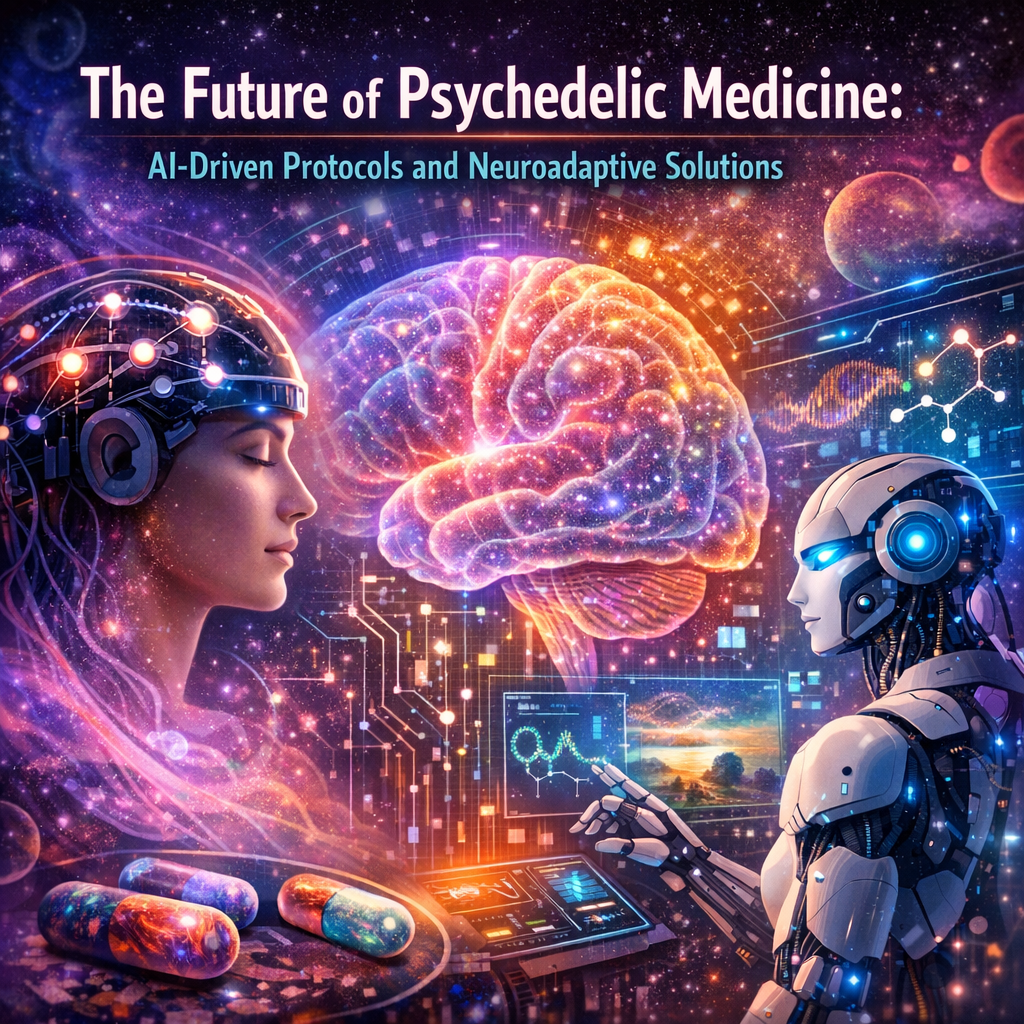
AI-driven protocols signify a significant advancement in **psychedelic therapy**. **AI algorithms** analyze vast amounts of data from clinical trials, patient histories, and real-time feedback to identify the most effective treatment strategies for each individual. By evaluating factors such as optimal dosage and potential side effects, machine learning models enhance the safety and efficacy of psychedelic treatments.
Furthermore, **neuroadaptive technologies** complement AI by providing real-time monitoring and dynamic adaptations during therapy sessions. **Neuroimaging tools**, such as functional **MRI** and **EEG**, evaluate brain activity during psychedelic experiences. This data can be fed into AI systems, allowing for real-time adjustments in therapeutic parameters, ensuring alignment with the patient’s mental state and therapeutic goals. For instance, visual and auditory elements of a therapy session can be customized on-the-fly to amplify therapeutic effects based on neurological responses.
The convergence of AI and neuroadaptive solutions in psychedelic therapy mirrors trends in precision medicine in other areas, like oncology. Just as oncologists personalize cancer treatments using genetic information, psychotherapists can now personalize psychedelic experiences using biosignals, marking a transformative shift in mental health care.
Features
Several studies underscore the promising role of AI and neuroadaptive solutions in psychedelics. For example, a pioneering study conducted by [Imperial College London](https://www.imperial.ac.uk/news/200524/psilocybin-for-depression-how-does-work/) examined combining psilocybin with AI-driven analysis of brain wave patterns. The research suggested that AI could predict therapeutic outcomes by assessing neural responses to psychedelic substances, reinforcing AI’s value in treatment customization.
Furthermore, AI can identify **biomarkers** associated with positive treatment results. A [Johns Hopkins Medicine](https://www.hopkinsmedicine.org/news/newsroom/news-releases/hallucinogen-in-magic-mushrooms-helps-cancer-patients-reduce-anxiety) study found that psilocybin induces rapid and enduring changes in personality traits like openness and emotional processing. By analyzing these and other studies, AI systems can identify patterns correlating with successful therapy, providing a roadmap for future interventions.
Neuroadaptive technologies, such as those developed by [Epoch Neuro](https://mindmed.co) in collaboration with **MindMed**, play a complementary role. Real-time neuroimaging helps clinicians monitor patients’ brain activity during psychedelic therapy. These technologies allow for dynamic adjustments in therapeutic environments, such as soundscapes and kinetics, based on the patient’s response.
With substantial research contributions from institutions like [MAPS](https://maps.org/research), integrating AI and neuroadaptive solutions in psychedelic therapy is underway. These studies advocate for a paradigm where psychotherapeutic techniques, both traditional and modern, are fused with intelligent systems to deliver optimized, individualized care.
Conclusion
The future of psychedelic medicine lies at the intersection of neuroscience, technology, and therapy. **AI-driven protocols** and **neuroadaptive solutions** offer a visionary approach to mental health treatment, promising more personalized, effective, and safe therapies. As research progresses, embracing these innovations could transform how we understand and treat mental health conditions, ultimately leading to better outcomes for patients worldwide.
Concise Summary
The integration of **AI** and **neuroadaptive solutions** is reshaping **psychedelic medicine** by personalizing treatment protocols, focusing on substances like **psilocybin** for mental health conditions. AI-driven algorithms analyze comprehensive datasets to customize therapies, ensuring optimal dosage and minimizing side effects. Neuroadaptive technologies enable real-time environmental adjustments during therapy sessions, aligning with patients’ brain activity. Complemented by institutions like [MAPS](https://maps.org/research), this approach mirrors precision medicine strategies in other medical fields, promising individualized and effective mental health treatments.
In conclusion, the amalgamation of AI and neuroadaptive solutions promises to revolutionize psychedelic medicine, enhancing its potential effectiveness and safety across various mental health applications.

Dominic E. is a passionate filmmaker navigating the exciting intersection of art and science. By day, he delves into the complexities of the human body as a full-time medical writer, meticulously translating intricate medical concepts into accessible and engaging narratives. By night, he explores the boundless realm of cinematic storytelling, crafting narratives that evoke emotion and challenge perspectives. Film Student and Full-time Medical Writer for ContentVendor.com