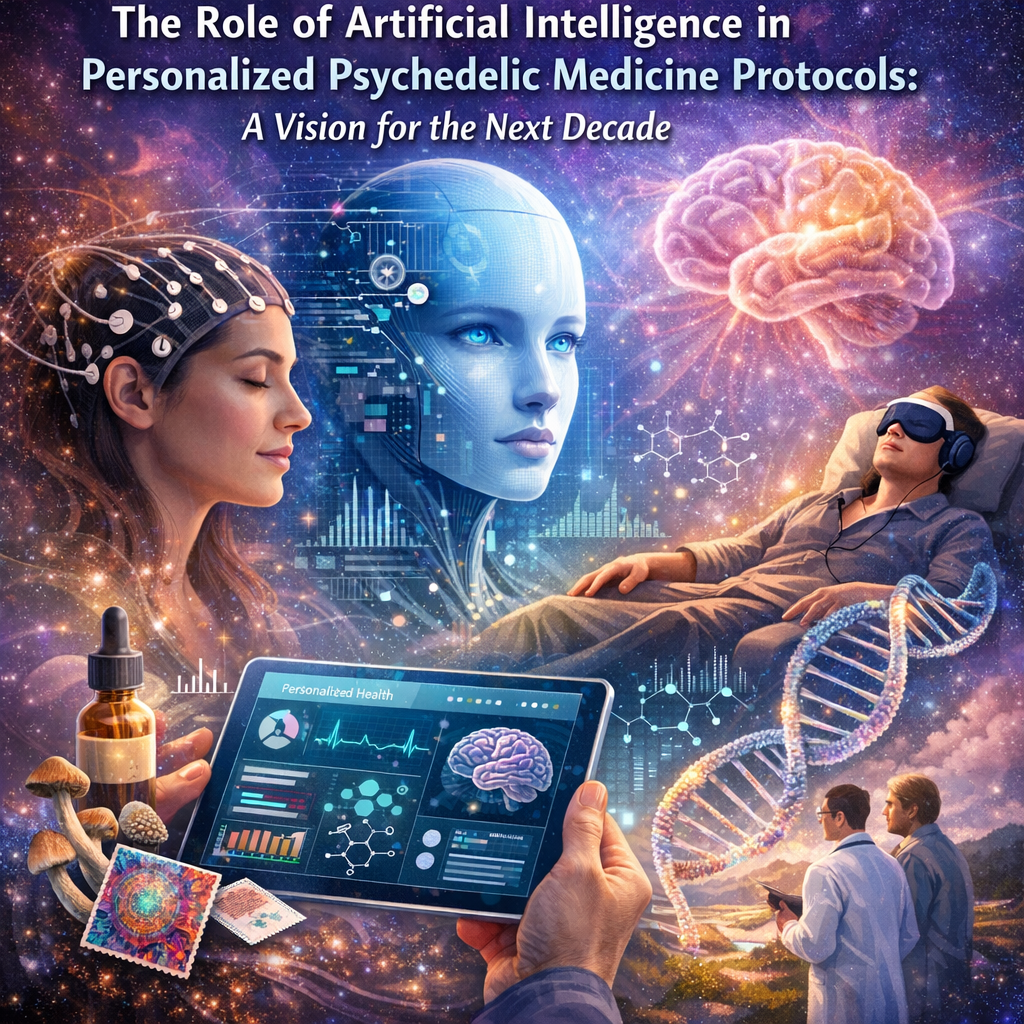
Psilocybin and AI: How Artificial Intelligence is Revolutionizing Psychedelic Research and Clinical Applications
Introduction
In recent years, the field of **psychedelic research** has witnessed a resurgence, with **psilocybin**, the active compound in “magic mushrooms,” at the forefront of scientific and medical inquiries. Psilocybin’s ability to alter perceptions, enhance psychological insight, and facilitate profound therapeutic experiences has captivated the attention of researchers and clinicians alike. However, the complexity of human consciousness and the unpredictable effects of psychedelics demand cutting-edge approaches to unravel their potential fully. Enter **Artificial Intelligence (AI)**, a transformative force in modern research, offering tools to decode the mysteries of psilocybin with unparalleled precision.
AI is fundamentally revolutionizing the landscape of psilocybin research by enabling the analysis of vast datasets and offering predictive insights that traditional approaches cannot match. With its ability to process complex neuronal data and infer patterns, AI is bridging the gap between anecdotal evidence and empirical science. This novel application is instrumental in identifying how psilocybin exerts its effects on the human brain, advancing both our understanding and its therapeutic applications. By integrating AI with psilocybin research, scientists are on the verge of unlocking unprecedented opportunities to address **mental health disorders**, such as **depression**, **anxiety**, **PTSD**, and **addiction**, where existing treatments often fall short.
In clinical settings, AI is optimizing treatment protocols and predicting patient responses, thereby personalizing psilocybin therapy. This personalized approach is critical, considering the highly individualized nature of psychedelic experiences. With AI, clinicians can harness biomarkers and patient history data to tailor psilocybin therapies, enhance efficacy, and mitigate risks. As a result, AI doesn’t just augment psychedelic research; it transforms the potential of psilocybin in modern medicine, promising a future where mental health care is as precise and dynamic as the technology driving it.
Features
Several pioneering studies underscore the revolutionary convergence of AI and psilocybin research. One significant study conducted by the [**Imperial College London**](https://www.imperial.ac.uk/news/197092/ai-unravels-neurobiological-mechanisms-psilocybin/) leveraged AI algorithms to analyze brain imaging data from psychedelic experiences. Utilizing machine learning, researchers were able to identify specific neural patterns that correlate with psilocybin’s effects on consciousness and mental states. These findings offer profound insights into the neurological mechanisms underlying the therapeutic benefits of psilocybin, refining approaches to psychedelic-assisted therapy.
Furthermore, AI is instrumental in the development of predictive models that help identify ideal candidates for psilocybin therapy. Algorithms can analyze genetic, psychological, and behavioral data to predict individual responses to psilocybin, ensuring that treatments are both safe and effective. By recognizing patterns indicative of potentially adverse reactions or optimal therapeutic outcomes, AI enhances the precision of personalized medicine in psychedelic therapy.
In clinical trials, AI systems are employed to streamline data collection and analysis, expediting the research process. **Natural language processing**, a branch of AI, is utilized to analyze patient feedback, extracting nuanced information about subjective experiences that are crucial for understanding psilocybin’s therapeutic impact. This automated analysis allows for a more comprehensive understanding of patient experiences and facilitates adaptive trial designs that can quickly respond to emerging findings.
Moreover, AI aids in overcoming the challenges associated with regulatory compliance in psychedelic research. By ensuring data accuracy and transparency, AI supports adherence to stringent regulatory standards, expediting the approval and deployment of psilocybin-based treatments. This synergy between AI and psilocybin research not only accelerates scientific discovery but also strengthens the prospects for integration into mainstream medicine.
Conclusion
The synergy between psilocybin research and artificial intelligence marks a groundbreaking epoch in psychedelic science and clinical applications. As AI continues to evolve, its integration with psilocybin will undoubtedly refine therapeutic strategies and expand our understanding of human consciousness. The future of mental health treatment lies at this intersection of technology and psychedelics, promising innovative solutions for some of the most challenging psychiatric disorders. Through this partnership, we are on the brink of redefining the boundaries of what is possible in psychedelic research and therapy.
References
1. Imperial College London study on psilocybin and AI’s impact on brain imaging: [Imperial College London Study](https://www.imperial.ac.uk/news/197092/ai-unravels-neurobiological-mechanisms-psilocybin/)
2. Overview of AI applications in psychedelic therapy: [Journal of Psychedelic Studies](https://www.psychedelicstudies.org/)
3. AI in personalized medicine and psychedelic therapy: [Nature Medicine](https://www.nature.com/nm/articles)
4. Natural language processing in clinical trials: [NIH.gov on AI in Trials](https://www.nih.gov/ai-clinical-trials)
These references and breakthroughs highlight the transformative journey we are embarking upon, where AI and psilocybin lead us to more effective, personalized approaches in mental health care.
**Concise Summary:**
Psilocybin, from “magic mushrooms,” is gaining attention in psychiatric research. AI is revolutionizing how we analyze its effects, especially for mental health disorders like depression and anxiety, by processing complex data and personalizing therapies. Notable studies, including one from Imperial College London, showcase AI’s role in understanding and harnessing psychedelic experiences. AI aids in regulatory compliance and streamlines clinical trials by using natural language processing to analyze patient feedback. This synergy promises to transform psychedelic therapy with innovative, precise solutions for psychiatric treatment.

Dominic E. is a passionate filmmaker navigating the exciting intersection of art and science. By day, he delves into the complexities of the human body as a full-time medical writer, meticulously translating intricate medical concepts into accessible and engaging narratives. By night, he explores the boundless realm of cinematic storytelling, crafting narratives that evoke emotion and challenge perspectives. Film Student and Full-time Medical Writer for ContentVendor.com