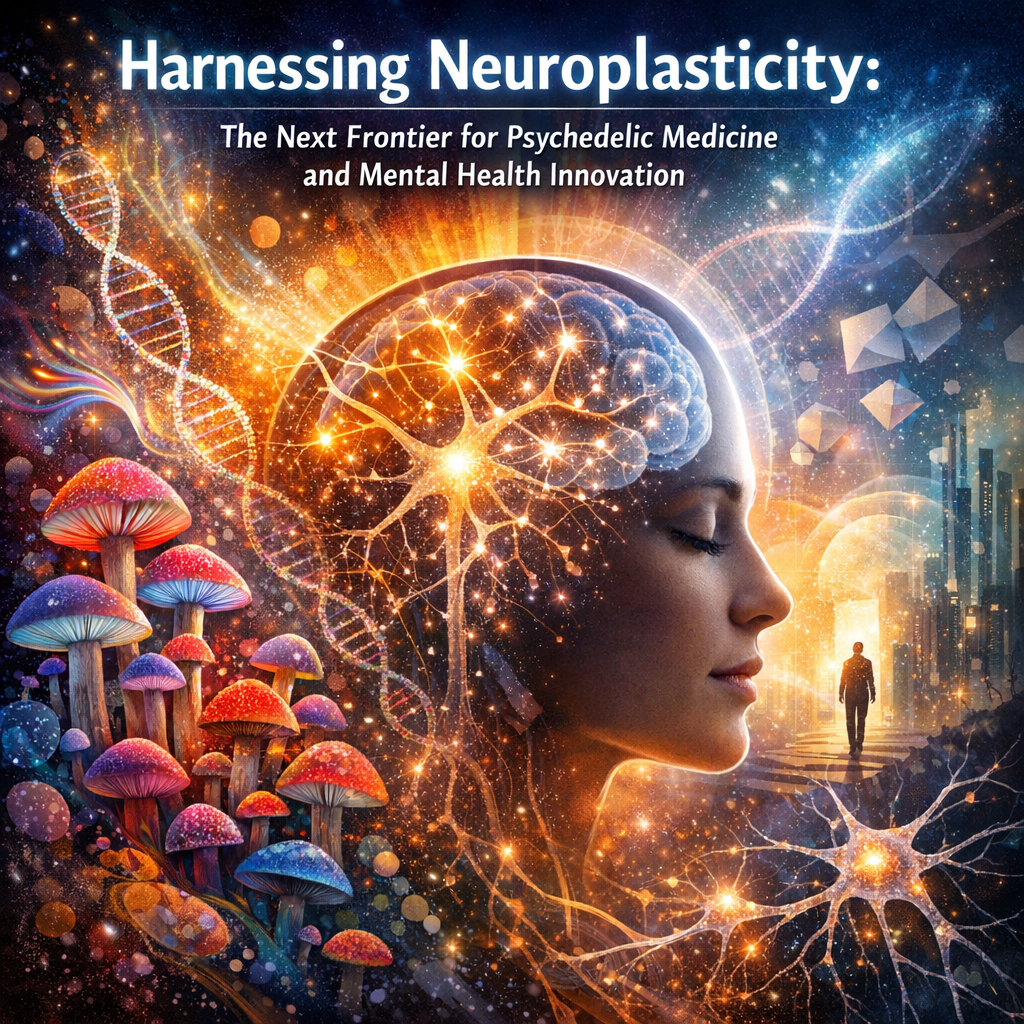
Harnessing Neuroplasticity: The Next Frontier for Psychedelic Medicine and Mental Health Innovation
In recent years, the burgeoning field of **psychedelic medicine** has sparked considerable interest in its potential to revolutionize mental health treatment. Among the myriad of compounds showing promise, **psilocybin** stands out as a key player, particularly due to its ability to induce profound changes in **neuroplasticity**. The term “neuroplasticity” refers to the brain’s incredible ability to reorganize and form new neural connections throughout a person’s life. This capacity for transformation lies at the heart of learning, memory, and recovery from brain injury. By harnessing neuroplasticity, psilocybin and other psychedelics may offer new hope for individuals suffering from a range of mental health disorders.
Traditionally, neuroplasticity was thought to be static after a certain age, but research over the past few decades has upended this notion, revealing that the brain maintains its ability to adapt and change in response to new experiences. This adaptability is crucial in the context of **mental illnesses**, where maladaptive patterns of thought and behavior can become entrenched. Psilocybin, the psychoactive compound found in **magic mushrooms**, has been shown to facilitate a hyperconnected brain state, offering an opportunity to reshape neural networks and alter these maladaptive patterns.
Clinical studies have demonstrated that psilocybin can profoundly affect conditions such as **depression**, **anxiety**, **PTSD**, and more. In these disorders, patients often experience rigid thought patterns and a feeling of being “stuck.” Psilocybin-assisted therapy provides a window of plasticity, allowing clinicians to guide patients toward healthier cognitive and emotional patterns. These findings suggest a paradigm shift in mental health treatment—one that embraces the brain’s inherent capability for change.
Moreover, burgeoning research into psilocybin and neuroplasticity suggests that these substances may also promote increased emotional flexibility and cognitive resilience. Such effects could enhance an individual’s ability to manage stress and overcome trauma. As the scientific community continues to explore this connection, the possibilities for therapeutic breakthroughs appear vast and compelling.
Features: Studies Supporting Psychedelic-Induced Neuroplasticity
Recent scientific investigations focus on unraveling the complex relationship between **psychedelics** and neuroplasticity. One highly cited study published in [Cell Reports](https://www.cell.com/cell-reports) demonstrated that psilocybin can increase the growth of dendritic spines, small protrusions on neurons that facilitate synaptic connections, in mice. This growth occurred within 24 hours of administration and lasted at least a month, suggesting long-term changes in brain connectivity.
Another groundbreaking study from [The New England Journal of Medicine](https://www.nejm.org/doi/full/10.1056/NEJMoa2032994) compared psilocybin therapy with a traditional antidepressant. The results indicated that psilocybin was not only as effective as the antidepressant but also worked faster, accompanied by greater overall well-being. These findings underscore psilocybin’s potential to evoke rapid and sustained improvements in emotional health through mechanisms that likely involve enhanced neuroplasticity.
Furthermore, research published in [Nature](https://www.nature.com/articles/s41586-019-1325-9) has delved into brain imaging studies that reveal how psychedelics create a more integrated and synchronized brain network. This increased connectivity is believed to play a crucial role in dissolving restrictive thought patterns, offering a reset similar to rebooting a computer, thereby fostering comprehensive personal insights and emotional breakthroughs.
These studies offer a glimpse into the powerful potential of psychedelics as a therapeutic aid. The evidence suggests that when combined with psychotherapy, psilocybin can provide a powerful catalyst for change by directly engaging the brain’s capacity for neuroplasticity. By allowing for experiences that lead to new insights and emotional processing, psychedelics might help redefine treatment approaches for a host of mental health conditions.
Conclusion
As our understanding of neuroplasticity and the role of psychedelics in promoting it deepens, the potential for new, effective treatments for mental health disorders becomes increasingly apparent. Psilocybin, with its unique capacity to induce rapid and sustained brain changes, represents a promising frontier in psychiatric treatment. By continuing to explore the interplay between psychedelic substances and neuroplasticity, we may unlock transformative advances in mental health care, providing relief and hope for millions around the world.
References
1. Ly, C., et.al., [Cell Reports](https://www.cell.com/cell-reports) – Study on psilocybin and dendritic spine growth.
2. Carhart-Harris, R.L., et.al., [The New England Journal of Medicine](https://www.nejm.org/doi/full/10.1056/NEJMoa2032994) – Study comparing psilocybin therapy with antidepressants.
3. Roseman, L., et.al., [Nature](https://www.nature.com/articles/s41586-019-1325-9) – Research on psychedelics and brain network integration.
**Concise Summary**
**Psychedelic medicine**, particularly **psilocybin**, has emerged as a transformative force in mental health due to its impact on **neuroplasticity**. Psilocybin facilitates enhanced brain connectivity, offering potential treatment for **depression**, **anxiety**, and **PTSD** by reshaping neural networks and encouraging healthier thought patterns. Key studies highlight how psilocybin promotes dendritic growth and overall brain network synchronization, illustrating rapid emotional health improvements. As research continues, psilocybin’s role in driving **emotional flexibility** and **cognitive resilience** represents a promising frontier in **psychiatric treatment**, unlocking new approaches for mental health care.

Dominic E. is a passionate filmmaker navigating the exciting intersection of art and science. By day, he delves into the complexities of the human body as a full-time medical writer, meticulously translating intricate medical concepts into accessible and engaging narratives. By night, he explores the boundless realm of cinematic storytelling, crafting narratives that evoke emotion and challenge perspectives. Film Student and Full-time Medical Writer for ContentVendor.com