The Psychedelic “Placebo Paradox”: Unveiling the Role of Expectation in Clinical Outcomes
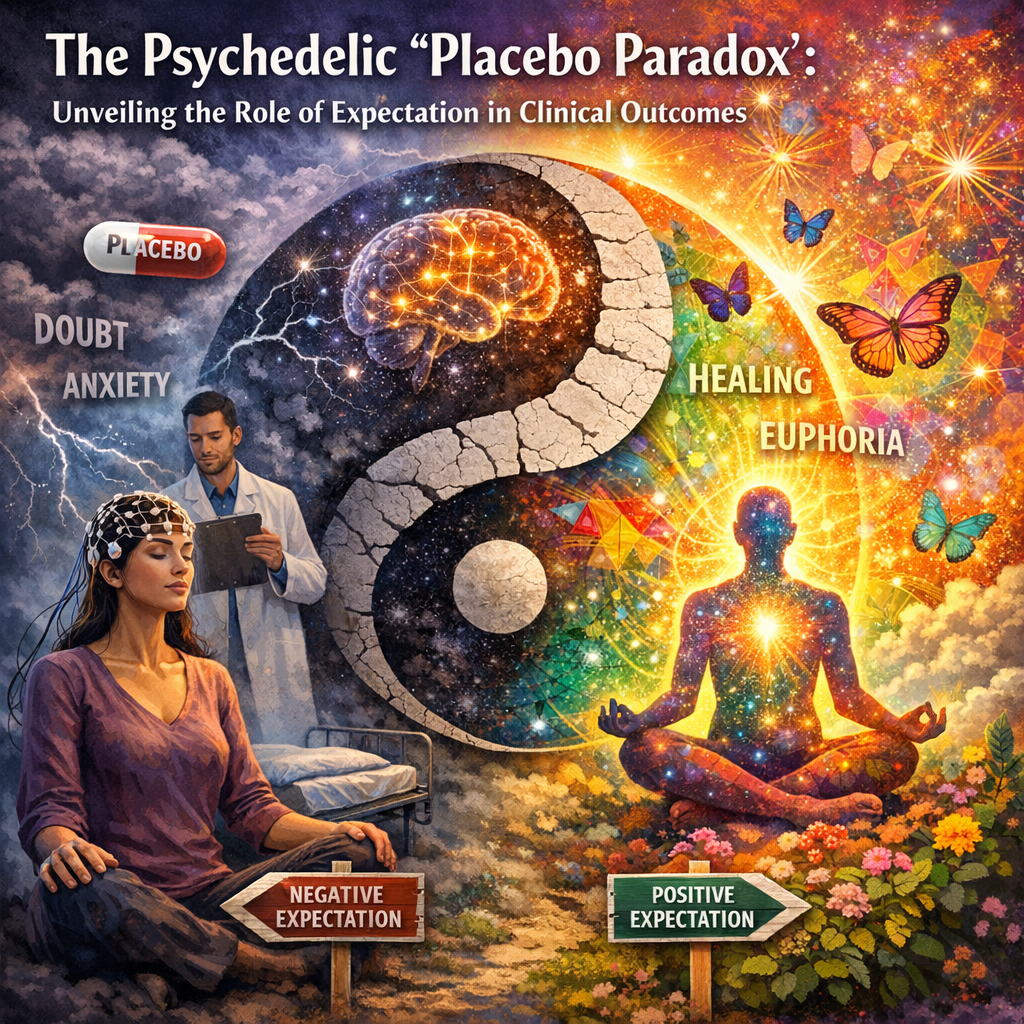
In recent years, the exploration of **psychedelic substances** for therapeutic purposes has captured the attention of both medical professionals and the general public. Among these substances, **psilocybin**—the active compound in magic mushrooms—has shown promising results in treating various mental health conditions such as **depression**, **anxiety**, and **PTSD**. Intriguingly, however, the efficacy of psilocybin and other psychedelics in clinical settings may not solely rely on their pharmacological action. Instead, emerging research suggests that patients’ **expectations**, often referred to as the **placebo effect**, may significantly influence the therapeutic outcomes of psychedelic therapies. This phenomenon, sometimes termed the “placebo paradox,” prompts questions about the role of psychological and environmental factors in shaping clinical experiences and results.
The **placebo effect**, already a well-documented phenomenon in conventional medicine, occurs when a patient’s symptoms improve due to their belief in the efficacy of the treatment rather than the treatment itself. In the context of psychedelics, this effect is magnified by the complex interplay of **mindset** and **setting**—collectively known as “set and setting.” Patients embarking on a psychedelic journey often have high expectations due to the powerful cultural narratives and anecdotal evidence surrounding these substances. These expectations can significantly color their experiences and, ultimately, their therapeutic outcomes.
Understanding the placebo effect in psychedelic therapies is essential for several reasons. First, it underscores the importance of psychological and emotional preparedness prior to treatment. Setting clear intentions and creating a supportive environment can enhance the likelihood of positive outcomes. Second, it challenges the simplistic notion that a substance’s potency is the sole determinant of its effectiveness, encouraging a more holistic view of therapeutic interventions.
Moreover, new studies investigating the placebo effect in psychedelics are beginning to provide valuable insights. These studies not only highlight the need for rigorous clinical methodologies to control for expectation and suggestibility but also point towards potentially revolutionary hybrid treatment models that integrate pharmacological effects with psychological coaching and support.
Features:
Several professional and medical studies have delved into the mysterious placebo paradox associated with psychedelic treatments. One noteworthy study was conducted by Dr. Roland Griffiths at **Johns Hopkins University**, where researchers explored the effects of psilocybin on individuals with treatment-resistant depression. They found that setting clear expectations and creating a conducive environment significantly amplified the therapeutic effects of psilocybin, leading to more substantial and long-lasting improvements in depressive symptoms. You can read more about this study on the [Johns Hopkins Medicine website](https://www.hopkinsmedicine.org).
The study highlighted that patients reporting profound experiences often cited personal expectations and the positive reinforcement from therapists as critical components of their recovery. This reinforces the understanding that while psilocybin has intrinsic pharmacological benefits, the role of psychological factors in therapeutic settings is undeniable.
In another influential study published in the journal “Psychopharmacology,” researchers attempted to quantify the magnitude of the placebo effect in psychedelic research. The study involved administering a placebo to one group and a low dose of psilocybin to another, while both groups were made to believe they were receiving substantial active doses. Results revealed that those with high expectations, irrespective of the actual substance administered, reported experiences indistinguishable from those described in high-dose psychedelic sessions. You can read more in the [Psychopharmacology Journal](https://link.springer.com/journal/213).
These findings have profound implications for the design of future clinical trials involving psychedelics. They highlight the critical need to balance physiological and psychological components of treatment to fully harness the therapeutic potential of these substances. Additionally, they open avenues for novel therapeutic protocols that emphasize patient education, expectation management, and setting optimization as integral components of successful psychedelic therapy.
Conclusion:
In conclusion, the psychedelic “placebo paradox” represents a fascinating frontier in the realm of psychedelic research and therapy. By acknowledging and integrating the power of expectation alongside the pharmacological effects of substances like psilocybin, medical practitioners can unlock new pathways to healing. This underscores the importance of comprehensive and empathetic care strategies that honor both the biochemical and psychological dimensions of human well-being, ultimately offering a more holistic approach to mental health treatment.
References:
1. [Johns Hopkins Medicine: Psilocybin for Depression](https://www.hopkinsmedicine.org)
2. [Psychopharmacology Journal: Placebo Effect in Psychedelic Studies](https://link.springer.com/journal/213)
Concise Summary:
The “placebo paradox” in psychedelic therapies highlights the significant role of patient expectations in the efficacy of treatments like psilocybin for mental health conditions. Emerging studies emphasize set and setting as key factors, demonstrating that psychological factors can profoundly affect outcomes. This understanding underscores the importance of holistic care that integrates both biochemical and psychological aspects, pointing toward innovative therapeutic models that combine pharmacology with psychological support. In doing so, the potential for psychedelics in mental health treatment is expanded, promising more effective and compassionate care strategies.

Dominic E. is a passionate filmmaker navigating the exciting intersection of art and science. By day, he delves into the complexities of the human body as a full-time medical writer, meticulously translating intricate medical concepts into accessible and engaging narratives. By night, he explores the boundless realm of cinematic storytelling, crafting narratives that evoke emotion and challenge perspectives. Film Student and Full-time Medical Writer for ContentVendor.com