Exploring the Psychedelic Impact: How Psilocybin Alters Decision-Making Networks in the Human Brain
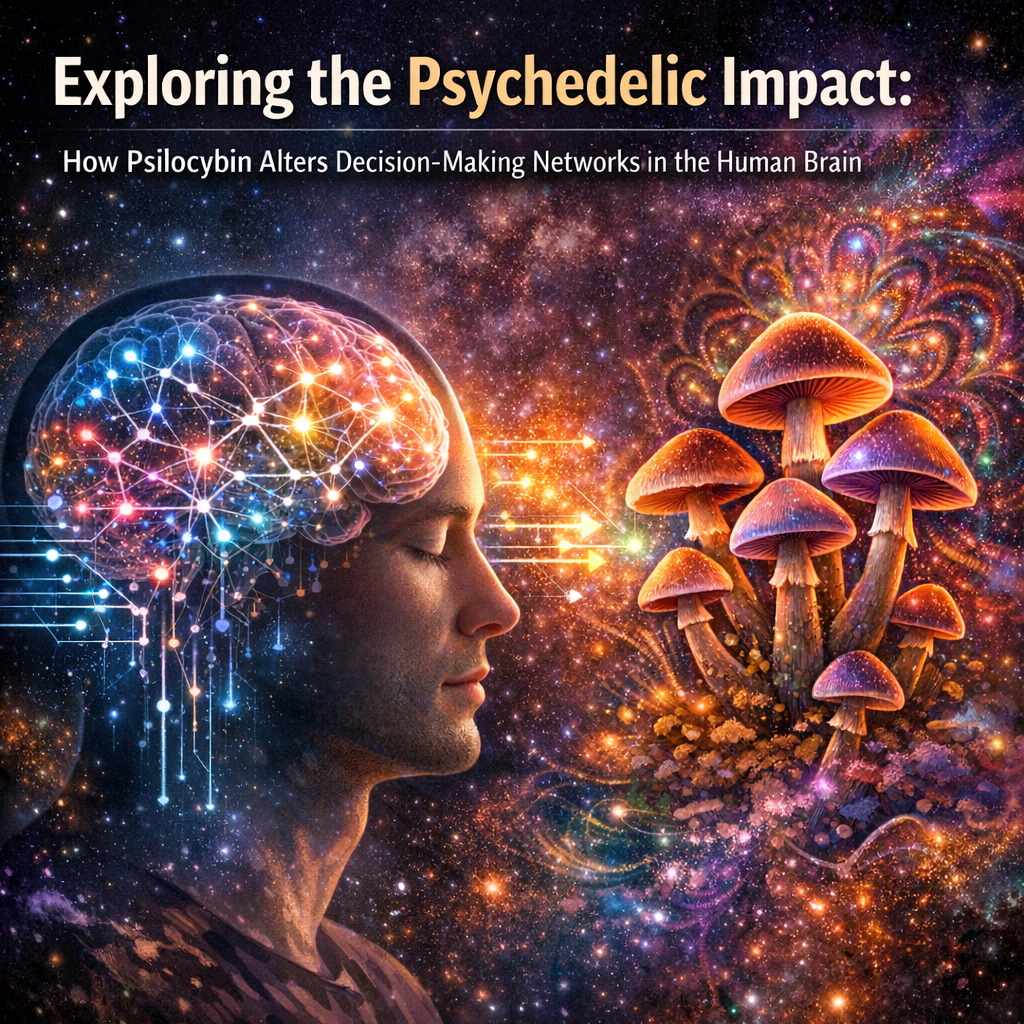
In recent years, the study of **psychedelic substances** has captivated the attention of researchers, **mental health professionals**, and the public alike. Among these substances, **psilocybin**—the psychoactive compound found in “magic mushrooms”—has emerged as a subject of intense scientific interest due to its profound effects on human consciousness. While psilocybin has been historically stigmatized and classified as a substance of abuse, modern science is beginning to unravel its complex interactions with the human brain, suggesting potential **therapeutic applications**. The core of this intrigue lies in its ability to alter **decision-making networks**, a phenomenon with wide-reaching implications for mental health treatment and cognitive neuroscience.
Initial research into psilocybin began in the mid-20th century. However, it was not until recently that rigorous scientific methodologies have provided deeper insights into its neural mechanisms. **Psilocybin** primarily exerts its effects by acting on **serotonin receptors**, especially the **5-HT2A receptor**, initiating a cascade of interactions that disrupt the habitual patterns of thinking and perception. This disruption has been particularly noted in brain regions associated with decision-making, such as the **prefrontal cortex**, and connectivity networks like the **default mode network (DMN)** and **central executive network (CEN)**.
Alterations in decision-making under the influence of psilocybin can lead to increased cognitive flexibility and a sense of open-mindedness. These effects are crucial for individuals grappling with mental health issues such as **depression**, **anxiety**, and **addiction**, where rigid and maladaptive thought patterns dominate. The capacity of psilocybin to “reset” or “restart” the brain holds potential for transformative therapeutic interventions, offering a new avenue for patients who have found limited success with traditional treatments.
As scientific inquiry progresses, the importance of understanding psilocybin’s impact on decision-making processes cannot be exaggerated. Not only does it challenge our preconceived notions of consciousness, but it also paves the way for innovative mental health therapies. By exploring how psilocybin acts within the human brain, we can further appreciate its complexity and potential as a catalyst for cognitive and emotional healing.
Exploring the Neuroscientific Frontier
In terms of professional and medical studies, several groundbreaking research contributions have highlighted how psilocybin affects decision-making networks in the brain. A pivotal study conducted by a team at Imperial College London utilized fMRI imaging to observe brain activity patterns in individuals under the influence of psilocybin. The research demonstrated a significant reduction in activity within the **default mode network (DMN)**, a network often hyperactive in individuals suffering from **depression** and **anxiety disorders**. This reduction was correlated with alterations in **self-referential thinking** and an increased capacity for novel problem-solving, emphasizing psilocybin’s potential in promoting adaptive cognitive flexibility ([source](https://www.imperial.ac.uk/psychedelic-research-centre)).
Another examination into psilocybin’s effects was carried out by researchers at **Johns Hopkins University**, where they employed psilocybin therapy sessions and monitored decision-making changes. Their findings indicated that psilocybin facilitated enhanced emotional regulation and increased connectivity with the **central executive network (CEN)**, responsible for high-level cognitive functions such as **decision-making** and goal-oriented behavior. The study suggested this enhanced connectivity supports the moderation of otherwise rigid, maladaptive decision-making patterns typical in clinical populations ([source](https://hopkinspsychedelic.org/)).
Moreover, an insightful investigation carried out at the **University of Zurich** assessed the impact of psilocybin on social decision-making. With its ability to foster interconnectedness, psilocybin can aid in overcoming biases and fostering prosocial behavior. The research team concluded that participants displayed a heightened sense of empathy and consideration in social interactions, reinforcing psilocybin’s role in reshaping decision-making paradigms related to awareness and social cognition ([source](https://www.uzh.ch/en/news/artsci/psychedelics.html)).
The converging evidence from these studies marks a significant progression in understanding how psilocybin modulates decision-making networks. The alteration in neural connectivity offers insights into psilocybin’s potential role in therapeutic settings, highlighting a shift towards innovative approaches to mental health treatment.
Conclusion: Charting a New Course in Psychotherapy
Psilocybin’s ability to alter decision-making networks in the human brain opens up promising new pathways for therapeutic interventions. By promoting **cognitive flexibility** and **emotional regulation**, psilocybin does more than challenge traditional concepts of psychedelic experiences; it redefines them in a clinically relevant framework. As research continues to unfold, the integration of psilocybin into clinical practice could radically transform how we approach mental health and decision-making issues. Embracing these innovative perspectives will enable continued exploration into the untapped potential of **psychedelic substances**, leading us toward a greater understanding of the human mind and the intricate patterns of consciousness.
**Concise Summary:**
Psilocybin, the psychoactive compound in magic mushrooms, is increasingly studied for its positive impact on brain networks involved in decision-making, offering promise in treating mental health conditions like depression and anxiety. By acting on serotonin receptors, particularly the 5-HT2A receptor, psilocybin alters neural connectivity in key brain areas, improving cognitive flexibility and emotional regulation. Groundbreaking studies at leading institutions highlight psilocybin’s potential to reshape rigid, maladaptive mental patterns, marking a new era in psychotherapeutic research and applications.

Dominic E. is a passionate filmmaker navigating the exciting intersection of art and science. By day, he delves into the complexities of the human body as a full-time medical writer, meticulously translating intricate medical concepts into accessible and engaging narratives. By night, he explores the boundless realm of cinematic storytelling, crafting narratives that evoke emotion and challenge perspectives. Film Student and Full-time Medical Writer for ContentVendor.com