Beyond Dosage: How AI is Revolutionizing Personalized Psychedelic Medicine Protocols
In recent years, the field of **psychedelic medicine** has witnessed an astonishing revival, particularly in the realm of **psilocybin**, a naturally occurring psychedelic compound found in certain mushrooms. The re-emergence of psilocybin in clinical research has reignited interest in its potential to treat an array of psychological and neurological disorders. However, an often-overlooked aspect of psychedelic therapy is the importance of **personalized medicine**—crafting treatment protocols that consider an individual’s unique physiological and psychological profile.
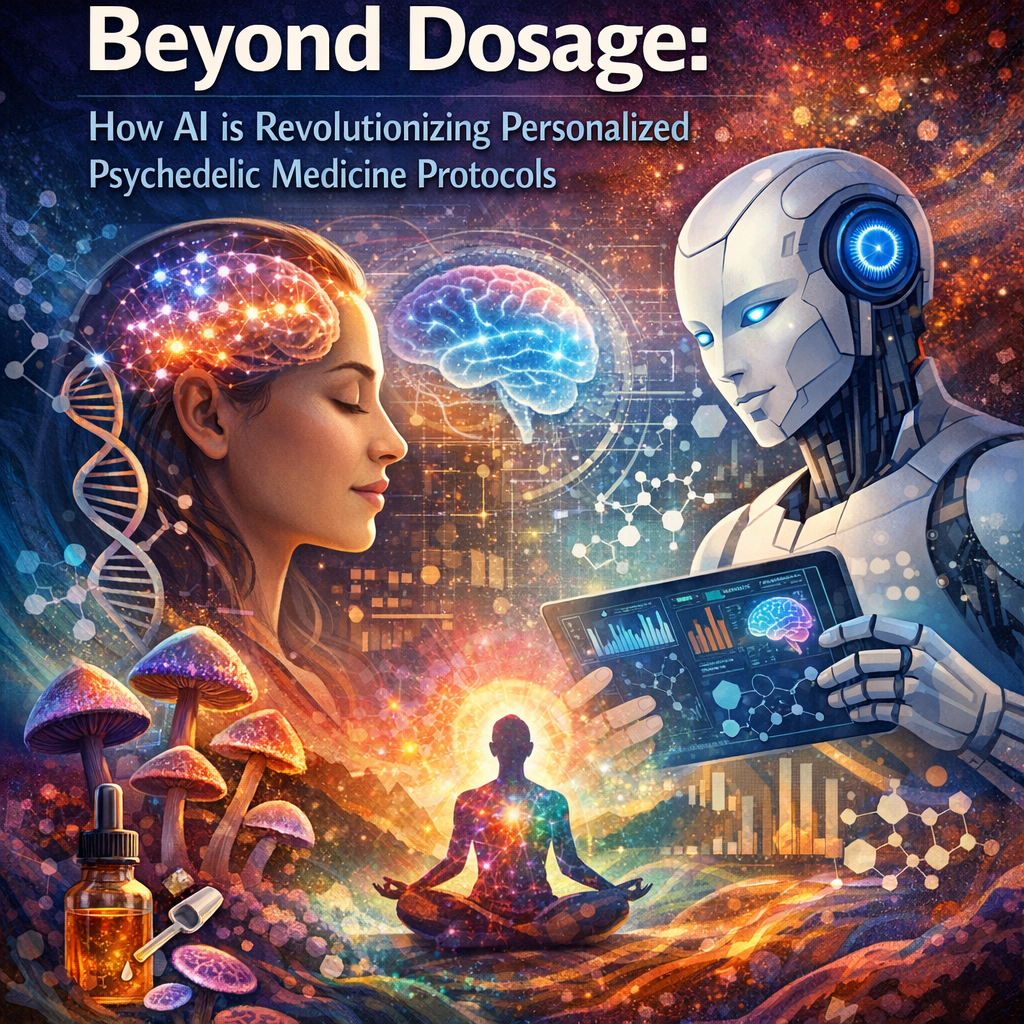
Enter **Artificial Intelligence (AI)**. This technological powerhouse is poised to transform how we approach psychedelic medicine, particularly with substances like psilocybin. AI’s ability to analyze and process vast amounts of data can help us understand the nuances of psychedelic experiences in unprecedented ways, allowing healthcare providers to design highly personalized treatment protocols that optimize efficacy and minimize potential risks.
The integration of AI into psychedelic therapy opens up new avenues in individualized patient care. With AI’s predictive analytics and machine learning capabilities, researchers and clinicians can explore how variables such as genetic makeup, mental health history, and lifestyle factors influence responses to psilocybin. Such insights are vital for tailoring dosage recommendations that not only ensure safety but also enhance therapeutic outcomes.
Additionally, AI can help identify patterns in patient data that are not immediately apparent to human analysts. For instance, machine learning algorithms can parse through data from clinical trials and real-world evidence to identify trends and correlations, offering fresh perspectives on which patients are most likely to benefit from psilocybin therapy. This level of personalization extends beyond dosage to encompass **set and setting**—factors known to significantly impact the psychedelic experience.
As we delve deeper into this innovative intersection between technology and psychedelic therapy, it becomes clear that AI holds the promise to revolutionize the next chapter in mental health treatment, not only by refining psilocybin protocols but by paving the way for a more comprehensive understanding of how psychedelics can be harnessed to improve mental well-being.
Features: AI Empowering Psychedelic Research and Personalized Protocols
Recent strides in the combination of AI and psilocybin research illustrate the potential for groundbreaking advancements in personalized medicine. AI’s ability to process complex data makes it an invaluable tool in the realm of psychedelic research, aiding in both the design and outcome of studies.
One important study published in [*Nature*](https://www.nature.com/) highlights the application of AI in predicting individual responses to psychedelic substances, using biometric data and psychological assessments to customize treatment plans. By harnessing machine learning algorithms, researchers were able to model and predict how different variables impact a patient’s response to psilocybin, ultimately guiding the development of more effective treatment protocols.
In another significant exploration, AI was employed to process data from neuroimaging studies during psilocybin sessions. These studies revealed that AI optimization methods could effectively map neural activity, identifying which brain networks were most implicated in the therapeutic effects and adverse experiences of psychedelic drugs. This allows for precision in modifying doses and adjusting therapeutic settings ([*Frontiers in Neuroscience*](https://www.frontiersin.org/journals/neuroscience)).
Moreover, an ongoing longitudinal study investigating the longer-term impacts of psilocybin on mental health outcomes is utilizing AI to track participant progress over time. This study examines how variations in individual biology and therapeutic protocols affect the efficacy and safety of psilocybin treatments. Results are demonstrating that AI can significantly contribute to developing personalized medicine frameworks, providing insights that inform both current treatment and future research ([*Journal of Psychopharmacology*](https://journals.sagepub.com/home/jop)).
These studies underscore the evolving relationship between AI and psychedelic therapy. The potential for AI to revolutionize the personalization of psilocybin protocols is vast, offering both patients and clinicians a more nuanced understanding of how psychedelics can be tailored to suit individual needs and conditions. The synthesis of AI and psilocybin is on the cusp of delivering more effective, reliable, and individual-specific approaches to some of the most challenging mental health issues of our time.
Conclusion
As AI continues to bond with the burgeoning field of psychedelic medicine, the potential for personalized **medical mushroom therapies** grows exponentially. Through AI’s predictive capabilities and data-processing power, treatment protocols can become more accurate, safer, and tailored to individual needs, all of which significantly enhance therapeutic outcomes. This seamless integration of cutting-edge technology and natural alternative treatment sheds light on a promising future for mental health care—a future where treatment is as unique as the individuals seeking it.
**Concise Summary**
AI is transforming psychedelic medicine, especially with psilocybin, by enabling highly personalized treatment protocols. Through AI’s data-processing capabilities, researchers can tailor therapies considering genetic makeup, mental health history, and lifestyle factors, thus optimizing efficacy and safety. AI identifies unseen patterns, improving treatment personalization beyond dosage to include psychological factors impacting the psychedelic experience. As these AI-powered insights evolve, the potential for precise, effective treatments for mental health issues grows, heralding a future where therapy is tailored to individual needs. Key studies demonstrating these advancements are published in respected journals like *Nature* and *Frontiers in Neuroscience*.

Dominic E. is a passionate filmmaker navigating the exciting intersection of art and science. By day, he delves into the complexities of the human body as a full-time medical writer, meticulously translating intricate medical concepts into accessible and engaging narratives. By night, he explores the boundless realm of cinematic storytelling, crafting narratives that evoke emotion and challenge perspectives. Film Student and Full-time Medical Writer for ContentVendor.com