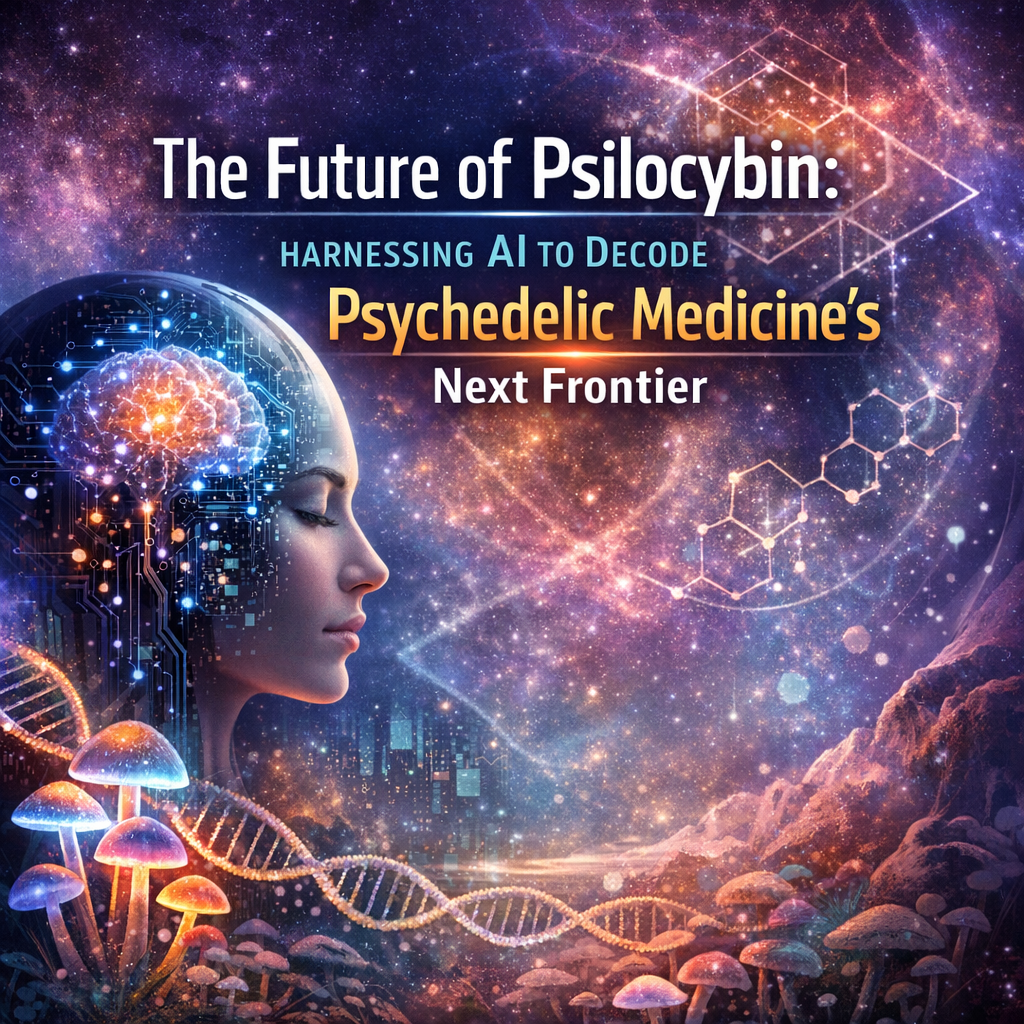
The Future of Psilocybin: Harnessing AI to Decode Psychedelic Medicine’s Next Frontier
The potential of **psilocybin**, the psychoactive compound found in certain mushrooms, to revolutionize the field of mental health treatment is rapidly evolving. Traditionally used in cultural and spiritual rituals, psilocybin is being recognized for its **therapeutic potential**. From treating **depression** and **anxiety** to aiding in **addiction recovery**, psilocybin now intersects with cutting-edge technology. The integration of **artificial intelligence (AI)** promises to streamline and enhance psychedelic medicine, leading to safer and more personalized therapies.
**AI’s Role in Psychedelic Research**
For decades, research on psychedelic compounds was constrained by strict regulations. Recent policy changes and a rising interest in alternative approaches to mental health care have reignited exploration into psychedelics like psilocybin. With mental health as a global concern, early studies suggest that psilocybin may offer relief where traditional treatments fail. Understanding the complexities of **psychedelic therapies**, such as dosage and long-term effects, demands new approaches, with AI playing a pivotal role. AI’s ability to process and analyze data efficiently is invaluable, particularly in mapping individual experiences and developing personalized treatment plans. **Machine learning models** can predict patient responses based on genetics, mental health history, and environmental factors, optimizing therapeutic outcomes.
Recent Studies Validating Psilocybin’s Therapeutic Potential
Recent studies have underscored psilocybin’s therapeutic promise, providing a foundation for AI development. A landmark study published in [JAMA Psychiatry](https://jamanetwork.com/journals/jamapsychiatry/fullarticle/2772630) demonstrated significant **antidepressant effects** of **psilocybin-assisted therapy** in patients with major depressive disorder. Similarly, research from [Imperial College London](https://www.imperial.ac.uk/news/231352/psilocybin-offers-hope-treatment-resistant-depression/) utilized fMRI to observe brain changes during and after psilocybin therapy in patients with treatment-resistant depression, indicating increased connectivity that may underlie psychological benefits. AI could facilitate the identification of biomarkers predicting individual responses, enabling more targeted treatments. Additionally, AI can design safer therapeutic settings, minimizing risks and enhancing the treatment experience.
The Future of Psychedelic Medicine and AI
These promising studies and the incorporation of AI technologies are setting the stage for a transformative approach to **mental health care**. As our understanding of **psychedelic mechanisms** grows, AI-driven insights will potentially lead to tailored treatment regimens maximizing therapeutic benefits while minimizing risks. The integration of **AI** with psychedelic research could reshape medical treatments, ushering in a new era of personalized mental health care.
**Concise Summary**
The future of psilocybin medicine is closely linked with AI technologies, which hold the potential to unlock the complexities of psychedelic compounds. By analyzing large datasets, AI can enhance the personalization of psychedelic-assisted therapies, optimizing outcomes based on individual characteristics and genetics. Recent studies have shown significant benefits of psilocybin in treating depression, with AI poised to further refine these interventions. The convergence of AI and psychedelics promises a new era in mental health treatment, characterized by safer, more effective, and personalized care solutions. This collaboration could revolutionize how we understand and apply psychedelic medicine in the clinical setting.

Dominic E. is a passionate filmmaker navigating the exciting intersection of art and science. By day, he delves into the complexities of the human body as a full-time medical writer, meticulously translating intricate medical concepts into accessible and engaging narratives. By night, he explores the boundless realm of cinematic storytelling, crafting narratives that evoke emotion and challenge perspectives. Film Student and Full-time Medical Writer for ContentVendor.com