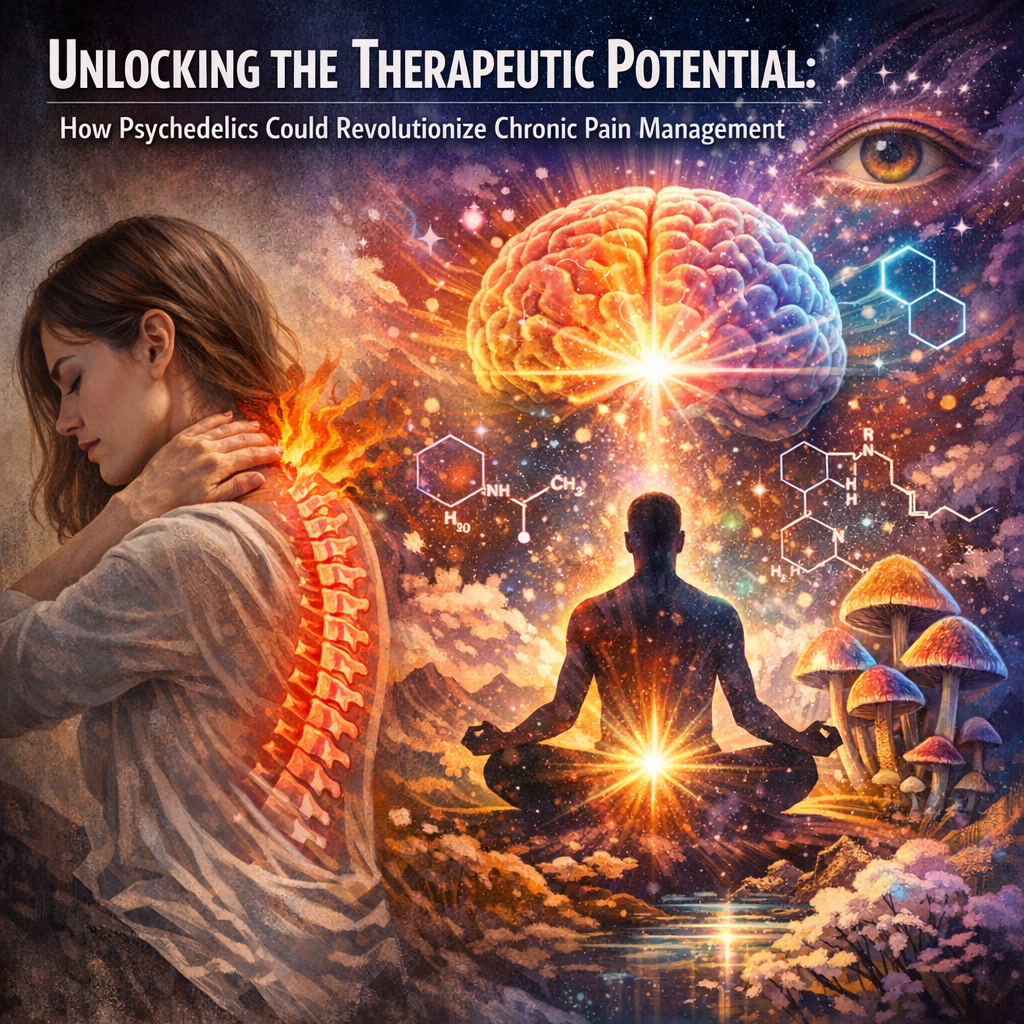
Unlocking the Therapeutic Potential: How Psychedelics Could Revolutionize Chronic Pain Management
**Introduction**
Chronic pain is a debilitating condition affecting millions globally, often with limited relief from conventional therapies that risk dependency and adverse side effects. Amidst these unmet needs, **psychedelic substances** like **psilocybin** (found in magic mushrooms) are gaining attention for their potential in chronic pain management. Recent scientific interest, fueled by advancing neuroscience and evolving public attitudes, suggests psychedelics may alter consciousness and **reprogram neural pathways** to offer longer-lasting relief by interacting with **serotonin 5-HT2A receptors**—key players in **neural plasticity**.
The therapeutic appeal is their dual action on mind and body, addressing both pain and associated mental health issues like **depression** and **anxiety**. This integrated treatment approach could revolutionize pain management by shifting focus from symptom suppression to addressing root causes, offering new hope for sufferers.
**Features**
Emerging studies shed light on psychedelics in chronic pain strategies. A *Nature* study showed psilocybin affects neural activity, reducing **pain perception** by influencing the default mode network—brain regions linked to self-referential thoughts and emotion regulation. Further research highlights potential **anti-inflammatory effects** and aid in psychological pain processing, reducing emotional distress associated with chronic pain.
**Johns Hopkins University’s** clinical trials on psilocybin reported improvements in anxiety and depression, aiding pain management. Safety is crucial; psychedelic-assisted therapy in controlled clinical settings shows promise, backed by organizations like the **Multidisciplinary Association for Psychedelic Studies** (MAPS), advocating for comprehensive trials to ensure safety and efficacy.
Collective findings indicate a promising future, but extensive trials and research are essential for mainstream acceptance. Legal and scientific frameworks must evolve to integrate psychedelics into recognized medical treatments.
**Conclusion**
Psychedelics’ evolution from misunderstood substances to therapeutic powerhouses marks a significant shift. As research deepens, they promise to redefine chronic pain management, transforming care for countless individuals worldwide. Safe integration into clinical practice necessitates ongoing research and regulation. The future holds vast potential for revolutionizing chronic pain care.
**References**
1. [Nature Study on Psilocybin and Brain Activity](https://www.nature.com/articles/s41586-019-1310-0)
2. [The Journal of Pain Research: Psychedelics in Chronic Pain](https://www.dovepress.com/psychedelics-in-chronic-pain-management-current-evidence-and-potential-peer-reviewed-fulltext-article-JPR)
3. [Johns Hopkins University Psilocybin Research](https://hub.jhu.edu/press/2020/11/04/psilocybin-depression-study/)
4. [Multidisciplinary Association for Psychedelic Studies (MAPS)](https://maps.org/)
**Concise Summary**
Psychedelics like psilocybin may offer transformative solutions for managing chronic pain by altering consciousness and addressing associated mental health issues like anxiety and depression. Current research highlights their impact on serotonin receptors and neural plasticity, suggesting profound changes in pain perception. While promising, extensive safety trials and regulatory frameworks are necessary to ensure their integration into mainstream clinical practices. This evolving field holds the potential to shift chronic pain management from temporary relief to addressing root causes, providing hope for millions.

Dominic E. is a passionate filmmaker navigating the exciting intersection of art and science. By day, he delves into the complexities of the human body as a full-time medical writer, meticulously translating intricate medical concepts into accessible and engaging narratives. By night, he explores the boundless realm of cinematic storytelling, crafting narratives that evoke emotion and challenge perspectives. Film Student and Full-time Medical Writer for ContentVendor.com