AI-Driven Psychedelic Therapy: Can Algorithms Personalize Mental Health Treatments with Psilocybin?
In recent years, there has been a growing interest in the use of **psychedelics**, particularly **psilocybin**, for **mental health therapy**. **Psilocybin**, a naturally occurring compound found in certain mushrooms, has been studied for its potential to treat a variety of mental health disorders, including **depression**, **anxiety**, and **PTSD**. However, while the potential benefits are highly promising, they are not uniform across all individuals. This is where the intersection of **artificial intelligence (AI)** and psychedelic therapy offers a cutting-edge solution.
**Personalization** in mental health treatment has always been a challenge. Each individual’s mental health condition is unique, shaped by a myriad of factors such as **genetics**, personal history, and environmental influences. Traditional “one-size-fits-all” approaches often fail to address these complex, personalized needs. **AI**, with its ability to analyze large datasets and identify patterns, provides an opportunity to tailor psilocybin therapy to each individual’s unique mental health profile.
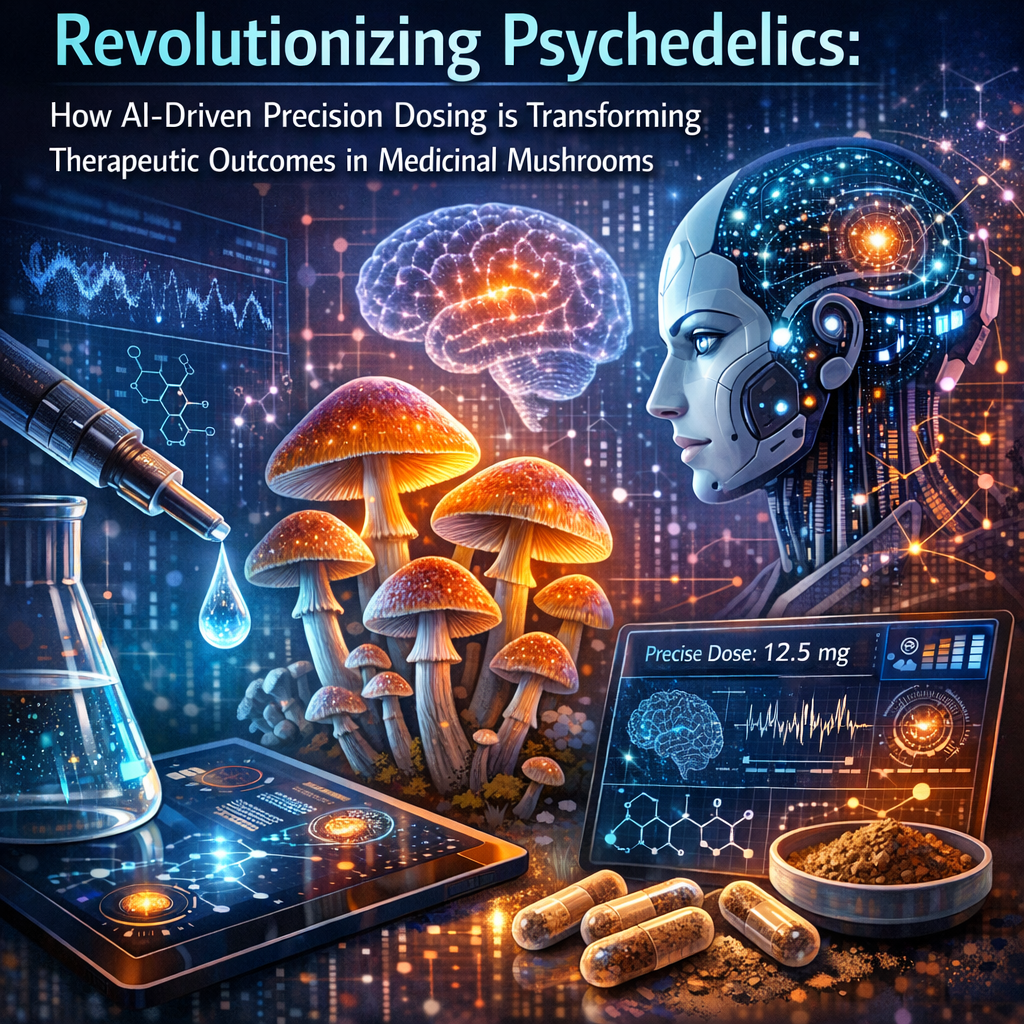
**AI-driven psychedelic therapy** leverages algorithms to analyze data from various sources, including **genetic information**, **biomarkers**, and mental health assessments. This information can then be used to predict individual responses to psilocybin, optimizing the dosage and therapeutic approach for maximum efficacy. For example, **machine learning models** can identify which patients are likely to benefit most from psilocybin therapy and tailor interventions accordingly. Furthermore, AI can continuously update treatment plans based on real-time feedback, ensuring that the therapy remains effective over time.
This integration of AI into psychedelic therapy not only promises more personalized treatments but also enhances safety and efficacy. By predicting potential **risk factors** and adverse reactions, AI can help clinicians mitigate these risks and provide a clearer path for regulatory approvals. As **AI technology** continues to evolve, its role in **psychedelic therapy** is expected to grow, potentially revolutionizing how mental health disorders are treated.
Features: Recent Studies and Innovations
Several studies have explored the effectiveness of **psilocybin** in treating mental health disorders, laying the groundwork for AI integration. One pivotal study conducted by researchers at **Imperial College London** demonstrated that psilocybin could alleviate symptoms of depression in patients who had not responded to conventional treatments. The study’s findings indicated that psilocybin facilitated significant reductions in depressive symptoms as early as one week post-treatment [source](https://www.imperial.ac.uk/news/188071/psilocybin-relieves-depression-mental-reboot-study/).
Beyond symptom relief, another study suggested that psilocybin could promote a sense of emotional release and acceptance, which can be particularly beneficial for those dealing with trauma or anxiety disorders [source](https://journals.sagepub.com/doi/10.1177/0269881117736912). The emotional and psychological benefits, however, varied among individuals, highlighting the need for personalized approaches.
**AI’s role** in enhancing psilocybin therapy is being actively researched. In a groundbreaking project, researchers are developing **machine learning models** that can predict a patient’s responsiveness to psilocybin based on brain imaging data. This work, conducted by the **Center for Psychedelic Research**, utilizes AI to analyze neural activity patterns and individualize therapeutic interventions accordingly [source](https://www.imperial.ac.uk/psychedelic-research-centre/).
Another innovative study explored the use of **AI-driven analysis** of verbal and non-verbal cues during psychedelic sessions to assess patients’ emotional states and therapy progress in real-time. This technology allows therapists to adjust their approaches instantaneously, offering a more dynamic and responsive treatment environment [source](https://www.frontiersin.org/articles/10.3389/fpsyg.2020.01487/full).
These advancements represent just the beginning of what is possible with **AI-driven psychedelic therapy**. As technology and our understanding of **psilocybin** continue to evolve, the potential to develop highly targeted, effective treatments for mental health disorders will only increase, offering new hope to those who have long struggled with traditional therapies.
Conclusion
As the field of **psychedelic therapy** advances, the integration of **AI** offers a promising frontier in mental health treatment personalization. By tailoring psilocybin therapy to individual needs, AI has the potential to enhance efficacy and safety, paving the way for more effective interventions. While challenges remain, ongoing research and innovation in **AI-driven psychedelic therapy** hold the promise of transforming mental health care for millions worldwide.
**Summary:** AI-driven psychedelic therapy is revolutionizing mental health treatment by personalizing interventions with psilocybin. Through advanced data analysis, AI tailors therapy based on individual mental health profiles, ensuring optimized dosage and therapeutic approaches. Recent studies highlight psilocybin’s potential for addressing depression and anxiety, and ongoing research is enhancing its efficacy with AI. This integration promises improved safety, regulatory progress, and dynamic therapy adjustments. As research progresses, AI-driven psychedelic therapy could significantly impact how mental health disorders are managed globally, offering hope to those unresponsive to traditional treatments.

Dominic E. is a passionate filmmaker navigating the exciting intersection of art and science. By day, he delves into the complexities of the human body as a full-time medical writer, meticulously translating intricate medical concepts into accessible and engaging narratives. By night, he explores the boundless realm of cinematic storytelling, crafting narratives that evoke emotion and challenge perspectives. Film Student and Full-time Medical Writer for ContentVendor.com