Unlocking Consciousness: How Emerging Brain Interface Technologies Could Revolutionize Psychedelic Therapy and Integration
**Introduction**
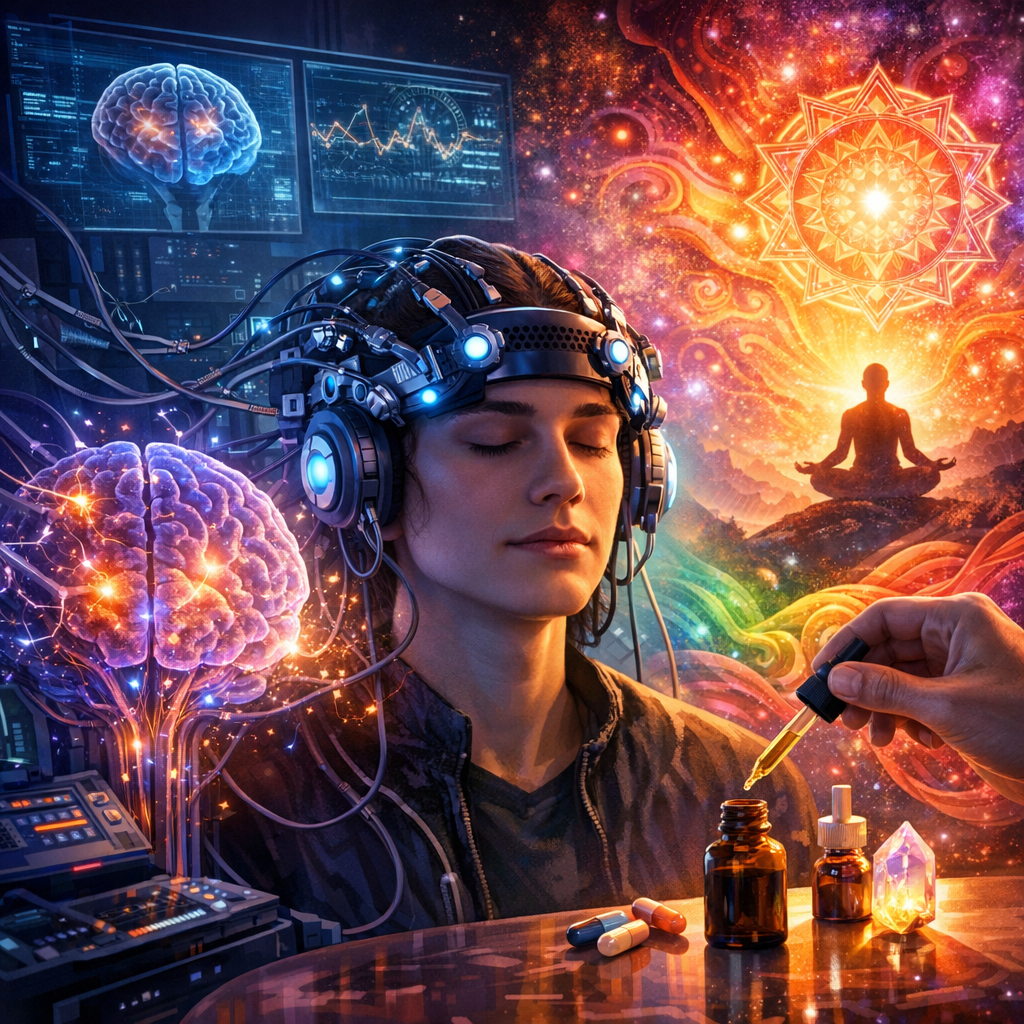
Throughout history, **psychedelics** like **psilocybin** have been revered for their ability to expand consciousness and catalyze profound personal transformations. With renewed scientific interest, these substances have taken center stage as powerful therapeutic agents, particularly for mental health disorders like **PTSD**, **depression**, and **anxiety**. However, optimizing their therapeutic benefits remains a dynamic challenge. Enter emerging **brain interface technologies**—groundbreaking tools that promise to enhance psychedelic therapy and integration in ways previously unimagined.
**Brain interface technologies** encompass a range of devices that enable direct communication between the brain and external systems. At the forefront are **brain-computer interfaces (BCIs)** which have shown potential in rehabilitating stroke victims and aiding those with mobility impairments. The natural evolution of these technologies sees them venturing into the domain of mental health, where they could transform the way we utilize psychedelics for therapeutic purposes.
One of the primary hurdles in **psychedelic therapy** is the subjectivity of the experience. Each individual’s journey is unique, making it difficult to predict or measure therapeutic outcomes. Brain interface technologies can bridge this gap by providing real-time data on the brain’s activity, offering insights into the neural dynamics at play during a psychedelic experience. This information could inform therapists about the optimal course of treatment and **personalization**, ensuring that each session is as effective as possible.
Moreover, **brain interfaces** could play a pivotal role in integrating the psychedelic experience post-therapy. A significant challenge in psychedelic therapy is translating the insights and changes experienced into long-term behavioral changes. By continuously monitoring brain activity, these technologies could assist in identifying neural patterns associated with positive change, thereby facilitating the assimilation of psychedelic experiences into everyday life.
**Features**
A groundbreaking study conducted by researchers at **Imperial College London** exemplifies the potential of combining psychedelic therapy with brain interface technology. The study leveraged magnetoencephalography (MEG), a non-invasive neuroimaging technique, to monitor brain activity in subjects under the influence of **psilocybin**. The findings revealed substantial changes in brain connectivity and synchronization, providing a clearer picture of how psychedelics modulate conscious experience.
While MEG has paved the way, the integration with BCIs offers even more promising avenues. BCIs can not only record neuronal data but also modulate brain activity. For instance, **transcranial magnetic stimulation (TMS)**, a BCI technology, can influence neural circuits non-invasively. When paired with psychedelics, TMS might amplify desired effects while minimizing adverse ones, tailoring the therapy to individual needs.
Another fascinating application arises from closed-loop BCIs, which offer the possibility of real-time adaptation of therapeutic protocols based on immediate brain responses. Such systems can identify in-the-moment psychological states, allowing therapists to adjust the therapeutic approach accordingly. This ongoing feedback loop could prevent overwhelming experiences, optimizing the therapeutic potential of **psychedelics**.
Moreover, ongoing research from institutions such as the **Multidisciplinary Association for Psychedelic Studies (MAPS)** and **Johns Hopkins University** [link to Johns Hopkins](https://www.hopkinsmedicine.org) is uncovering the interaction between **neural plasticity** and psychedelics. Brain interface technologies can enhance these findings by identifying neural changes over time, providing clarity on the longevity of psychedelically-induced insights.
**Conclusion**
The convergence of brain interface technologies and **psychedelic therapy** heralds a new era of mental health treatment, expanding our understanding of consciousness while promising highly individualized care. As technology advances, so does our capacity to unlock the mysteries of the mind, offering hope and healing through scientifically-grounded, innovative methods. A future where mental health treatment is precise, personalized, and profoundly transformative is within reach, with psychedelics and brain interfaces leading the charge.
**Concise Summary**
Emerging brain interface technologies, such as brain-computer interfaces (BCIs), are poised to revolutionize psychedelic therapy by offering precise, real-time insights into the brain’s activity during psychedelic experiences. These technologies can enhance personalization, ensure effective post-therapy integration, and facilitate long-term behavioral changes. Studies, like those from Imperial College London, demonstrated changes in brain connectivity with psychedelics use, highlighting a convergence that could transform mental health treatments for conditions like PTSD, depression, and anxiety. The collaboration of BCIs and psychedelics is paving the way for a future of individualized, revolutionary mental health care.
**Reference Hyperlinks**
– [link to study](https://www.imperial.ac.uk)
– [link to MAPS](https://maps.org)
– [link to Johns Hopkins](https://www.hopkinsmedicine.org)

Dominic E. is a passionate filmmaker navigating the exciting intersection of art and science. By day, he delves into the complexities of the human body as a full-time medical writer, meticulously translating intricate medical concepts into accessible and engaging narratives. By night, he explores the boundless realm of cinematic storytelling, crafting narratives that evoke emotion and challenge perspectives. Film Student and Full-time Medical Writer for ContentVendor.com