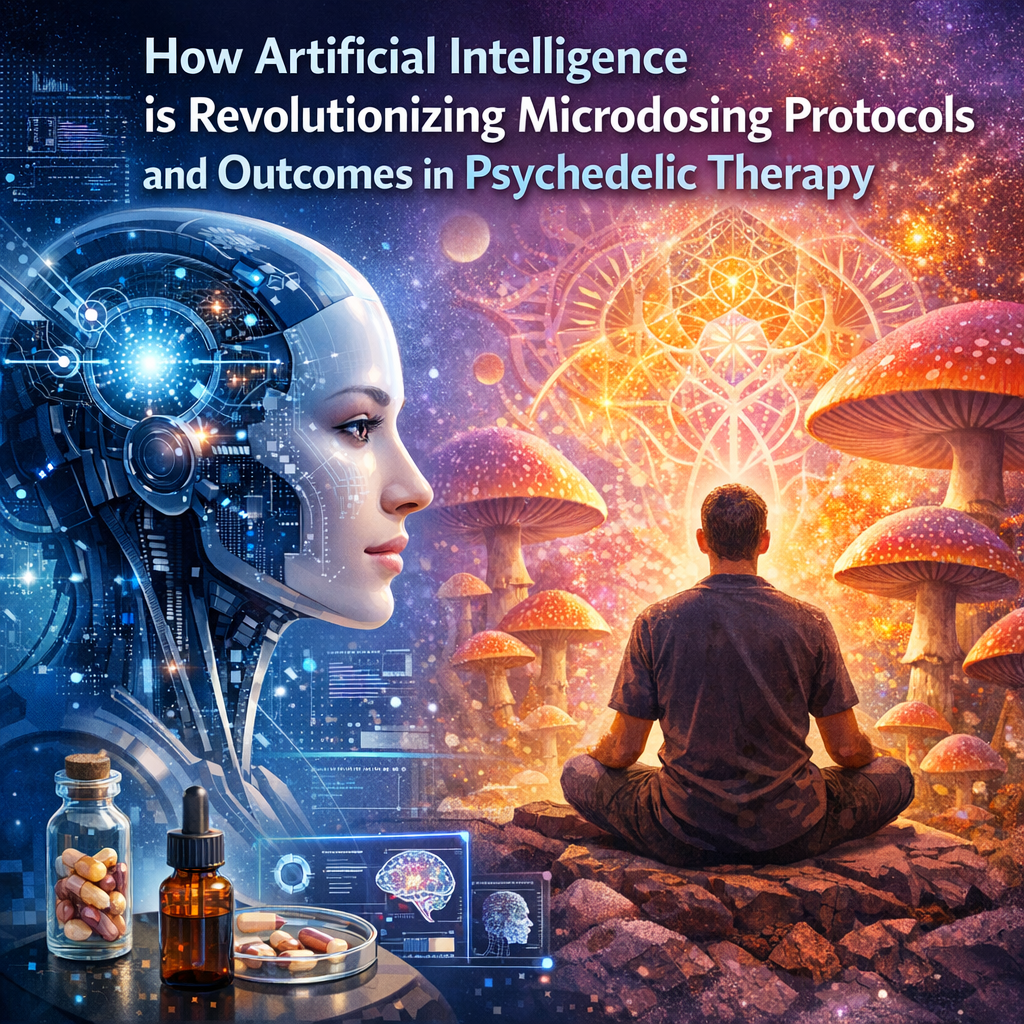
How Artificial Intelligence is Revolutionizing Microdosing Protocols and Outcomes in Psychedelic Therapy
In recent years, the resurgence of interest in **psychedelic therapy**, particularly regarding the natural compound **psilocybin**, has captivated the medical community and the public. Psychedelics, especially psilocybin mushrooms, have shown promising therapeutic potential for various **mental health conditions**, including depression, anxiety, and PTSD. An intriguing aspect of this trend is **microdosing**—consuming sub-perceptual dosages to enhance cognitive function, emotional balance, and creativity without hallucinogenic effects.
As the field grows, there’s a pressing need to refine microdosing protocols to maximize therapeutic outcomes while minimizing risks. Here, **Artificial Intelligence (AI)** emerges as a transformative tool, revolutionizing the landscape of psychedelic therapy. AI’s ability to analyze vast datasets and identify subtle patterns makes it invaluable for understanding individual variations in response to microdosing regimens.
**AI technologies** can sift through biological, psychological, and environmental data to tailor microdosing schedules personalized for individual patients. This is crucial since individual responses to psychedelics vary greatly based on factors like genetic makeup, lifestyle, and pre-existing medical conditions. With AI, healthcare practitioners can develop nuanced protocols, leading to more effective and safer psychedelic therapies.
Moreover, AI’s predictive analytics can anticipate possible adverse reactions, ensuring patient safety. By integrating data from previous clinical studies with real-time patient feedback, AI models can forecast how different individuals might respond to specific microdoses over time, allowing for proactive adjustments.
As we delve deeper into exploring how AI-powered insights are transforming microdosing protocols, it’s critical to highlight professional and medical studies underscoring this innovation. The integration of AI in this field signifies a cutting-edge advancement in psychedelic research and a significant step forward in personalized medicine.
Features: Scientific Innovations in AI-Assisted Microdosing
The application of AI in psychedelic therapy is supported by several studies and clinical trials demonstrating its efficacy. A pivotal study published in **Nature Medicine** explored how AI could be leveraged to optimize dosing strategies for psychiatric medications, paving the way for its application in psychedelics ([Nature Medicine](https://www.nature.com/articles/s41591-021-01430-2)). The research showed how AI algorithms could predict optimal dosing regimens by analyzing patient data, crucial for safely managing the nuanced effects of psychedelics.
Further reinforcing this, a study by the **University of California, Berkeley**, utilized **machine learning**—a branch of AI—to analyze survey data from psychedelic users worldwide. The findings illustrated how AI could scrutinize user-reported outcomes and side-effects, leading to more reliable microdosing guidelines ([UC Berkeley Study](https://news.berkeley.edu/2021/01/26/probing-the-promises-of-psychedelic-microdosing/)). This milestone represents harnessing real-world evidence through AI to refine therapeutic practices.
In addition to optimized dosing strategies, AI platforms are developed to track the psychophysiological markers associated with psychedelic use—such as changes in mood, cognition, and neural activity. Tools like Mycelia, an AI-driven application, are used by researchers to monitor and interpret these parameters, facilitating personalized feedback loops for individual users ([Mycelia](https://www.mycelia.com)). These insights are crucial in continuously adapting microdosing protocols to better meet individual therapeutic needs.
Lastly, **AI’s role in patient monitoring** through apps and wearables is significant. With the rise of digital health platforms, AI algorithms can continuously collect and analyze data on users’ physiological and psychological states. This constant stream of real-time data enables clinicians to make informed adjustments to microdosing protocols, enhancing treatment efficacy and safety.
Conclusion
The infusion of AI into psychedelic therapy signifies a transformative shift towards more precise and personalized treatment modalities. By tailoring microdosing protocols through sophisticated data analysis, AI optimizes therapeutic outcomes and elevates the safety and efficacy of psychedelic interventions. As research progresses, leveraging AI in psychedelic therapy will continue to unlock new insights, supporting the potential of psychotropic medicines in modern healthcare.
For more information on AI’s impact on psychedelic therapy, explore these resources:
– [Nature Medicine](https://www.nature.com/articles/s41591-021-01430-2)
– [UC Berkeley Study](https://news.berkeley.edu/2021/01/26/probing-the-promises-of-psychedelic-microdosing/)
– [Mycelia](https://www.mycelia.com)
**Concise Summary**: The integration of AI into psychedelic microdosing protocols marks a significant advancement, enhancing the personalization and safety of therapies involving substances like psilocybin. AI’s ability to analyze diverse data allows for optimized and individualized dosing strategies and predicts potential adverse reactions, improving patient outcomes. Supported by studies from institutions like **Nature Medicine** and **UC Berkeley**, AI’s role in monitoring and refining psychedelic therapy is paving the way for its broader application in modern healthcare.

Dominic E. is a passionate filmmaker navigating the exciting intersection of art and science. By day, he delves into the complexities of the human body as a full-time medical writer, meticulously translating intricate medical concepts into accessible and engaging narratives. By night, he explores the boundless realm of cinematic storytelling, crafting narratives that evoke emotion and challenge perspectives. Film Student and Full-time Medical Writer for ContentVendor.com