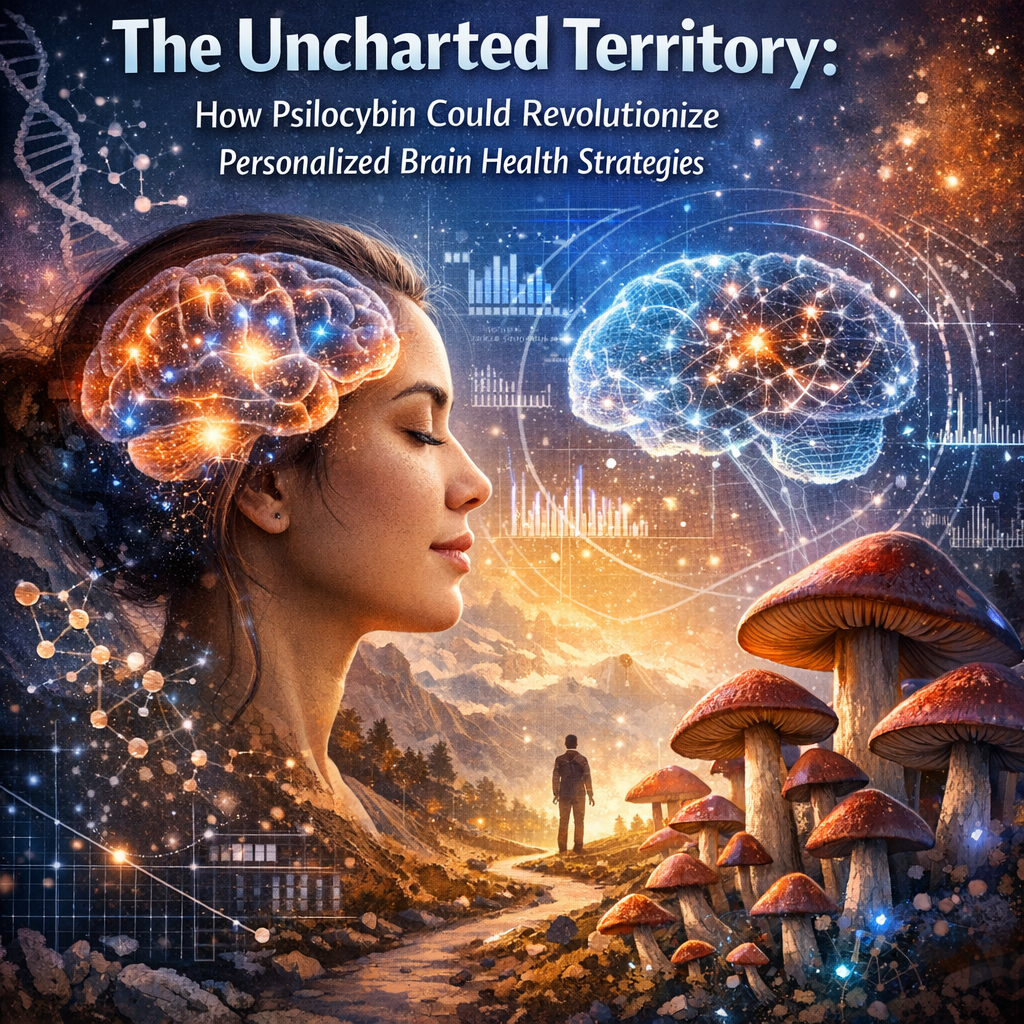
The Uncharted Territory: How Psilocybin Could Revolutionize Personalized Brain Health Strategies
**In recent years,** ***psilocybin***—a naturally occurring psychedelic compound found in certain mushrooms—has garnered significant attention from both the scientific community and the public for its potential mental health benefits. ***Historically, psilocybin*** has been used in various cultures for spiritual ceremonies and healing practices. However, the modern medical community is beginning to explore its potential as a highly personalized treatment for a variety of brain health issues. With the rise of ***precision medicine,*** characterized by treatments tailored to individual genetic, environmental, and lifestyle factors, ***psilocybin*** stands at the precipice of revolutionizing how we approach personalized mental health strategies.
**The promising effects of psilocybin** are rooted in its ability to modulate serotonin receptors in the brain, primarily the 5-HT2A receptor. This interaction appears to foster ***neural plasticity*** and, consequently, enhances the brain’s ability to reorganize itself in response to therapy, environment, or trauma. Due to its capacity to profoundly alter consciousness, perceptions, and emotions, ***psilocybin*** is being studied for its potential to treat a range of mental health disorders that are traditionally resistant to conventional treatments, such as depression, anxiety, PTSD, and addiction.
**Research indicates** that ***psilocybin*** can significantly reduce symptoms of severe depression and anxiety by disrupting negative thought patterns and allowing individuals to experience radical shifts in perspective. A ***psilocybin-induced experience*** could aid patients in gaining a more objective view of their psychological conditions, thereby enhancing the efficacy of cognitive behavioral therapies. This unprecedented approach to mental health treatment suggests a more harmonious integration between ***psychedelic-assisted psychotherapy*** and conventional mental health strategies.
***Moreover, psilocybin***’s potential in facilitating access to altered states of consciousness provides a unique framework for personal growth and healing. Its capacity to dissolve the ego and promote a sense of unity and connectedness can be pivotal in healing interpersonal trauma and improving emotional resilience. As researchers continue to study ***psilocybin***’s effects, it is becoming increasingly clear that these mushrooms could potentially offer significant advantages over traditional pharmaceutical interventions—particularly for conditions that are deeply rooted in one’s psychological, emotional, and spiritual well-being.
Features: Professional and Medical Studies
**A growing body of clinical research** supports the potential of ***psilocybin*** as an effective treatment for various mental health conditions. A landmark study conducted by researchers at ***Johns Hopkins University*** found that ***psilocybin-assisted therapy*** resulted in significant reductions in depressive symptoms. The study, published in ***JAMA Psychiatry***, highlighted that these therapeutic benefits persisted for months post-treatment ([JAMA Psychiatry](https://jamanetwork.com/journals/jamapsychiatry/fullarticle/2772630)). This study has paved the way for ***psilocybin***’s resurgence as a legitimate topic of scientific inquiry and potential clinical application.
Parallel research at ***Imperial College London*** revealed that just two doses of ***psilocybin***, alongside supportive therapy, significantly reduced symptoms in patients with treatment-resistant depression. The study’s findings, published in ***The New England Journal of Medicine***, underscore ***psilocybin***’s ability to ‘reset’ network connectivity patterns in the brain, thereby alleviating symptoms of depression long-term ([The New England Journal of Medicine](https://www.nejm.org/doi/full/10.1056/NEJMoa2032994)).
**Furthermore, research from New York University** and ***University of California Los Angeles*** demonstrated ***psilocybin***’s efficacy in reducing anxiety and depression in patients with life-threatening cancer diagnoses. This study emphasized the compound’s potential for enhancing psychological and spiritual well-being, facilitating emotional acceptance, and reducing death-related anxiety ([NYU Langone Health](https://nyulangone.org/news/psilocybin-treatment-anxiety-depression-patients-life-threatening-cancer-randomized-clinical-trial)).
**Despite the promising results**, researchers warn that self-medication with ***psilocybin*** is not advisable due to its intense psychoactive effects and the importance of controlling set, setting, and dosage in clinical environments. Instead, ongoing clinical trials under rigorous and monitored conditions are critical for uncovering therapeutic potentials and minimizing adverse effects.
Conclusion
**As scientific inquiry into psychedelics progresses**, ***psilocybin*** stands out as a promising candidate for redefining personalized mental health strategies. While more research is necessary to unlock its full potential and ensure safety and efficacy comprehensively, the exploration of ***psilocybin***’s effects on brain health is a vital endeavor. Its potential integration into personalized medicine strategies not only offers hope for those with treatment-resistant conditions but also sets the stage for a transformative paradigm shift in how we understand and treat mental health challenges.
**References**
1. “[Effects of Psilocybin-Assisted Therapy on Major Depressive Disorder.](https://jamanetwork.com/journals/jamapsychiatry/fullarticle/2772630)” ***JAMA Psychiatry.***
2. “[Psilocybin for Treatment-Resistant Depression: fMRI-Measured Brain Changes.](https://www.nejm.org/doi/full/10.1056/NEJMoa2032994)” ***The New England Journal of Medicine.***
3. “[Psilocybin Treatment for Anxiety and Depression in Patients With Life-Threatening Cancer: A Randomized Clinical Trial.](https://nyulangone.org/news/psilocybin-treatment-anxiety-depression-patients-life-threatening-cancer-randomized-clinical-trial)” ***NYU Langone Health.***
—
**Concise Summary:**
Psilocybin, a compound in certain mushrooms, is gaining scientific interest for mental health treatment, particularly depression, anxiety, PTSD, and addiction, by interacting with serotonin receptors to promote neural plasticity. Significant studies from Johns Hopkins, Imperial College London, and NYU demonstrate its potential in therapy-resistant depression and anxiety reduction, often offering benefits surpassing traditional medicines. Research advocates careful clinical application due to potent psychoactive effects, underscoring psilocybin’s promise in reshaping personalized mental health care approaches and its potential paradigm shift in treatment methodologies.

Dominic E. is a passionate filmmaker navigating the exciting intersection of art and science. By day, he delves into the complexities of the human body as a full-time medical writer, meticulously translating intricate medical concepts into accessible and engaging narratives. By night, he explores the boundless realm of cinematic storytelling, crafting narratives that evoke emotion and challenge perspectives. Film Student and Full-time Medical Writer for ContentVendor.com