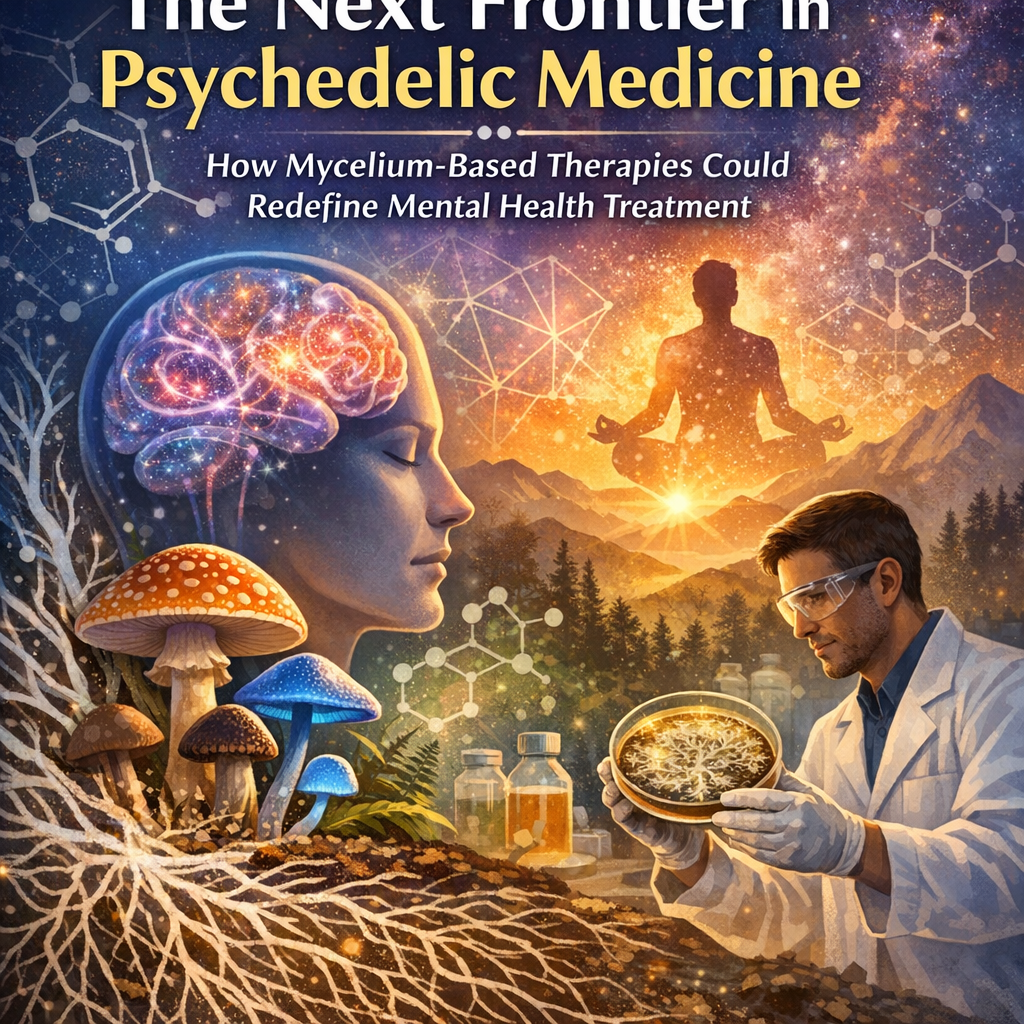
The Next Frontier in Psychedelic Medicine: How Mycelium-Based Therapies Could Redefine Mental Health Treatment
In recent years, the use of **psychedelic substances** in **mental health treatment** has transitioned from countercultural roots to the realm of serious scientific inquiry and medical application. Among the most promising candidates in this field is **psilocybin**, a compound naturally found in certain types of mushrooms. However, the potential of fungi extends beyond just psilocybin. **Mycelium**, the intricate root system of mushrooms, may hold the key to unlocking groundbreaking therapies for mental health disorders.
The rising interest in **mycelium-based therapies** isn’t solely due to the effects of psilocybin. Mycelium contains a diverse range of **bioactive compounds**, each with its own potential therapeutic benefits. These include polysaccharides, glycoproteins, and triterpenoids, which have shown promise in boosting immune function, reducing inflammation, and exhibiting neuroprotective properties. This added layer of complexity has spurred a wealth of research into the potential of mycelium beyond its psychoactive components.
Within the realm of mental health, the treatment of disorders such as **depression**, **anxiety**, and **PTSD** presents an urgent yet unmet need. Traditional pharmaceuticals often come with a laundry list of side effects and don’t work for everyone. Enter mycelium-based therapies, which promise not only fewer side effects but also a holistic approach to mental well-being. These therapies could serve as a complement or even an alternative to existing mental health treatments, tapping into the body’s natural systems to promote healing and restoration.
The landscape of mental health treatment is changing, with more people seeking natural and holistic options. Psilocybin therapy, when used in controlled and supportive settings, has already shown substantial promise in clinical trials. For example, a 2020 study published in [JAMA Psychiatry](https://jamanetwork.com/journals/jamapsychiatry/fullarticle/2772630) found that psilocybin was effective in reducing symptoms of major depressive disorder, with effects lasting up to four weeks after treatment. Coupled with the emerging research on mycelium’s diverse pharmacological properties, the potential to redefine mental health treatment is immense. This burgeoning area of study offers the possibility of more personalized, efficient, and side-effect-free treatments in the near future.
Features of Mycelium-Based Therapies
The promise of mycelium-based therapies in mental health is supported by a growing body of scientific research. Despite the challenges of dismantling longstanding stigmas and navigating regulatory bureaucracies, researchers have made significant strides in evaluating the therapeutic potential of mycelium.
A noteworthy study published in the journal [Frontiers in Pharmacology](https://www.frontiersin.org/articles/10.3389/fphar.2020.591704/full) explored the anti-inflammatory and immunomodulatory effects of polysaccharides derived from mushroom mycelium. These compounds have been shown to influence the brain-gut axis positively, directly impacting mental health by reducing **neuroinflammation**—a crucial factor in disorders like depression and anxiety.
In another pioneering study available in [Scientific Reports](https://www.nature.com/articles/s41598-019-46301-y), mycelium’s neuroprotective properties were highlighted. The research found that compounds in mycelium could promote **neurogenesis**, the growth of new neurons, which is essential for cognitive function and mood regulation. This capability underscores mycelium’s potential in addressing neurodegenerative conditions, as well as providing supportive treatment for various mental health disorders.
Furthermore, clinical trials focusing on psilocybin—a psychoactive mycelium component—have consistently demonstrated its efficacy in mental health treatment. One such pivotal study published in [The New England Journal of Medicine](https://www.nejm.org/doi/10.1056/NEJMoa2032994) revealed that psilocybin produced comparable results to antidepressant medications in treating major depressive disorder, with fewer side effects noted. The trial emphasized the importance of mycelium’s psychoactive properties in therapeutic settings, encouraging deeper research into other non-psychoactive compounds in mycelium.
The broader use of mycelium in a therapeutic context extends beyond psychoactivity to encompass a holistic approach to health. The bioactive components of mycelium indicate their potential in augmenting traditional methods, providing a more rounded form of healthcare. As ongoing trials and studies continue to unfold, the understanding of mycelium’s full spectrum of medicinal properties expands, bringing new hope for alternative mental health treatments and opening the doors to next-generation psychedelic medicine.
Conclusion
The burgeoning research into mycelium-based therapies stands at the brink of revolutionizing mental health treatment. By harnessing the full potential of mycelium’s bioactive compounds—alongside its psychoactive properties—scientists and healthcare practitioners are poised to offer more effective and holistic approaches to combating mental health disorders. As our understanding deepens, so too does the hope for a world where mental health is addressed with the complexity and care it deserves.
Summary
**Mycelium-based therapies** represent a promising frontier in **mental health treatment**, offering potential benefits beyond psilocybin. These therapies include diverse bioactive compounds that could enhance **immune function**, reduce inflammation, and offer **neuroprotective** properties. Noted for fewer side effects, they provide a holistic alternative to traditional drugs for conditions like **depression**, **anxiety**, and **PTSD**. As **clinical trials** and studies continue, mycelium therapies may revolutionize **psychedelic medicine**, presenting efficient and personalized treatment options for **mental health disorders**.

Dominic E. is a passionate filmmaker navigating the exciting intersection of art and science. By day, he delves into the complexities of the human body as a full-time medical writer, meticulously translating intricate medical concepts into accessible and engaging narratives. By night, he explores the boundless realm of cinematic storytelling, crafting narratives that evoke emotion and challenge perspectives. Film Student and Full-time Medical Writer for ContentVendor.com