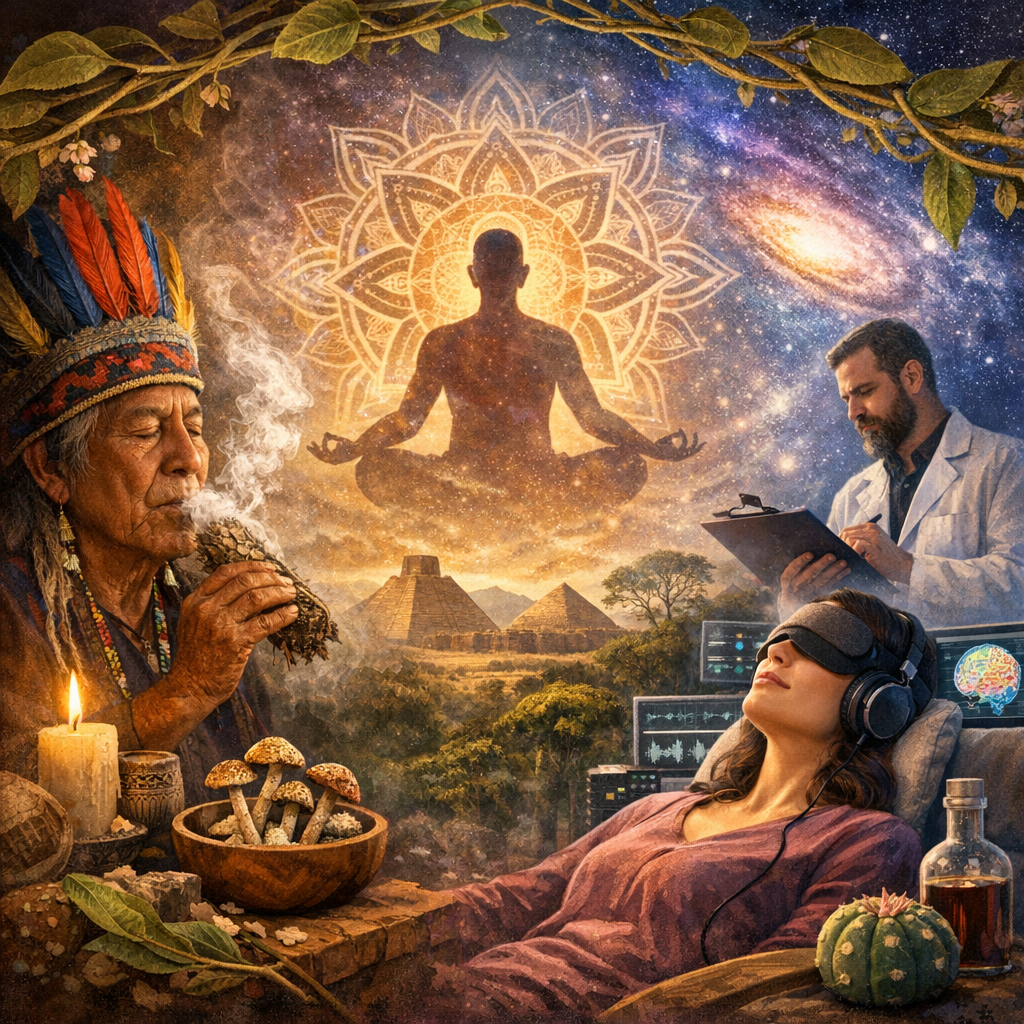
The Role of Ancient Indigenous Practices in Modern Psychedelic Therapy and Consciousness Research
Introduction
The resurgence of interest in **psychedelic substances** for therapeutic purposes marks a turning point in modern medicine and consciousness studies. Central to this development is the role of **ancient indigenous practices** that have utilized these substances for thousands of years. Long before the term “psychedelic therapy” was coined, indigenous communities from the **Mazatec in Mexico** to the **Shipibo in the Amazon** employed compounds from mushrooms and other natural sources for **healing** and **spiritual purposes**. These age-old traditions serve as vital blueprints in today’s scientific and therapeutic explorations, bridging past wisdom with future potential in **mental health treatment** and **consciousness research**.
**Psilocybin mushrooms** and other **psychedelic plants** have been integral to spiritual ceremonies, rites of passage, and healing rituals among indigenous groups. Their use was guided by a profound understanding of the natural world and humanity’s place within it, often accompanied by strict ceremonial contexts that ensured both safety and efficacy. These practices were characterized by structured settings, respected community leaders or shamans overseeing the experience, and culturally embedded intentions of **healing** or **spiritual growth**.
Today, as mental health challenges such as **depression**, **PTSD**, and **anxiety** rise, there is renewed scientific exploration into these ancient practices’ potential to inform and shape modern approaches. **Psychedelic-assisted therapy** harnesses the transformative experiences induced by these substances, aiming to unravel deep-seated trauma and promote psychological and emotional healing. At the heart of this revival is an acknowledgment of indigenous knowledge systems that inherently grasped how these substances could alter human consciousness, providing insights and healing previously deemed unreachable.
The importance of honoring these traditions cannot be overstated. Researchers and practitioners emphasize the need to collaborate with indigenous communities to ensure that modern adaptations do not exploit ancient wisdom but rather integrate it respectfully. By doing so, there is a dual benefit: advancing therapeutic technologies while safeguarding cultural heritage that offers a profound understanding of human consciousness and potential.
Features
The intersection of ancient indigenous practices with contemporary **psychedelic therapy** is supported by an increasing number of professional and medical studies. One notable study, published in the journal [*Psychopharmacology*](https://doi.org/10.1007/s00213-014-3749-0), investigates the therapeutic potential of **psilocybin for depression** and anxiety, highlighting the importance of **set and setting**, a concept long emphasized by indigenous practices. This concept, derived from traditional use among indigenous practitioners, ensures that the environment and psychological mindset are conducive to positive and transformative experiences.
Furthermore, the *Journal of Psychopharmacology* features research on the use of **ayahuasca**, a traditional psychoactive brew originating from the Amazon. A clinical trial conducted by researchers at the Federal University of Rio Grande do Norte in Brazil demonstrated significant reductions in depression and anxiety symptoms in participants after multiple ayahuasca sessions ([*Journal of Psychopharmacology*](https://doi.org/10.1177/0269881116662639)). These findings parallel the traditional understanding of ayahuasca as a purgative and spiritual cleanser, offering therapeutic insights which are being integrated into Western mental health practices.
In another pivotal study, published in [*Frontiers in Pharmacology*](https://doi.org/10.3389/fphar.2018.00003), researchers explore how indigenous healing methods involving psychedelics are both psychotherapeutic and paradigmatic, shifting one’s worldview and providing lasting change. This research aligns with the Mazatec people’s use of **psilocybin mushrooms** for holistic healing, encompassing the physical body, mind, and spirit.
As interest in psychedelic therapies grows, the healthcare and research communities increasingly acknowledge the insights provided by the guardians of these traditions. The indigenous focus on community, ceremony, and spirituality is seen as essential to maximizing therapeutic benefits while minimizing risks. Notably, collaborative research ventures are being established to ensure these practices are adapted with integrity and cultural sensitivity, providing a robust framework honoring their origin.
Conclusion
The integration of ancient indigenous practices in modern psychedelic therapy and consciousness research holds incredible promise for advancing mental health treatment and broadening our understanding of human consciousness. By respecting and incorporating time-honored traditions, modern science can ensure a holistic and ethical approach that benefits both the field of psychology and the communities whose wisdom has guided these practices for millennia. As we explore the therapeutic potential of psychedelics, honoring these ancient practices is key to unlocking their full potential.
**Summary:** The resurgence of psychedelic therapy highlights the importance of ancient indigenous practices, which have long utilized substances like psilocybin and ayahuasca for healing. These traditions, characterized by structured settings and cultural intentions, inform modern mental health approaches. Renewed scientific interest acknowledges how indigenous systems understood these substances’ impact on consciousness. Recent studies demonstrate their potential for treating depression and anxiety, emphasizing community and ceremony’s role in therapy. Safeguarding cultural heritage while advancing therapy ensures an ethical approach, with collaborations enhancing both scientific understanding and honoring indigenous wisdom.

Dominic E. is a passionate filmmaker navigating the exciting intersection of art and science. By day, he delves into the complexities of the human body as a full-time medical writer, meticulously translating intricate medical concepts into accessible and engaging narratives. By night, he explores the boundless realm of cinematic storytelling, crafting narratives that evoke emotion and challenge perspectives. Film Student and Full-time Medical Writer for ContentVendor.com