The Next Frontier: How Psychedelic Virtual Reality Could Revolutionize Mental Health Treatments
In recent years, the world of **mental health treatment** has experienced a surge of **innovation**, with **researchers** and **clinicians** exploring novel modalities to assist patients in navigating their psychological challenges. Among these is the intersecting development of **psychedelic therapy** and **virtual reality (VR) technology**—two fascinating fields that hold transformative potential. Combining **psychedelics** with **VR** could usher in a new era of mental health treatment, offering unique and immersive therapeutic experiences that were previously unimaginable.
**Psychedelic therapy**, which involves the supervised use of substances like **psilocybin** (the active compound in magic mushrooms), has shown promising results in treating a variety of mental health conditions, including **depression**, **anxiety**, **PTSD**, and **addiction**. These compounds work by altering neural connectivity, allowing for profound changes in perception, mood, and cognition. This temporary rewiring of the brain provides individuals the opportunity to process emotions and experiences in new ways, often leading to significant therapeutic breakthroughs.
On the other hand, **virtual reality technology** offers a different but complementary approach to altering consciousness. By immersing users in a fully simulated environment, VR can create experiences that are rich, diverse, and customizable. The technology has already begun to demonstrate its potential in mental health care, assisting with exposure therapy for phobias, as well as in teaching mindfulness and stress reduction techniques.
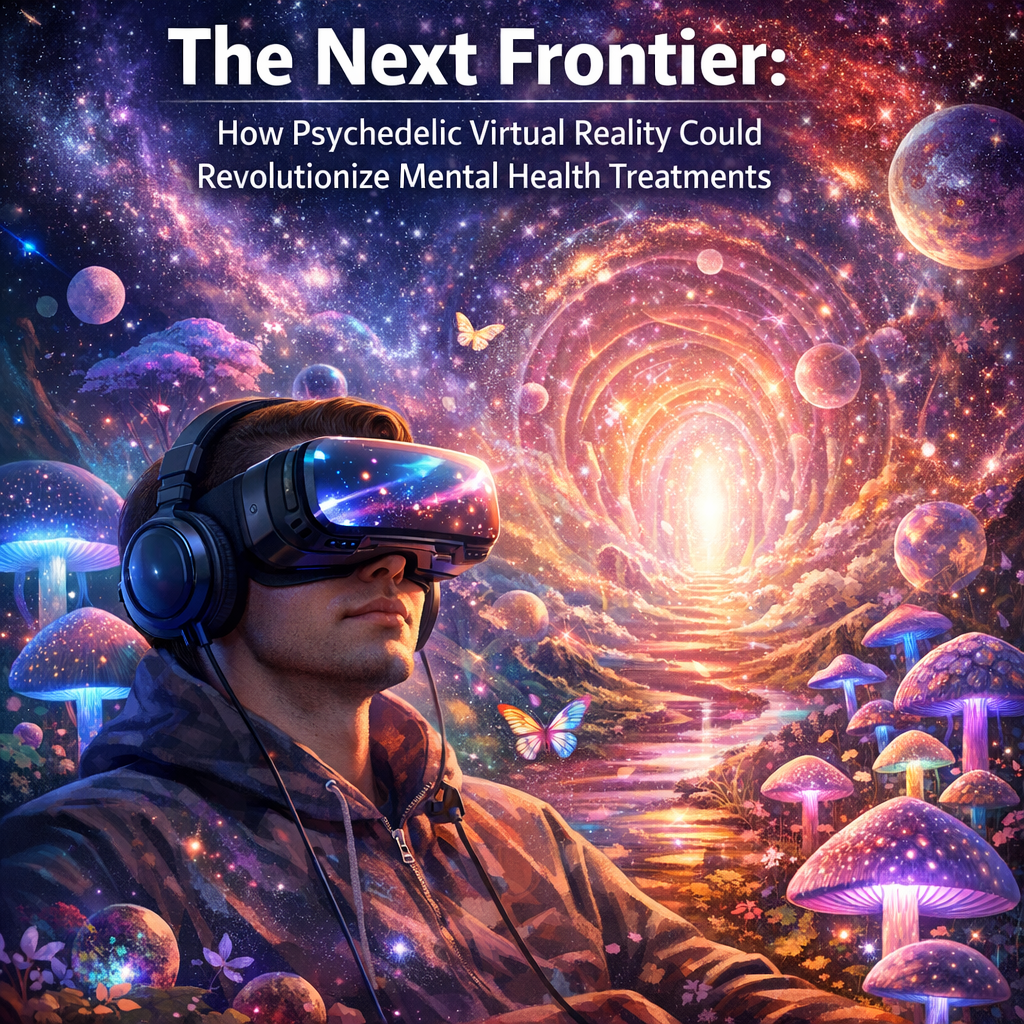
The fusion of **psychedelics** and **VR** creates an intriguing “double whammy” effect for mental health treatment. The evocative, often euphoric experiences produced by psychedelics can be further enhanced by virtual environments designed to promote healing and introspection. Patients can be guided through landscapes of ethereal beauty or calming tranquility, allowing them to confront and process their fears, traumas, or insecurities in a controlled and supportive setting.
This hybrid approach could revolutionize mental health treatments by making therapy more accessible, customizable, and impactful. With current treatments like medication and talk therapy often taking weeks or months to show progress, the rapid and potentially transformative effects of **psychedelic-assisted VR therapy** present a compelling alternative.
Features of Psychedelic Virtual Reality in Mental Health Treatments
Research exploring the combination of **psychedelics** and **virtual reality** to enhance therapeutic outcomes is still in its nascent stages, but early studies paint an optimistic picture. For instance, a study published in the journal Frontiers in Psychology discussed the therapeutic potential of immersive technologies combined with psilocybin. Researchers suggested that **VR** could enhance the visual and emotional aspects of a psychedelic experience, potentially leading to deeper emotional and cognitive shifts. By offering rich, immersive scenarios tailored to individual therapeutic goals, VR could amplify the introspective benefits that **psychedelics** promote.
Several clinical trials have also highlighted the benefits of **psychedelics** for mental health. A study conducted by Johns Hopkins University found significant reductions in depression and anxiety in cancer patients using psilocybin therapy. Similarly, research from Imperial College London reported that psilocybin can “reset” brain activity in patients with treatment-resistant depression, markedly improving symptoms. Integrating these insights with VR technology may expedite and intensify such outcomes.
The application of **VR** in exposure therapy, especially for PTSD, also provides a framework for its use in conjunction with **psychedelics**. A study published in Cyberpsychology, Behavior, and Social Networking demonstrated that VR exposure therapy can result in significant reductions in PTSD symptoms. By integrating a psychedelic component into this scenario, patients may experience enhanced emotional release and insight, potentially leading to sustained psychological healing.
Moreover, **virtual reality** can provide a controlled environment for these experiences, addressing concerns about safety and setting that come with psychedelic sessions. This control allows therapists to adjust the environment according to the patient’s progress, ensuring a tailored fit to individual needs. This fusion creates an expansive field for exploration, offering the potential to revolutionize how mental health practitioners approach treatment.
Conclusion
The integration of **psychedelic therapy** and **virtual reality** represents a bold, innovative step forward in mental health treatment. By merging the profound introspective effects of **psychedelics** with the immersive possibilities of **VR**, we stand on the brink of a new frontier in psychological healing. As research continues to unfold, the hope is that this approach will unlock new levels of resilience and well-being for individuals around the world, providing faster, more effective relief for those who need it most.
Concise Summary
Recent advances in mental health treatment explore the confluence of **psychedelic therapy** and **virtual reality (VR) technology**. **Psychedelic therapy** uses substances like **psilocybin** to rewire neural connections and offers promising outcomes for conditions such as **depression** and **PTSD**. When paired with **VR**, which provides immersive, customizable experiences, the potential for therapeutic impact increases greatly. Studies indicate that this combination can enhance emotional and cognitive shifts, offering rapid and profound relief. As research continues, this innovative hybrid approach aims to offer more accessible and effective mental health solutions.

Dominic E. is a passionate filmmaker navigating the exciting intersection of art and science. By day, he delves into the complexities of the human body as a full-time medical writer, meticulously translating intricate medical concepts into accessible and engaging narratives. By night, he explores the boundless realm of cinematic storytelling, crafting narratives that evoke emotion and challenge perspectives. Film Student and Full-time Medical Writer for ContentVendor.com