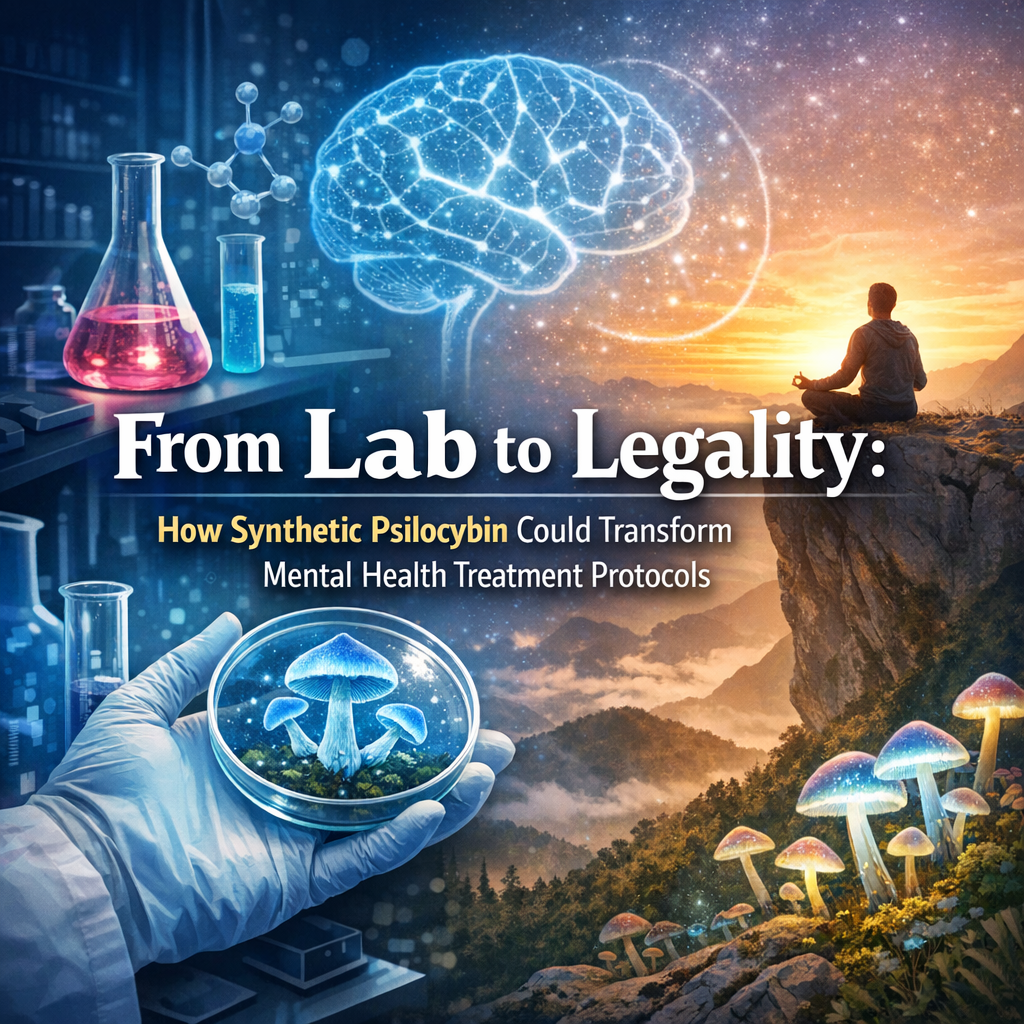
From Lab to Legality: How Synthetic Psilocybin Could Transform Mental Health Treatment Protocols
Introduction
In recent years, the burgeoning interest in **psychedelic medicine** has reignited discussions around the potential of compounds such as **psilocybin** to revolutionize **mental health treatment**. Once confined to the countercultural fringes, psilocybin is now making its way into **mainstream medicine**, supported by a growing body of scientific research and advocacy for its legalization. From treating **depression** to addressing **PTSD** and **anxiety**, the therapeutic potential of this psychedelic compound calls into question existing treatment protocols that heavily rely on pharmaceuticals like SSRIs and benzodiazepines. One particularly exciting development in this arena is the shift from naturally derived to **synthetic psilocybin**.
Synthetic psilocybin, which mimics the effects of the compound found in magic mushrooms, offers a more consistent and controllable experience, alleviating the variability associated with natural sources. The transition from lab to legality not only underscores a significant scientific milestone but also heralds a new chapter in mental health treatments. This shift holds promise not only for improved efficacy but also for broader acceptance and integration into medical practice.
The importance of synthetic psilocybin is amplified by the substantial societal burden of mental health disorders. According to the **World Health Organization**, depression affects more than 264 million people globally and is a leading contributor to the global burden of disease. Existing treatments, though beneficial for many, often come with significant side effects or fail to provide relief. This is where synthetic psilocybin steps in, with its potential to address **treatment-resistant psychiatric conditions** where traditional therapies falter.
The growing momentum in research and development is being matched by evolving legal frameworks, particularly in countries like the United States where states such as Oregon have decriminalized the use of psilocybin for therapeutic purposes. The **U.S. Food and Drug Administration**’s designation of psilocybin as a “breakthrough therapy” for depression is a testament to its potential and a catalyst for ongoing research.
Features
The accelerated pace of research into psilocybin’s therapeutic potential is yielding promising results. Various studies underscore its efficacy in treating mental health conditions, setting the groundwork for synthetic psilocybin’s role in transforming treatment protocols. One pivotal study by Johns Hopkins University, [published in JAMA Psychiatry](https://jamanetwork.com/journals/jamapsychiatry/fullarticle/2772630), found that psilocybin produced substantial antidepressant effects in patients with major depressive disorder. In this double-blind, randomized clinical trial, 24 participants received two doses of synthetic psilocybin, and researchers noted rapid and significant reductions in depressive symptoms, sustained over a follow-up period of four weeks.
Another significant study conducted by **Imperial College London**, [published in the New England Journal of Medicine](https://www.nejm.org/doi/full/10.1056/NEJMoa2024994), compared the efficacy of psilocybin against **escitalopram**, a well-known SSRI. The results showed that psilocybin was just as effective, if not more so, than escitalopram in improving emotional wellbeing over a six-week trial period. What set psilocybin apart was the rapid onset of its effects and the absence of the emotional blunting often associated with SSRIs.
The synthetic production of psilocybin addresses several challenges faced by naturally derived compounds. It offers a way to ensure purity, consistency, and scalability while facilitating rigorous clinical trials necessary for regulatory approvals. These attributes are especially critical in not only establishing safety and efficacy but also navigating the path towards wider acceptance in therapeutic settings.
The [Multidisciplinary Association for Psychedelic Studies (MAPS)](https://maps.org/) has been instrumental in advocating for and coordinating research on psychedelic substances, including synthetic psilocybin. Their significant contributions to clinical trials provide a robust database supporting psilocybin’s therapeutic use, further solidifying its viability as a novel treatment option.
Conclusion
**Synthetic psilocybin** stands at the forefront of a paradigm shift in mental health treatment. Leveraging its potential not only offers hope for transformative therapies but also challenges existing treatment frameworks. As ongoing research and legal reforms continue to align, the integration of synthetic psilocybin into clinical practice could markedly alter the landscape of mental health treatment, delivering solutions where many are most needed. The transition from lab to legality is not just a scientific journey but a societal one, paving the road to holistic healing and improved quality of life for countless individuals.
—-
Concise Summary
Synthetic psilocybin is gaining attention as a potential game-changer in mental health treatment, addressing pressing needs like depression, PTSD, and anxiety. Offering consistency that natural sources lack, it promises improved efficacy. Notable studies, like those by Johns Hopkins University and Imperial College London, highlight its therapeutic advantages compared to traditional SSRIs. Supported by evolving legislation and research advocacy from organizations like MAPS, synthetic psilocybin is poised to become integral to mental health protocols, challenging existing norms and offering new hope for treatment-resistant conditions. The road from lab to legality is set to transform healthcare practices significantly.

Dominic E. is a passionate filmmaker navigating the exciting intersection of art and science. By day, he delves into the complexities of the human body as a full-time medical writer, meticulously translating intricate medical concepts into accessible and engaging narratives. By night, he explores the boundless realm of cinematic storytelling, crafting narratives that evoke emotion and challenge perspectives. Film Student and Full-time Medical Writer for ContentVendor.com