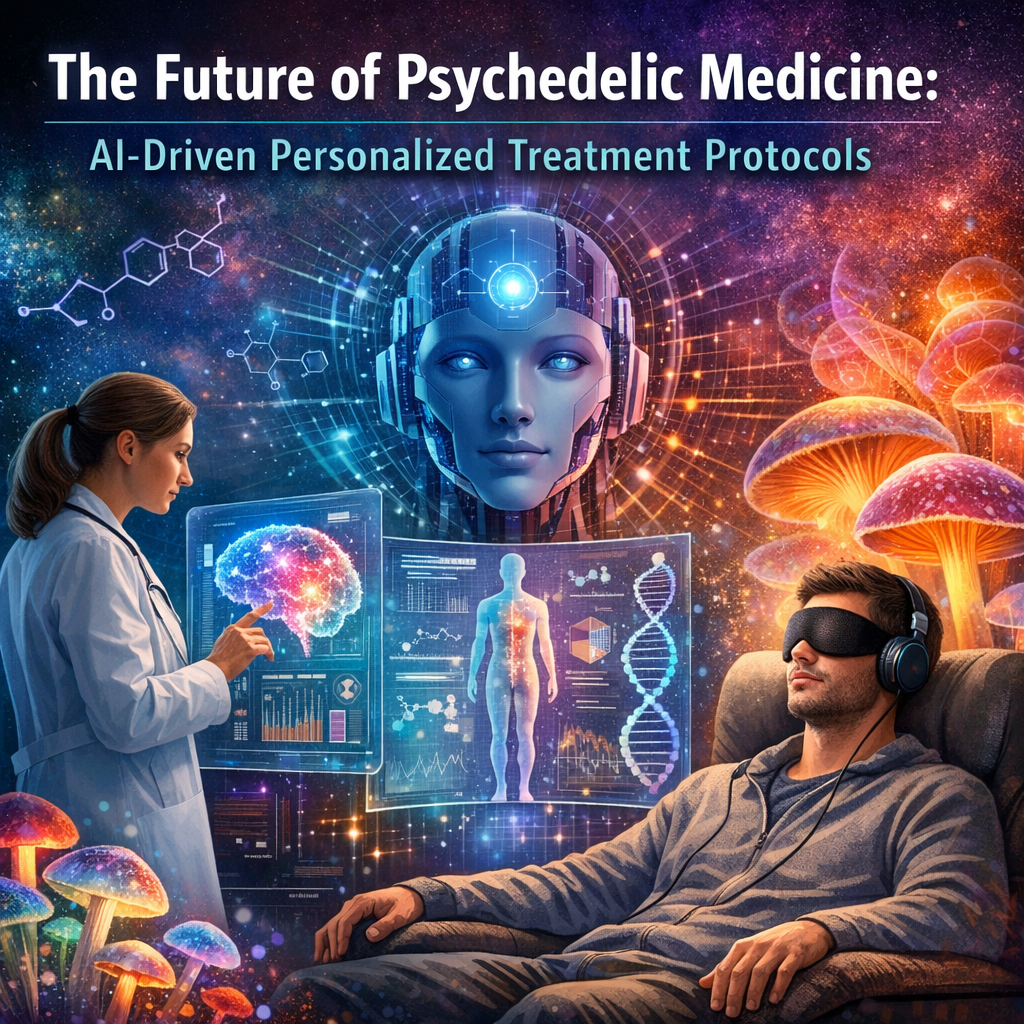
The Future of Psychedelic Medicine: AI-Driven Personalized Treatment Protocols
Introduction
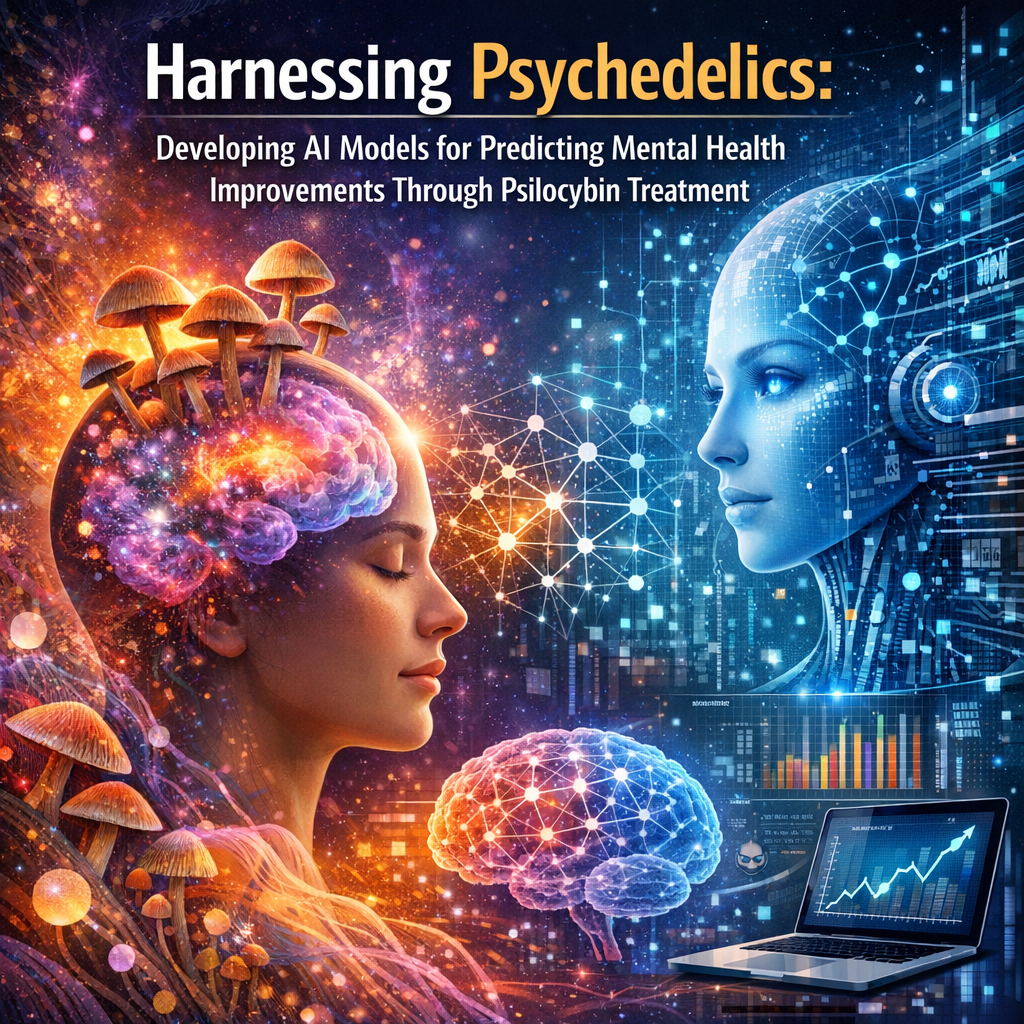
The dawn of **personalized medicine** marks a new era in healthcare, where treatments are uniquely tailored to an individual’s genetic makeup and personal history. Emerging prominently is **psychedelic medicine**, highlighted by **psilocybin**, the active compound in magic mushrooms. Recent psychiatric studies have demonstrated its potential to treat conditions like **depression**, **anxiety**, **PTSD**, and **addiction**. When integrated with **artificial intelligence (AI)**, these treatments could revolutionize mental health care.
The synergy of AI and psychedelic medicine offers a personalized approach that enhances efficacy, reduces adverse effects, and broadens accessibility. AI processes vast datasets, identifying subtle patterns that may remain hidden to the human observer. This makes AI an invaluable asset in predicting individual responses to psychedelic therapy by analyzing **biomarkers**, personal history, and **psychological profiles**.
Most current psychedelic therapy protocols adopt a one-size-fits-all approach. Psychedelics affect **serotonin receptors** and promote **neural plasticity**, but their effects can vary widely among individuals. AI paves the way for utilizing these differences for optimal therapeutic outcomes, whether through tracking **neuroimaging data** or refining protocols based on patient feedback.
Recent **FDA** advancements have accelerated psilocybin’s path to medical approval, creating an opportune moment to incorporate AI into treatment models. Personalized protocols will not only boost effectiveness but ensure safety and individual alignment, underpinned by psychological and medical parameters. This interdisciplinary fusion exemplifies innovation in tackling long-standing health issues.
Features
Several pioneering studies highlight AI-driven, **personalized psychedelic** treatments. A significant study in *Nature Medicine* demonstrated how **machine learning** forecasts patient outcomes in psilocybin therapy for depression with high precision. The AI was trained on biometric and neuroimaging data, setting a precedent for AI-guided psychiatric care [Nature Medicine Study](https://www.nature.com/articles/s41591-020-0943-9).
In a landmark collaboration between Imperial College London and AI researchers, novel models mapped the psychedelic experience to brain connectivity changes. Using **fMRI data** from psilocybin-treated patients, the AI identified neural pathways associated with positive outcomes, improving candidate selection for therapy [Imperial College Study](https://www.imperial.ac.uk/news/238119).
Additionally, AI optimizes dosing and minimizes risks. A pilot program at Massachusetts General Hospital employed an AI algorithm to adjust dosages in real-time, enhancing treatment safety and efficacy [Massachusetts General Hospital Study](https://www.massgeneral.org/news/press-release4).
These studies signify a transition to individualized, evidence-based care at the nexus of neuroscience, psychology, and technology. AI’s predictive capacity allows practitioners to navigate psychedelic treatments’ intricacies, targeting beneficial therapies while mitigating risks. These advancements propose that AI-enhanced psychedelic protocols could reshape mental health care, making it more precise, accessible, and effective.
Conclusion
The integration of AI into **psychedelic medicine** represents not just a glimpse into a technologically advanced future but signals a paradigm shift in therapeutic practices. This convergence promises unprecedented personalization in mental health treatment, improving outcomes and enhancing the understanding of mind-body-medicine interplay. As research and clinical trials continue harnessing these technologies, we move closer to a future where AI-driven psychedelic therapy could be a cornerstone of mental health care, offering individualized, effective treatment strategies for those in need.
**Concise Summary:**
The integration of **artificial intelligence (AI)** into **psychedelic medicine** heralds a paradigm shift in mental health care, promising unprecedented personalization and efficacy in treatments. Advances in recent studies show AI’s potential in optimizing psilocybin therapy for conditions like **depression** and **PTSD**, by analyzing patient-specific data to refine protocols. This innovative approach promises enhanced precision and safety, paving the way for AI-enhanced personalized treatment models that could become foundational in mental health care, addressing diverse individual needs with tailored therapies.

Dominic E. is a passionate filmmaker navigating the exciting intersection of art and science. By day, he delves into the complexities of the human body as a full-time medical writer, meticulously translating intricate medical concepts into accessible and engaging narratives. By night, he explores the boundless realm of cinematic storytelling, crafting narratives that evoke emotion and challenge perspectives. Film Student and Full-time Medical Writer for ContentVendor.com