“`html
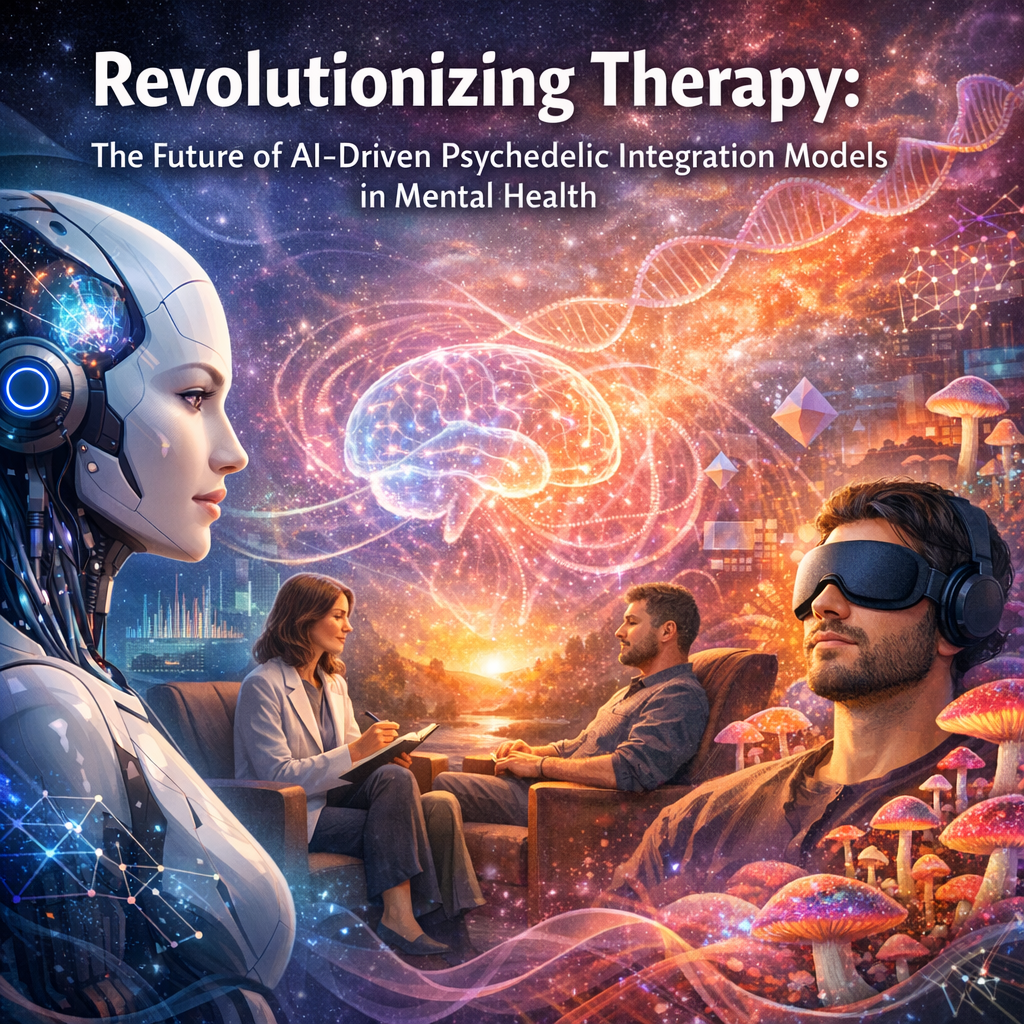
Revolutionizing Therapy: The Future of AI-Driven Psychedelic Integration Models in Mental Health
Introduction
In recent years, the mental health field has embraced innovative therapies to address widespread conditions like **depression**, **anxiety**, **PTSD**, and more. One promising area is the integration of **psychedelic therapy**, particularly with substances like **psilocybin** found in **magic mushrooms**. As research highlights the therapeutic potential of these substances, another technological wave is emerging: **Artificial Intelligence (AI)**. The fusion of **AI-driven models** and psychedelic therapy holds promise to revolutionize mental health treatment and optimize outcomes. For more context, visit [Imperial College London](https://www.imperial.ac.uk/psychedelic-research/).
AI has transformed various sectors, from finance to logistics, and now healthcare is its new frontier. Integrating AI into psychedelic therapy involves using advanced algorithms and machine learning techniques to create personalized treatment plans, predict outcomes, and provide ongoing support tailored to individual needs. This can profoundly enhance understanding and integration of psychedelic experiences, offering a structured method to unravel insights gained during sessions.
**Traditional therapies** often struggle to provide sustainable solutions for mental health issues, with many patients experiencing relapse or plateauing after initial improvements. In contrast, psychedelic substances promote **neuroplasticity** and can induce profound emotional and psychological shifts, offering deeper healing potential. However, the risks associated with unsupervised use or unguided interpretations of psychedelic experiences necessitate a supportive structure. **AI models** can aid therapists by analyzing massive datasets, identifying patterns, and offering insights that transcend what human practitioners can discern alone.
Furthermore, AI can facilitate real-time monitoring of physiological and psychological responses during **psychedelic therapy sessions**. Wearable technology and biometric data can be harnessed to ensure patient safety, modulate dosages in real-time, and record intricate details of each session for later analysis. By integrating these components into a coherent system, therapists can personalize treatments that accommodate the unique neurobiology and psychological makeup of each patient.
Features
Scientific endeavors spotlight the synergy between AI technology and psychedelic therapy, promising significant advancements in **mental health treatment models**. A pivotal study from Imperial College London highlights how algorithms can enhance the personalization of psychedelic therapies, tailoring experiences to match individual patient profiles. By analyzing data from previous sessions and outcomes, AI can predict how a patient might respond to different substances and therapeutic approaches, thus refining the therapeutic process.
Additionally, a groundbreaking research project funded by MAPS (Multidisciplinary Association for Psychedelic Studies) explores how AI can be used alongside **MDMA-assisted psychotherapy** for **PTSD treatment**. This study uses AI to collect and analyze data from multiple sessions, identifying key emotional breakthroughs and optimizing therapeutic interventions to personalize treatment approaches. This aids therapists and equips patients with a toolkit to navigate their therapeutic journey better. More information can be found on [MAPS’ official website](https://maps.org/).
Beyond therapeutic integration, AI extends into the realms of education and patient support. Platforms like **Psyberguide** utilize AI to provide expansive educational resources, connect patients to community support networks, and bridge the gap between therapy sessions. This reinforces the integration experience and ensures continuous support in line with changing patient needs. For more details, visit [Psyberguide](https://www.psyberguide.org/).
The intricacy of psychedelic experiences and their profound cognitive effects presents a complex challenge to mental health professionals. AI’s capability to decode and interpret vast amounts of data offers an unparalleled advantage. By marrying neural data mapping, patient history analysis, and real-time feedback mechanisms, AI can amplify the therapeutic potential of psychedelics, establishing it as a mainstay in future mental health care.
Conclusion
**AI-driven psychedelic integration models** signify a transformative era in mental health therapy, offering hopeful prospects for patients seeking profound and lasting healing. As scientific research progresses and technology advances, these models promise to become increasingly comprehensive and accessible, revolutionizing how mental health issues are treated. This fusion of AI and psychedelics not only underscores the innovation at the intersection of technology and healthcare but also heralds a new paradigm of personalized, effective, and safe mental health treatments.
References
1. [The future of therapeutic psychedelic research](https://www.imperial.ac.uk/psychedelic-research/)
2. [MDMA-Assisted Therapy Research](https://maps.org/)
3. [Psyberguide: Mental Health App Guide](https://www.psyberguide.org/)
“`
**Concise Summary**
The integration of **AI-driven models** and **psychedelic therapy** is set to transform mental health treatment by optimizing personalized solutions for conditions like **depression**, **anxiety**, and **PTSD**. By harnessing advanced algorithms and real-time data, AI can predict patient responses to psychedelic substances and tailor experiences to individual needs. With projects from **Imperial College London** and **MAPS** leading the way, the union of AI and psychedelics offers a promising frontier for sustainable, effective, and personalized mental health care solutions.

Dominic E. is a passionate filmmaker navigating the exciting intersection of art and science. By day, he delves into the complexities of the human body as a full-time medical writer, meticulously translating intricate medical concepts into accessible and engaging narratives. By night, he explores the boundless realm of cinematic storytelling, crafting narratives that evoke emotion and challenge perspectives. Film Student and Full-time Medical Writer for ContentVendor.com