The Future of Psychedelic Medicine: AI-Driven Personalization and Predictive Protocol Design
Introduction
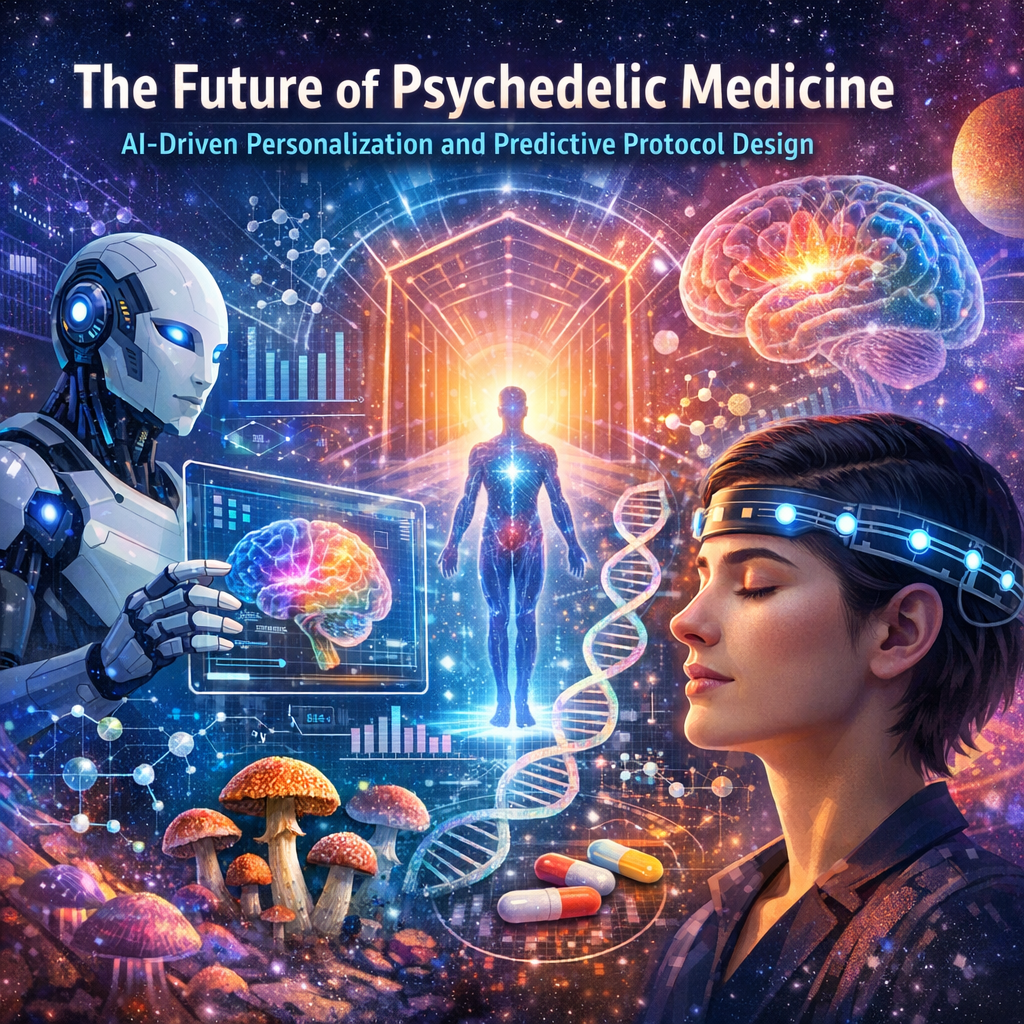
The landscape of **psychedelic medicine** is undergoing a transformative evolution characterized by groundbreaking technological advances. Among these, **artificial intelligence** (AI) stands as a powerful catalyst for change, promising to revolutionize the way psychedelic treatments are personalized and protocols are designed. The unique properties of **psychedelic compounds**, such as **psilocybin**, have shown potential in treating a range of **mental health disorders**, including **depression, anxiety, and PTSD**. However, the variability in individual responses to psychedelics presents a significant challenge. This is where AI comes in, offering unprecedented opportunities to tailor treatments specifically to the needs of each individual.
At the core of this innovation is the capability of AI algorithms to analyze vast amounts of data from various sources such as genetic profiles, patient histories, and real-time monitoring during therapy sessions. This data-driven approach allows for the development of predictive models that can identify which psychedelic compounds and dosages are likely to produce the most effective therapeutic outcomes for individual patients. In essence, AI can sift through complexities and variables that are beyond human analytical capacity, unveiling patterns and indicators that inform personalized treatment plans.
Moreover, AI’s ability to adapt and learn enhances its proficiency in protocol design. As new research emerges and more data becomes available, AI models can evolve, continually improving the accuracy and efficacy of treatment recommendations. The symbiosis of AI and psychedelics not only personalizes care but also accelerates drug development processes, enabling rapid advancements in therapeutic protocols. This fusion has the potential to streamline the road to regulatory approval by providing strong evidence-based frameworks showcasing the safety and efficacy of psychedelic treatments.
As we stand at this crossroads of **technology** and **healthcare**, the integration of AI into psychedelic medicine heralds a future where patient-centric care isn’t just an ideal but a reality. Personalization is no longer a distant goal but an achievable standard, marking a pivotal shift in how mental and emotional well-being is approached, understood, and ultimately treated.
Features
The potential of AI-driven personalization in psychedelic medicine is illuminated by several pioneering studies and professional insights into AI’s ability to revolutionize **mental health care**.
Firstly, a 2022 study published in the journal [*Nature Medicine*](https://www.nature.com/articles/s41591-022-01668-w) leveraged **machine learning algorithms** to predict individual responses to psilocybin treatments. The research involved detailed **neuroimaging** and **genetic mappings** of participants, leading to models that could predict how patients would respond to psychedelics based on their unique biological signatures. This study underscored AI’s capability to enhance the precision of psychedelic therapies, tailoring them to maximize efficacy and minimize adverse effects.
Another prominent study conducted by researchers at [**Imperial College London**](https://www.imperial.ac.uk/news/237593/new-study-analyses-brain-activity-patterns) explored AI’s role in unraveling the complexities of the human brain’s response to psychedelics. By employing AI to analyze brain activity patterns, the study highlighted how different regions of the brain communicate under the influence of psychedelics. This not only provides a deeper understanding of how these substances work but also aids in identifying markers that predict therapeutic outcomes. Insights from such studies inform the AI-driven design of therapies, customizing sessions to align with each patient’s neural landscape.
Furthermore, the potential benefits of AI in psychedelic medicine are bolstered by its diagnostic capabilities, which are exemplified by partnerships like that of Compass Pathways and [**DeepMind**](https://research.com/news/ai-mental-health-care-compass-pathways-deepmind), the AI lab owned by Google. This collaboration aims to leverage AI algorithms to diagnose and subsequently tailor psilocybin-based treatments for depression and anxiety. By continuously learning from clinical data, these AI systems can help refine patient selection criteria, optimize dosing, and personalize treatment plans, reinforcing individualized care’s efficacy.
Finally, the ability of AI to facilitate **real-time monitoring** during psychedelic sessions offers significant advancements in safety protocols. Sensors and AI-driven platforms can track physiological responses, alerting practitioners to potential issues and adjusting protocols instantly if necessary. This dynamic adaptability not only enhances the safety of treatments but also empowers healthcare providers with actionable insights, mitigating risks associated with psychedelic therapies.
Conclusion
The incorporation of AI into the realm of psychedelic medicine signifies a monumental leap towards personalized, predictive, and precise care. Bridging the gap between technology and therapy, AI-driven innovations promise to maximize therapeutic outcomes by aligning treatments with the diverse needs of individual patients. As research progresses and technology continues to advance, the amalgamation of AI and psychedelics will redefine our understanding and approach to mental health, crafting a brighter, healthier future for countless individuals.
**References**
1. [Nature Medicine Study on AI and Psilocybin](https://www.nature.com/articles/s41591-022-01668-w)
2. [Imperial College London Research on Brain Activity](https://www.imperial.ac.uk/news/237593/new-study-analyses-brain-activity-patterns)
3. [Compass Pathways and DeepMind Collaboration](https://research.com/news/ai-mental-health-care-compass-pathways-deepmind)
Concise Summary
The article explores the intersection of **AI** and **psychedelic medicine**, emphasizing AI’s role in revolutionizing personalized treatment protocols. AI algorithms can analyze vast data from genetic profiles, patient histories, and real-time monitoring, leading to predictive models for personalized psychedelic therapies. Noteworthy studies include those on AI’s ability to predict responses to **psilocybin** and understand brain activity under psychedelics. Collaborations like those between Compass Pathways and DeepMind highlight AI’s diagnostic potential. The integration of AI not only personalizes care but also accelerates drug developments, heralding a new era in mental health treatment.

Dominic E. is a passionate filmmaker navigating the exciting intersection of art and science. By day, he delves into the complexities of the human body as a full-time medical writer, meticulously translating intricate medical concepts into accessible and engaging narratives. By night, he explores the boundless realm of cinematic storytelling, crafting narratives that evoke emotion and challenge perspectives. Film Student and Full-time Medical Writer for ContentVendor.com