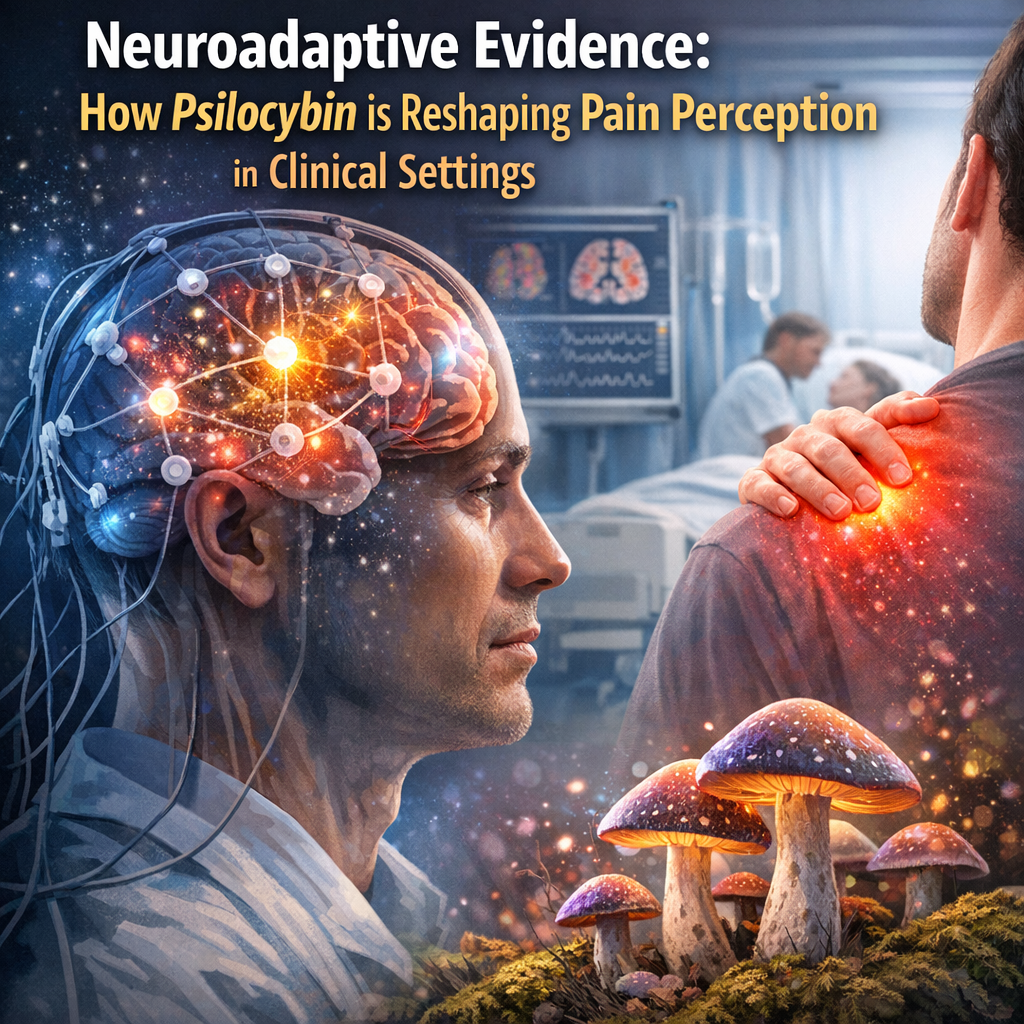
Neuroadaptive Evidence: How Psilocybin is Reshaping Pain Perception in Clinical Settings
Introduction:
The exploration of **psychedelics** in clinical contexts represents a promising frontier in medical research, especially concerning understanding and treating complex physiological phenomena like **pain perception**. Among these psychedelics, **psilocybin**—the active compound in **magic mushrooms**—is increasingly spotlighted for its potent potential to affect the brain. Traditionally, **pain management** has relied heavily on pharmaceuticals such as **opioids**, which, while effective, also carry significant risks of addiction and adverse side effects. As the medical community grapples with these challenges, psilocybin emerges as a potential game-changer. Its ability to alter consciousness and enhance neural plasticity may offer new avenues for managing both chronic and acute pain in clinical settings.
Research into psilocybin is rooted in understanding its effects on the brain’s **neuroadaptive capacity**. Psilocybin is known to bind primarily to **serotonin receptors**, notably the **5-HT2A receptor**, which plays a critical role in mood, perception, and cognition. This interaction is believed to facilitate changes in neural pathways, a process known as **neuroplasticity**, which forms the basis for psilocybin’s potential to alter pain perception. Patients who have participated in studies report a reduction in pain intensity and an emotional recontextualization of their pain, suggesting that psilocybin aids in dissociating the physical sensation from emotional suffering.
The implications of these findings are profound. Pain is a multifaceted experience that encompasses physical, emotional, and psychological dimensions. By addressing these dimensions holistically, **psilocybin** may offer a more comprehensive approach to pain management than traditional methods. The renewed interest in psychedelics is leading to rigorous studies aimed at understanding the full scope of psilocybin’s therapeutic promise, and the results are beginning to reshape our approach not only to pain management but also to our broader understanding of the brain’s adaptability.
Features:
Numerous studies have highlighted the neuroplastic potential of psilocybin, which is integral to its ability to modulate **pain perception**. A landmark study conducted by researchers at [Johns Hopkins University](https://www.hopkinsmedicine.org) found that psilocybin administration can lead to enduring changes in personality, often increasing traits such as openness and emotional communication, which may contribute to pain resilience and an attenuated pain response.
Moreover, a study published in the journal [*Psychopharmacology*](https://link.springer.com) revealed that psilocybin has observable effects on **brain connectivity**. MRI scans showed enhanced connectivity between different brain regions following psilocybin ingestion, suggesting that altered neural activity patterns could underlie shifts in pain perception. This network-level reset has been termed a “therapeutic reorganization” by researchers, implicating psilocybin as a potential treatment for conditions where pain perception is disrupted, such as fibromyalgia or cluster headaches.
One of the most compelling studies was undertaken by [Imperial College London](https://www.imperial.ac.uk), where participants suffering from treatment-resistant depression with associated chronic pain symptoms experienced significant pain relief post-psilocybin therapy. The results were attributed to psilocybin’s capacity to dissolve the “default mode network” in the brain, which is responsible for the rigid thinking patterns associated with chronic pain and depression.
Furthermore, the psychological aspect of pain is being re-evaluated through psilocybin’s capacity to foster emotional insight. A [Yale University](https://medicine.yale.edu) study observed that psilocybin allows patients to explore the psychological components of their pain in a supported therapeutic environment, leading to reduced perceived pain intensity. This phenomenon demonstrates that by altering the emotional significance of pain, psilocybin can lessen the suffering component, effectively decoupling physical pain and its emotional counterpart.
Conclusion:
The burgeoning body of research into psilocybin’s effects on **pain perception** indicates a paradigm shift in how pain might be managed in clinical settings. By promoting **neuroadaptive changes**, psilocybin has the potential to address the complex interplay of physical and emotional factors that contribute to pain, thereby offering hope to those who are unresponsive to conventional treatments. As studies continue to unveil the intricacies of psilocybin and its broad-reaching effects, we may be on the cusp of integrating this compound into mainstream therapeutic practices, reshaping not only pain management but also our broader understanding of human consciousness and resilience.
Concise Summary
Psilocybin, derived from **magic mushrooms**, is gaining attention as a potential revolution in pain management, offering an alternative to traditional opioids. Its ability to interact with serotonin receptors and promote neuroplasticity may change pain perception. Studies show long-term changes in brain connectivity and emotional insight, helping decouple the physical and emotional aspects of pain. Psilocybin’s potential for therapeutic reorganization supports its use for conditions like fibromyalgia and cluster headaches. This research highlights psilocybin’s role in managing pain holistically, addressing both physical and emotional components, and heralding a new era in clinical pain treatment.

Dominic E. is a passionate filmmaker navigating the exciting intersection of art and science. By day, he delves into the complexities of the human body as a full-time medical writer, meticulously translating intricate medical concepts into accessible and engaging narratives. By night, he explores the boundless realm of cinematic storytelling, crafting narratives that evoke emotion and challenge perspectives. Film Student and Full-time Medical Writer for ContentVendor.com