How Blockchain Could Revolutionize Legal and Ethical Frameworks in Psychedelic Medicine
**Introduction:**
The rapidly evolving intersection of **psychedelic medicine** and **technology** is setting the stage for groundbreaking transformations in healthcare delivery and research. While the therapeutic potential of psychedelic substances like **psilocybin** is gaining increased recognition, the **legal and ethical frameworks** surrounding their use remain complex and often outdated. Enter **blockchain technology**, a digital innovation traditionally associated with cryptocurrencies such as **Bitcoin**. Blockchain is poised to revolutionize various industries by offering enhanced **security**, **transparency**, and decentralized control over information.
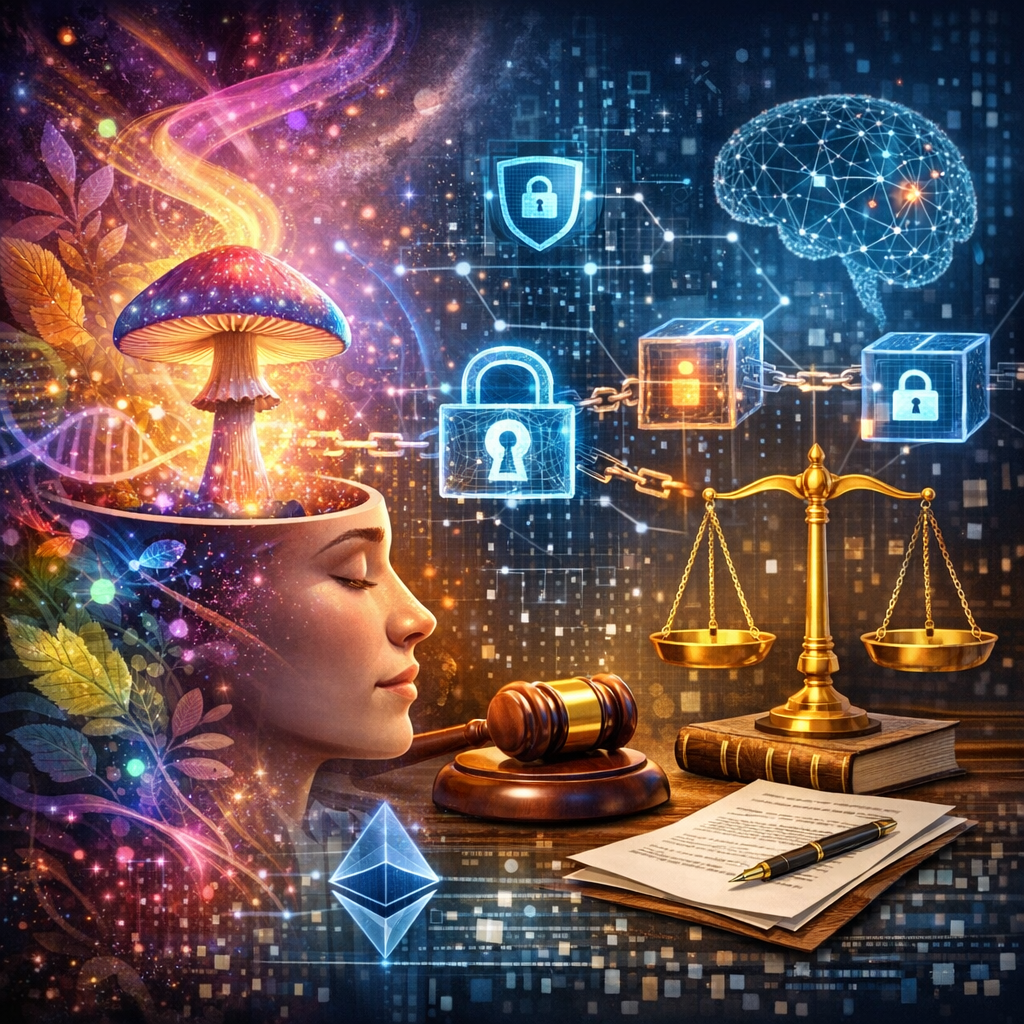
In the context of psychedelic medicine, blockchain can tackle persistent challenges related to **data management**, **privacy**, and **regulatory compliance**. For instance, one of the primary issues with current psychedelic research is the decentralized nature of data and records, which are often fragmented across institutions and jurisdictions. Blockchain technology, with its decentralized ledger system, can securely and transparently consolidate these disparate data sources, ensuring consistent and reliable access for accredited stakeholders.
Moreover, blockchain can enhance **privacy**, a critical concern when dealing with sensitive health information in psychedelic therapy. Through advancements like encryption and smart contracts, blockchain provides the infrastructure where patient records can be protected, with access granted only to authorized parties. This ensures that patient data is not only secure but also complies with regulations such as the **Health Insurance Portability and Accountability Act (HIPAA)** in the United States, which mandates strict controls over personal health information.
Blockchain’s ability to streamline **regulatory compliance** cannot be understated. By enabling the creation of an immutable and transparent ledger, regulatory bodies and stakeholders can effortlessly audit processes, ensuring that all parties adhere to legal and ethical standards. This transparency can help bridge the trust gap between consumers, healthcare providers, and regulators, making the adoption of psychedelic therapies more viable in mainstream medicine.
**Features:**
The potential of **blockchain** in **psychedelic medicine** is not just theoretical; it is supported by emerging professional studies and real-world applications. A study published in the [*Journal of Medical Internet Research*](https://www.jmir.org/2020/5/e18703/) highlighted blockchain’s capacity to enhance trust in medical data sharing, proving particularly relevant in psychedelic research where cross-institutional collaboration is vital. The study emphasized blockchain’s role in reducing fraud and enhancing accountability through its immutable record-keeping, which is invaluable for maintaining the integrity of psychedelic clinical trials.
Blockchain also lends itself to the ethical management of psychedelic therapies. The **decentralized** nature ensures no single entity has monopolistic control over data, fostering equitable access to information and resources. This is particularly crucial in the global arena where psychedelic substances can vary in legal status and availability. By facilitating a global network of information exchange, blockchain helps align worldwide research efforts, allowing for a standardized approach to **psychedelic medicine** and potentially informing policy changes that harmonize international laws.
A notable application of blockchain in this field is in **patient data consent**. Through smart contracts, blockchain automates and standardizes the consent process, ensuring patients understand and agree to how their data will be used in research or treatment. This is not only crucial for ethical compliance but also enhances patient autonomy and trust in psychedelic therapies, aligning with ethical standards proposed by governing bodies like the **World Health Organization**.
Furthermore, a report from the [*Blockchain Research Institute*](https://www.blockchainresearchinstitute.org/) indicates that the **pharmaceutical industry** could apply blockchain to manage supply chains for psychedelics, ensuring traceability, preventing fraud, and verifying the authenticity of substances. This application could significantly reduce the risks associated with counterfeit drugs, providing safe and reliable access to **psychedelic therapies**.
**Conclusion:**
In summation, **blockchain technology** offers a promising frontier for revolutionizing the legal and ethical frameworks of **psychedelic medicine**. By enhancing transparency, data security, and regulatory compliance, blockchain holds the potential to transform the landscape of psychedelic therapies, making them more accessible and trustworthy. As the world continues to acknowledge the therapeutic benefits of psychedelics, integrating blockchain solutions will be pivotal in addressing current challenges and paving the way for a more innovative, equitable, and ethically sound future in psychedelic medicine.
**Concise Summary:**
Blockchain technology is set to revolutionize the legal and ethical frameworks of psychedelic medicine by offering enhanced security, privacy, and regulatory compliance. Its decentralized ledger system can consolidate fragmented data, ensuring transparency and trust in clinical trials and therapies. Supported by studies and real-world applications, blockchain enables ethical data management, automates patient consent, and ensures supply chain integrity. These advancements make psychedelic therapies more accessible and trustworthy, paving the way for a transformative future in healthcare.

Dominic E. is a passionate filmmaker navigating the exciting intersection of art and science. By day, he delves into the complexities of the human body as a full-time medical writer, meticulously translating intricate medical concepts into accessible and engaging narratives. By night, he explores the boundless realm of cinematic storytelling, crafting narratives that evoke emotion and challenge perspectives. Film Student and Full-time Medical Writer for ContentVendor.com