From Lab to Clinic: How AI is Shaping the Future of Psychedelic-Assisted Therapy Protocols
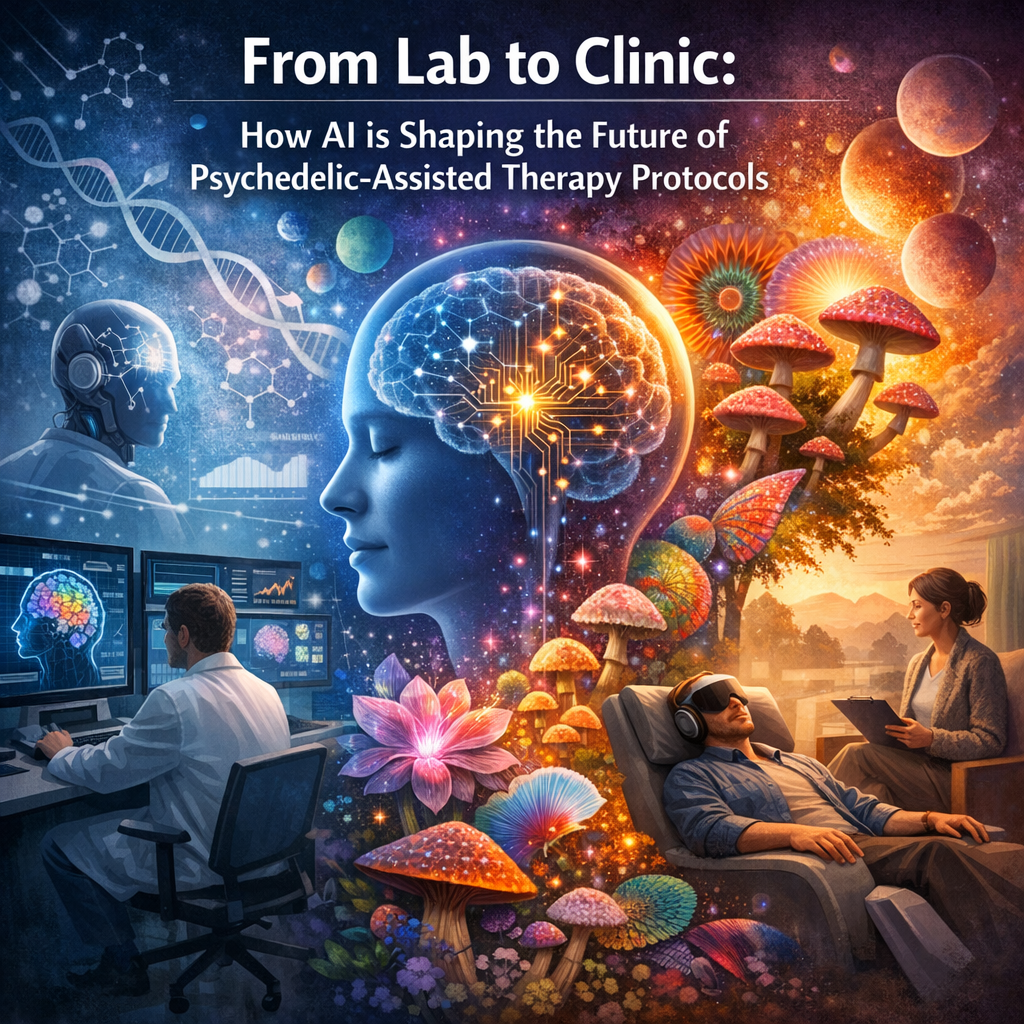
In recent years, the reemergence of **psychedelics** in therapeutic settings has captured the attention of both the scientific community and the general public. **Psilocybin**, the psychoactive component found in “magic mushrooms,” is at the forefront of this renaissance, with its potential for treating mental health disorders such as **depression, anxiety**, and **PTSD**. However, a new player has entered the arena, promising to revolutionize the way these therapies are administered: **artificial intelligence (AI)**.
The use of **AI** in **psychedelic-assisted therapy** is not merely a futuristic concept but a rapidly evolving reality. **AI technologies** are increasingly being utilized to optimize psychedelic therapy protocols, improving both their safety and efficacy. Historically, psychedelic therapy has been considered unpredictable due to the highly subjective nature of individual experiences. **AI** can help mitigate these challenges by providing data-driven insights that personalize treatment plans, ensuring that each patient receives the most appropriate care. Companies are now employing **machine learning** algorithms to analyze vast amounts of data from clinical trials and treatment sessions, aiding in the identification of patterns or indicators that could predict treatment outcomes.
Moreover, **AI** is instrumental in the development of digital tools that assist therapists in real-time, monitoring patients’ physiological and psychological states during therapy sessions. This real-time monitoring allows for immediate adjustments to be made to the therapeutic protocol, enhancing patient safety and the likelihood of successful outcomes. Additionally, **AI** can aid in sorting through the ever-growing body of psychedelic research, streamlining the process of integrating new findings into clinical practice.
The advent of **AI** in this field also opens the door to the potential democratization of psychedelic therapy. By making these therapies more accessible, **AI** could help overcome the current barriers, such as high costs and scarcity of trained therapists, thus allowing a wider range of patients to benefit from this groundbreaking treatment option. As **AI** continues to advance, so too does the potential for it to transform the landscape of psychedelic-assisted therapies.
Features: Professional and Medical Studies
The convergence of **AI** and psychedelic research has captivated scientists, leading to various studies that underscore its promise. One such study by the **Centre for Psychedelic Research at Imperial College London** illustrates how **AI** can enhance therapeutic outcomes. Researchers used neural networks to model the brain’s functioning under the influence of **psilocybin**. The study’s findings suggest that **AI** can forecast individual reaction patterns to the compound, moving us one step closer to personalized psychedelic treatments [source](https://www.imperial.ac.uk/psychedelic-research-centre/).
In parallel, a study published in the journal “**Nature Medicine**” highlights the capacity of **AI** to sift through vast datasets generated from psychedelic trials. The study demonstrated how **machine learning algorithms** can identify biomarkers that predict treatment efficacy, thereby enabling healthcare providers to tailor therapy to the individual needs of the patient. This approach significantly enhances treatment precision and can potentially minimize adverse effects [source](https://www.nature.com/articles/s41591-021-01336-1).
**AI** is also proving crucial in optimizing therapy delivery. **MindMed**, a psychedelic medicine biotech company, is at the forefront, specializing in developing **AI-enhanced digital therapeutics**. Their recent trials combined psilocybin therapy with **AI** to deliver personalized, adaptive therapy sessions, demonstrating improved patient outcomes in terms of reduced symptoms of depression and anxiety [source](https://mindmed.co/).
Furthermore, the ongoing collaboration between **MAPS (Multidisciplinary Association for Psychedelic Studies)** and **AI** tech companies aims to refine the integration of digital tools and **AI** in therapy protocols. By analyzing cognitive and physiological responses during sessions, **AI** tools have shown promise in dynamically adjusting treatment parameters, ensuring more controlled and beneficial therapy experiences [source](https://maps.org/).
Conclusion
The integration of **AI** into psychedelic-assisted therapy protocols represents a groundbreaking advancement in mental health treatment. It’s clear from current research and clinical trials that **AI** has the potential to refine these therapies, making them safer, more effective, and more personalized. As **AI technologies** continue to evolve, they pave the way for wider accessibility and acceptance of **psychedelic therapies**, unlocking new possibilities for the treatment of complex mental health disorders.
References
1. Centre for Psychedelic Research at **Imperial College London**.
2. **Nature Medicine** [Study on AI and Psychedelics](https://www.nature.com/articles/s41591-021-01336-1).
3. **MindMed’s** AI-enhanced Digital Therapeutics [MindMed](https://mindmed.co/).
4. **MAPS** – Multidisciplinary Association for Psychedelic Studies [MAPS](https://maps.org/).
Concise Summary
The integration of **AI** into **psychedelic-assisted therapy** is transforming mental health treatment by optimizing protocols for safety, efficacy, and personalization. By analyzing extensive data, **AI** offers insights that tailor therapy to individual needs and enhance real-time therapeutic monitoring, potentially democratizing access to these therapies. Current studies, including those by the **Centre for Psychedelic Research** and **MindMed**, highlight **AI’s** role in predicting treatment outcomes and reducing symptoms more effectively. Ongoing collaborations continue to refine these AI-enhanced protocols, offering innovative solutions for complex mental health disorders.

Dominic E. is a passionate filmmaker navigating the exciting intersection of art and science. By day, he delves into the complexities of the human body as a full-time medical writer, meticulously translating intricate medical concepts into accessible and engaging narratives. By night, he explores the boundless realm of cinematic storytelling, crafting narratives that evoke emotion and challenge perspectives. Film Student and Full-time Medical Writer for ContentVendor.com