Deciphering Psilocybin’s Role in Neuroplasticity: The Next Leap in Cognitive Recovery Tools
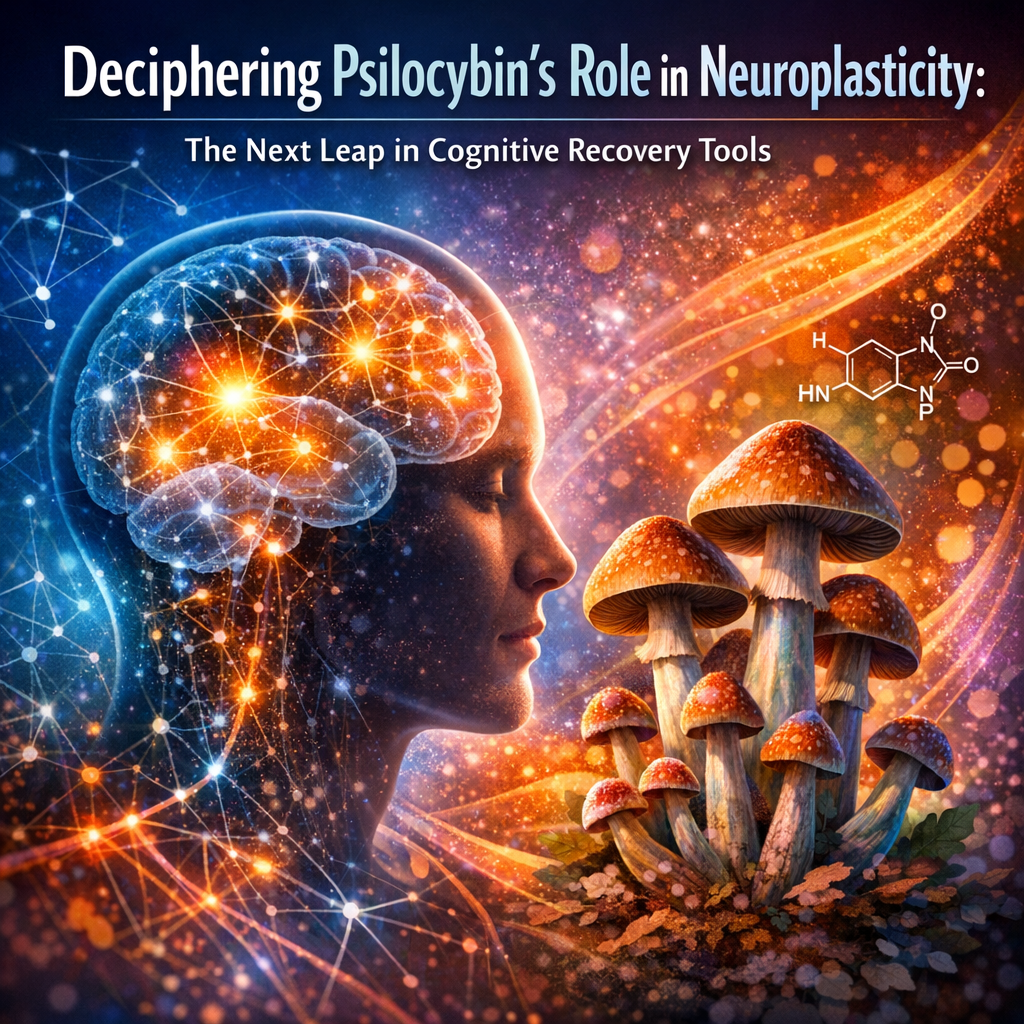
The last few decades have witnessed a burgeoning interest in understanding the human brain’s resilience and ability to adapt, a characteristic referred to as **neuroplasticity**. Essentially, neuroplasticity is the brain’s capacity to reorganize itself by forming new neural connections. This remarkable trait underlies the brain’s ability to recover from injuries, adapt to new experiences, and acquire new skills. In recent years, researchers have started to unravel the potential use of **psilocybin**—a naturally occurring psychedelic compound found in certain mushrooms—in enhancing neuroplasticity. While psilocybin has traditionally been associated with mystical experiences and consciousness expansion, its potential therapeutic benefits are now being explored with scientific rigor.
**Psilocybin’s** implications for cognitive recovery are particularly exciting because they suggest a natural, effective treatment for a variety of neurological conditions and mental health disorders. The compound interacts primarily with **serotonin receptors**, notably the serotonin 2A receptor, which plays a significant role in neural connectivity and brain plasticity. As people continue to search for alternative medication formats with fewer side effects and more holistic benefits, psilocybin emerges as a prime candidate. Preliminary studies and anecdotal evidence suggest that psilocybin can potentially aid in the recovery process for conditions ranging from **depression** and **anxiety** to **traumatic brain injuries** and even **Alzheimer’s disease**.
The current enthusiasm surrounding psilocybin is not unfounded. Researchers are uncovering evidence that psilocybin can induce profound changes in thought patterns and emotional responses, thereby opening up pathways that were previously blocked or degraded. This topic garners further significance considering the modern-day epidemic of mental health issues and the accompanying burden they impose on healthcare systems around the globe. As the exploration of psilocybin’s therapeutic benefits gains momentum, it stands at the intersection of **neuroscience**, **psychiatry**, and **pharmacology**, holding the promise of redefining how we approach cognitive recovery.
Features:
One of the most influential studies illustrating psilocybin’s role in neuroplasticity is a groundbreaking 2018 research paper published in [**Cell Reports**](https://www.cell.com/cell-reports/fulltext/S2211-1247(18)30906-2) by a team from the University of California, Davis. The study conducted on rodents showed that psilocybin increased the growth of dendritic spines in the brain, which are small, spinelike protrusions on neurons that facilitate synaptic connections. This structural transformation in the brain’s architecture supports the theory that psilocybin can promote neuroplasticity by creating new neural pathways and reinforcing existing ones, bearing significant implications for cognitive recovery.
Further corroborating these findings, **Imperial College London** conducted a study in 2020 where brain scans of people under the influence of psilocybin revealed heightened connectivity between different brain regions. These studies suggest a temporary dissolution of traditional neural structures, making way for new connections to form, a phenomenon that could be invaluable for recovering cognitive functionality in patients with mental health disorders.
Clinical trials are also showing promise. **Johns Hopkins University** has been at the forefront of investigating psilocybin’s pivotal role in managing depression. Their studies show that patients suffering from treatment-resistant depression demonstrated significant reductions in depressive symptoms after just two psilocybin sessions. Imaging data from this research indicates enhanced neuroplasticity as a consequence of psilocybin administration, marking it as a potentially groundbreaking tool in psychiatric therapy.
The field is still burgeoning, and the exploration of psilocybin in clinical settings must navigate regulatory landscapes and ethical considerations. However, early results are promising and lay the groundwork for future research that could establish psilocybin as a primary tool in cognitive recovery and mental health treatment protocols. As discussions continue within the professional community, psilocybin could redefine how we understand and influence the brain’s ability to heal and adapt.
Conclusion:
As scientific inquiry and clinical trials progress, **psilocybin** emerges as a promising agent in enhancing neuroplasticity and supporting cognitive recovery. The studies conducted thus far provide compelling evidence for its potential role in treating a myriad of **neurological** and **psychiatric conditions**. However, as with any developing field, further research is necessary to fully understand its capabilities and limitations. With careful consideration and continued investigation, psilocybin has the potential to revolutionize modern medicine’s approach to cognitive and mental health therapies.
References:
1. [“Psychedelics Promote Structural and Functional Neural Plasticity” – Cell Reports](https://www.cell.com/cell-reports/fulltext/S2211-1247(18)30906-2)
2. [“Psilocybin for treatment-resistant depression: fMRI-measured brain changes” – Imperial College London](https://www.imperial.ac.uk/news/207713/psilocybin-changes-brain-effective-treating-depression/)
3. [“Effects of Psilocybin Therapy on Personality Structure” – Johns Hopkins Medicine](https://www.hopkinsmedicine.org/news/articles/effects-of-psilocybin-therapy-on-personality-structure)
**Concise Summary:**
Psilocybin, a psychedelic compound, is being researched for its potential to enhance **neuroplasticity**, which could treat various mental health and neurological conditions. By interacting with serotonin receptors, notably the serotonin 2A receptor, psilocybin may help form new neural connections. Studies have shown it enhances connectivity between brain regions, which could be critical for recovering cognitive functions. Research by institutions like **Johns Hopkins University** and **Imperial College London** highlights promising results for treatment-resistant depression and brain injuries. As research continues, psilocybin could revolutionize cognitive recovery and mental health treatments.

Dominic E. is a passionate filmmaker navigating the exciting intersection of art and science. By day, he delves into the complexities of the human body as a full-time medical writer, meticulously translating intricate medical concepts into accessible and engaging narratives. By night, he explores the boundless realm of cinematic storytelling, crafting narratives that evoke emotion and challenge perspectives. Film Student and Full-time Medical Writer for ContentVendor.com