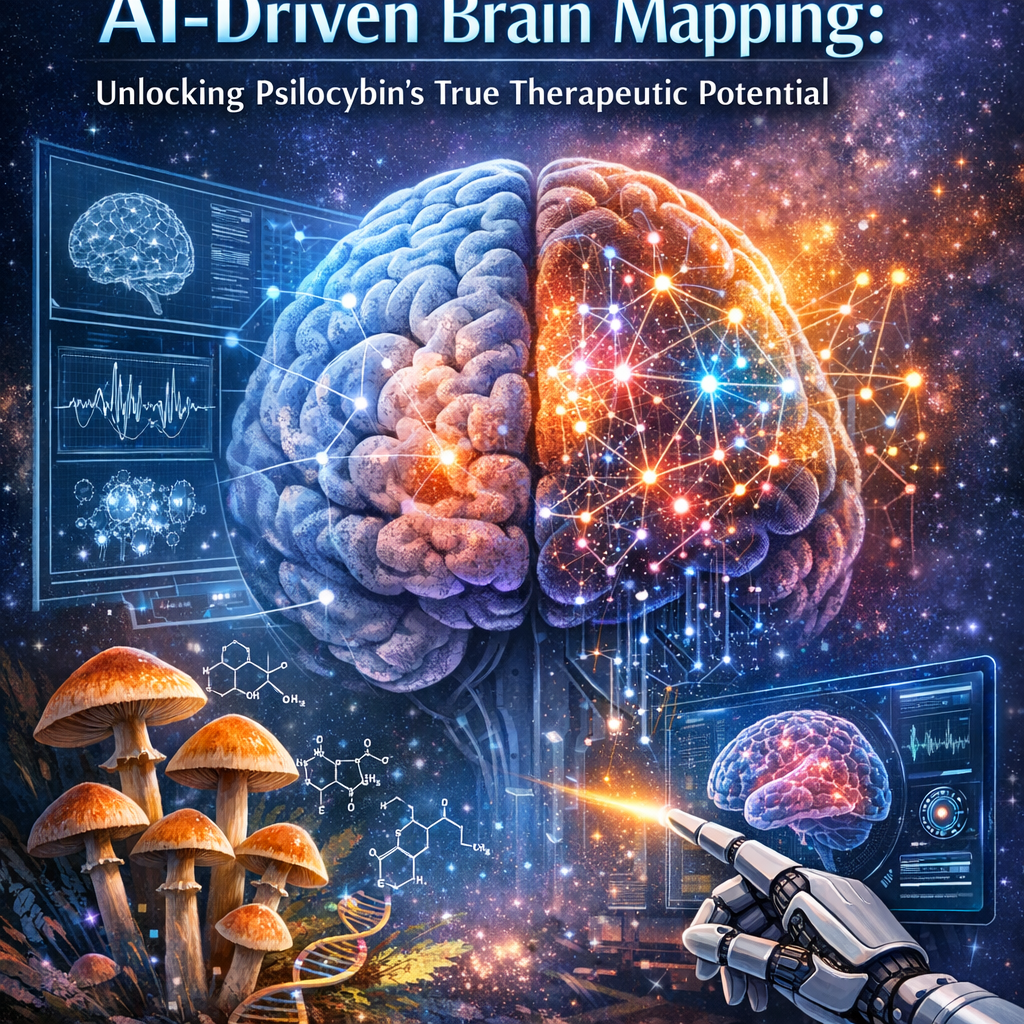
AI-Driven Brain Mapping: Unlocking Psilocybin’s True Therapeutic Potential
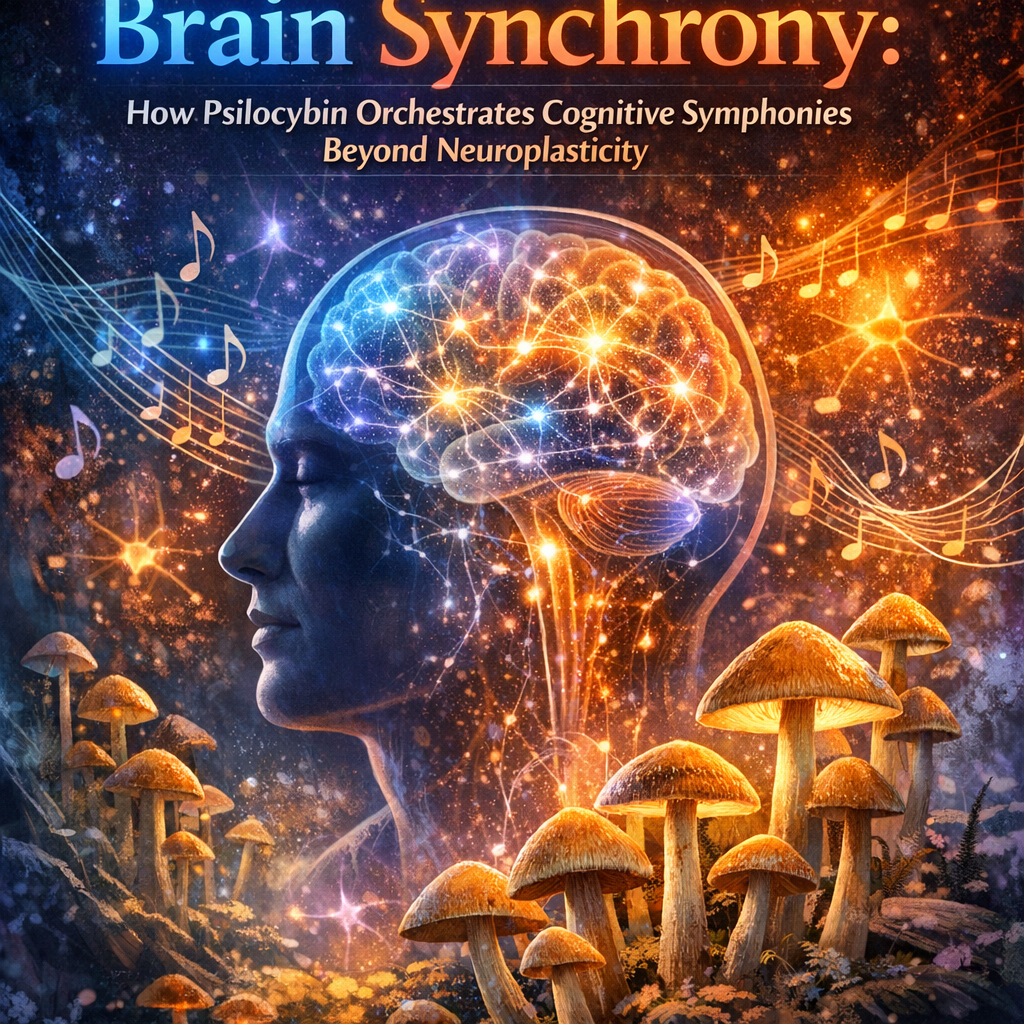
In recent years, the **mental health community** and **psychedelic researchers** have turned their gaze towards the potential **therapeutic benefits of psilocybin**, a naturally occurring psychedelic compound found in certain species of mushrooms. As promising as this journey towards understanding and utilizing psilocybin is, the integration of **artificial intelligence (AI)** into **brain mapping** offers a game-changing enhancement to exploring its therapeutic potential. AI-driven brain mapping provides a more nuanced understanding of how psilocybin interacts with the human brain, allowing for targeted therapeutic applications that could revolutionize treatments for a variety of mental health disorders.
Traditional brain imaging techniques, such as **magnetic resonance imaging (MRI)** and **positron emission tomography (PET)**, have provided substantial insights into brain functioning under the influence of psychedelics. However, these approaches are often limited by their generalized data processing capabilities and lack of precision in mapping neural connections. Enter AI-driven brain mapping, a cutting-edge technology that employs **machine learning algorithms** to interpret large datasets derived from brain scans. This technology can identify patterns and correlations that were previously unattainable, offering a highly detailed view into how psilocybin affects brain activity and connectivity.
**Research** surrounding psilocybin’s effects on the brain has revealed its potential to reset neural pathways and create a sense of heightened connectivity between different **brain regions**. AI-driven brain mapping can further elucidate these findings by identifying specific neural mechanisms and pathways that are activated during a psilocybin experience. This enhanced understanding could pave the way for personalized psilocybin therapies, tailored to the individual’s unique neural architecture and specific mental health needs.
**Deep learning models**, a subset of machine learning, are particularly effective in identifying complex, non-linear relationships within large datasets. When applied to brain mapping, these models can visualize how psilocybin rewires the brain’s **default mode network**—a network associated with self-referential thoughts and behaviors, which is often hyperactive in those suffering from **depression** and **anxiety**. By pinpointing precisely how this network is altered, AI helps in developing targeted treatments that can alleviate symptoms more effectively than current interventions. To further elaborate, this visualization aspect allows researchers to observe changes over time, providing insights into both immediate and long-lasting effects of psilocybin on neural activity. This data can also help in creating **predictive models** for treatment outcomes.
Features:
Numerous professional and medical studies are currently exploring the synergistic potential of **AI** and **psilocybin**, focusing on identifying specific applications in **mental health treatments**. One such study, conducted by researchers at [Imperial College London](https://www.imperial.ac.uk), utilized AI algorithms to analyze fMRI data from participants who consumed psilocybin. The study found that psilocybin reduces the activity of the **default mode network**, leading to increased connectivity across different brain regions. This change in connectivity is believed to contribute to the hallucinations of psilocybin, as well as its capacity for inducing states of deep therapeutic introspection.
Another groundbreaking study undertaken by researchers at [Johns Hopkins University](https://www.hopkinsmedicine.org) supports the notion that AI-driven brain mapping can help specify psilocybin’s impact on neural pathways. The research highlighted how psilocybin modifies neural circuits linked to mood regulation and cognition, offering supporting evidence for its efficacy in treating depression and anxiety. The study’s AI component enabled researchers to predict treatment outcomes based on changes in connectivity patterns, showcasing the potential of AI in personalizing psychedelic therapy.
Further research from the [Multidisciplinary Association for Psychedelic Studies (MAPS)](https://maps.org) is employing AI to synthesize data across multiple psilocybin studies, aiming to create a comprehensive model of psilocybin’s effects on the human psyche. This model may become a critical resource for both clinicians and researchers, ultimately informing best practices for **psychedelic therapy** applications.
As AI in brain mapping continues to evolve, its integration with psilocybin research holds the promise of revolutionizing the landscape for treating **mental health disorders**. The potential to precisely target neural pathways that underlie specific psychiatric conditions could lead to more effective and personalized treatment strategies, drastically reducing the trial-and-error approach currently prevalent in psychiatry. More broadly, this integration may lead to a paradigm shift in how we view and address mental health, moving from generalized treatments to precision medicine based on **neural connectivity** and individual brain responses to psychedelics.
Conclusion:
The harnessing of AI-driven brain mapping to unlock the full therapeutic potential of psilocybin marks an inspiring shift in the treatment of **mental health disorders**. By delving deeper into the intricate dance between psilocybin and the human brain, AI empowers us to explore a new frontier in personalized mental health care. As studies continue to unfold, the amalgamation of AI and psychedelic research promises to not only enhance our understanding of the mind but also revolutionize how we approach and administer mental health interventions.
For additional information and deeper insights into these groundbreaking studies, please refer to the published works available through resources such as [Imperial College London](https://www.imperial.ac.uk), [Johns Hopkins University](https://www.hopkinsmedicine.org), and [MAPS](https://maps.org).
**Concise Summary:**
AI-driven brain mapping enhances the understanding of psilocybin’s therapeutic potential by providing detailed insights into how it affects brain connectivity. This integration could revolutionize mental health treatments by offering precise, personalized therapies. Studies by Imperial College London and Johns Hopkins University showcase AI’s role in mapping psilocybin’s impact, predicting outcomes, and tailoring treatments for conditions like depression and anxiety. AI’s synthesis of data from multiple studies aims to create comprehensive models of psilocybin’s effects, forging a path toward more effective mental health interventions.

Dominic E. is a passionate filmmaker navigating the exciting intersection of art and science. By day, he delves into the complexities of the human body as a full-time medical writer, meticulously translating intricate medical concepts into accessible and engaging narratives. By night, he explores the boundless realm of cinematic storytelling, crafting narratives that evoke emotion and challenge perspectives. Film Student and Full-time Medical Writer for ContentVendor.com