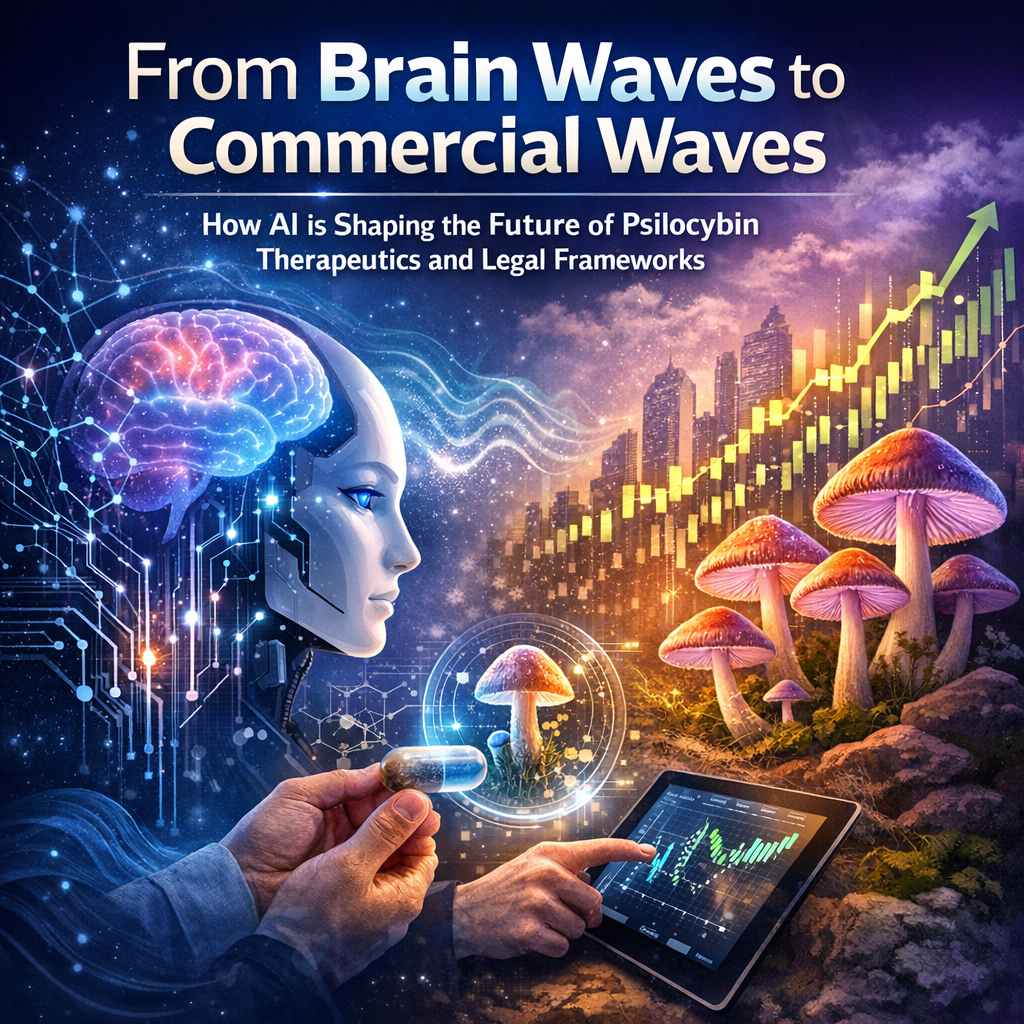
From Brain Waves to Commercial Waves: How AI is Shaping the Future of Psilocybin Therapeutics and Legal Frameworks
Introduction
In recent years, the revival of interest in **psychedelic therapies** has opened new avenues for exploration in medical research and treatment strategies. Among the most promising of these substances is **psilocybin**, a naturally occurring psychedelic prodrug compound produced by more than 200 species of mushrooms. Known for its **psychoactive properties**, psilocybin has traditionally been shrouded in controversy and **legal constraints**. However, the tide is changing as groundbreaking research and technological advancements begin to reshape the landscape for psilocybin therapeutics.
One of the foremost technologies driving this wave of change is **Artificial Intelligence (AI)**. While traditionally used in fields like robotics, data analysis, and machine learning, AI is now making meaningful inroads into the domain of psilocybin research and application. This infusion of advanced technology helps decode complex human **neurophysiology**, unveiling the mysteries of how psychedelics like psilocybin interact with our brains. From personalized treatment plans to predictive analyses that better elucidate clinical outcomes, AI’s algorithms offer untapped potential to optimize and democratize psilocybin-based therapies.
Moreover, the changing **legal landscape** also plays a pivotal role in shaping the commercial prospects of psilocybin. As measures to decriminalize and regulate the therapeutic use of psilocybin gain traction worldwide, there is an emerging need for a structured legal framework. AI tools can help streamline regulatory processes, adapt to policy changes, and enhance compliance guidelines for companies eager to explore this burgeoning field. As we stand at the intersection of science, technology, and regulatory policy, the question isn’t merely about how psilocybin can benefit from AI but how both can together revolutionize mental health treatment on a global scale.
Features
One of the standout studies in this domain is the research conducted by **Johns Hopkins University**, which explores the therapeutic potential of psilocybin in treating major depressive disorder. The study, published in *JAMA Psychiatry*, showed significant improvements in depression symptoms among participants receiving psilocybin-assisted therapy, facilitating what the researchers describe as a psyche reset [here](https://jamanetwork.com).
While these types of studies lay the groundwork for understanding psilocybin’s effect on mental health disorders, AI adds a transformative layer in optimizing these therapeutic interventions. For instance, AI can analyze a vast range of brain activity data to better understand individual responses to psilocybin. Using neural imaging and AI algorithms, researchers can predict the efficacy of psilocybin on a personalized level, tailoring dosages and therapies to fit an individual’s unique neurochemistry and mental health needs.
AI’s role doesn’t end there. Another study by **Imperial College London** utilizes what they call “dynamic representation” models to track how psilocybin impacts **brain connectivity patterns**. AI helps in decoding these dynamic shifts, offering new insights into how brain networks reorganize during and after treatment [here](https://www.nature.com/articles/s41598-018-23874-5).
Moreover, AI can facilitate real-time monitoring of psilocybin’s effects, inspiring the development of wearable technology that can collect and analyze physiological data in situ. This merging of AI and wearable tech can provide healthcare professionals timely, actionable insights for therapeutic adjustments, significantly improving safety protocols.
Furthermore, AI stands at the forefront of legal clarity. By analyzing policy papers, legislative histories, and existing frameworks across multiple jurisdictions, AI can predict and propose optimized paths for psilocybin’s legal acceptance, giving entrepreneurs and advocates data-driven strategies to press for law reforms.
Conclusion
As we dive deeper into an era where mental health takes center stage, the synergy between AI and psilocybin presents a transformative horizon. AI tools promise more effective, personalized treatment strategies and a streamlined pathway through regulatory complexities, offering fresh hope for psilocybin-based therapies. Together, they empower a new therapeutic frontier with the potential to reshape not only mental healthcare but also our broader understanding of consciousness, opening doors to possibilities once relegated to the realm of science fiction.
References
– [Johns Hopkins Study on Psilocybin and Depression](https://jamanetwork.com/journals/jamapsychiatry/fullarticle/2772630)
– [Study on Brain Connectivity and Psilocybin by Imperial College London](https://www.nature.com/articles/s41598-018-23874-5)
Concise Summary:
The intersection of AI and psilocybin research presents a revolutionary opportunity for mental health therapies. **Psilocybin**, a psychedelic with psychoactive properties, is gaining renewed interest for its therapeutic potential, bolstered by **AI** technologies. AI aids in decoding complex neurophysiology, personalizing treatment plans, and predicting clinical outcomes. Meanwhile, the changing **legal landscape** necessitates structured frameworks, which AI can streamline by analyzing policy changes. Together, AI and psilocybin may transform mental healthcare by providing effective treatments and clearer regulatory paths, heralding a new era in understanding consciousness and therapeutics.

Dominic E. is a passionate filmmaker navigating the exciting intersection of art and science. By day, he delves into the complexities of the human body as a full-time medical writer, meticulously translating intricate medical concepts into accessible and engaging narratives. By night, he explores the boundless realm of cinematic storytelling, crafting narratives that evoke emotion and challenge perspectives. Film Student and Full-time Medical Writer for ContentVendor.com