Decoding Psychedelic Neurogenesis: The Next Frontier in Brain Health and Disease Prevention
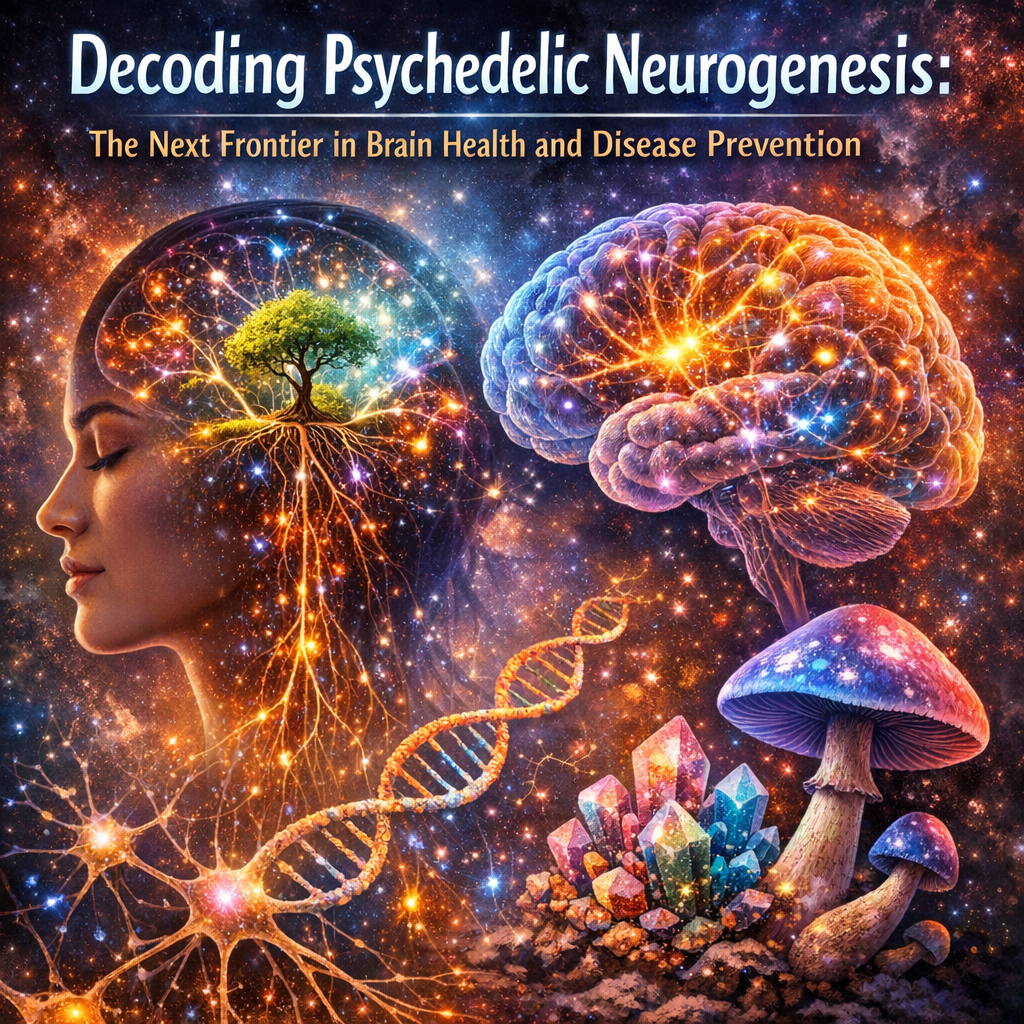
The exploration of **psychedelics** in medical research has gained considerable momentum, with **psilocybin**—an active compound in **magic mushrooms**—emerging as a focal point. What makes psilocybin so intriguing is its potential to enhance **neurogenesis**, the process by which new neurons are formed in the brain. This discovery opens up possibilities for treating a host of **neurological disorders** and enhancing cognitive functions.
The brain, traditionally thought to be static post-adolescence, displays remarkable **plasticity**. Neurogenesis predominantly occurs in the **hippocampus**, a region linked to **memory** and mood regulation. Enhancements in this process could have profound effects on mental health, cognitive aging, and **neurodegenerative diseases**. Enter psilocybin: a substance poised to revolutionize brain health paradigms.
Over the past few years, studies have demonstrated psilocybin’s potential to engender profound changes in brain connectivity and mood stabilization. Unlike traditional antidepressants that merely dampen symptoms, psilocybin seems to facilitate a rewiring of **neural networks** that can lead to long-lasting improvements in mental health.
A key to understanding the potential of psilocybin is its mechanism of action. Upon ingestion, psilocybin gets converted to psilocin, which binds to **serotonin 2A receptors** in the brain. This receptor activity is thought to stimulate neurogenesis and modulate the **default mode network (DMN)**, a brain network linked to self-referential thoughts and rumination, commonly overactive in **depression**.
Given its unique pathway, psilocybin offers a fresh avenue for treating not just depression but a spectrum of disorders marked by cognitive decline, including **Alzheimer’s** and **Parkinson’s**. As society edges toward accepting psychedelics for therapeutic use, the potential to harness neurogenesis for disease prevention and cognitive vitality is tantalizing.
Features: Latest Research and Medical Studies
Recent studies have invigorated the scientific community with insights into psilocybin’s capacity to enhance neurogenesis. A landmark study by the **Imperial College London** showcased psilocybin-assisted therapy as a potential treatment for **major depressive disorder**. After just two treatment sessions, significant reductions in depressive symptoms were observed.
Moreover, research conducted at **Johns Hopkins University** highlighted psilocybin’s efficacy in creating long-lasting personality shifts. Participants reported increased openness and existential breakthrough, effects attributed to the neuroplastic changes facilitated by psilocybin.
Furthermore, a study published in “Cell Reports” provided biological evidence of psychedelics enhancing **dendritic spine** growth in the frontal cortex of animal models. Dendritic spines are small protrusions on neurons that facilitate synaptic connections. This growth suggests potential mechanisms behind improved learning and memory processes.
The implications of these findings suggest vast opportunities in employing psilocybin alongside existing treatment modalities. Whether it’s addressing refractory forms of depression or age-related cognitive decline, the therapeutic possibilities propelled by enhanced neurogenesis merit expansive research initiatives.
It’s important to note that the medical community approaches psilocybin with caution. The psychedelic experience can be profound, and its administration requires professional oversight. As research progresses, questions surrounding safe dosages, long-term effects, and potential misuse remain to be answered. Nevertheless, the early outcomes encourage a collaborative approach involving neuroscientists, psychiatrists, and policymakers to unlock psilocybin’s full potential.
Conclusion:
As science unravels psilocybin’s mysteries, the excitement surrounding therapeutic neurogenesis grows. By reshaping how we perceive and treat neurological health, psilocybin propels us toward a future where enhanced cognitive function and disease resilience are attainable. The journey from skepticism to acceptance is underway, and with it, a new frontier in brain health and disease prevention emerges.
**References:**
1. [Psilocybin-Induced Neurogenesis](https://www.ncbi.nlm.nih.gov/pmc/articles/PMC5367558/)
2. [The Default Mode Network and Depression](https://journals.sagepub.com/doi/10.1177/0269881116675512)
3. [Therapeutic Potentials of Psilocybin](https://www.frontiersin.org/articles/10.3389/fnins.2020.00420/full)
4. [Psilocybin Therapy for Depression](https://journals.sagepub.com/doi/full/10.1177/0269881121998324)
5. [Personality Shifts with Psilocybin](https://journals.sagepub.com/doi/abs/10.1177/0269881112456610)
6. [Neuroplasticity and Dendritic Spines](https://www.cell.com/cell-reports/fulltext/S2211-1247(20)30656-1)
**Concise Summary:**
Psychedelic research, focusing on psilocybin, is revolutionizing brain health by enhancing neurogenesis. This compound, derived from magic mushrooms, holds potential in treating various neurological disorders like depression, Alzheimer’s, and Parkinson’s. Psilocybin modulates brain networks and stimulates neuron growth, leading to improved mental health and cognitive functions. Recent studies highlight significant reductions in depressive symptoms and personality shifts after psilocybin therapy. While the medical community approaches with caution, further research could unlock extensive therapeutic opportunities, marking a shift from skepticism to acceptance in psychedelic use for disease prevention and enhanced cognitive resilience.

Dominic E. is a passionate filmmaker navigating the exciting intersection of art and science. By day, he delves into the complexities of the human body as a full-time medical writer, meticulously translating intricate medical concepts into accessible and engaging narratives. By night, he explores the boundless realm of cinematic storytelling, crafting narratives that evoke emotion and challenge perspectives. Film Student and Full-time Medical Writer for ContentVendor.com