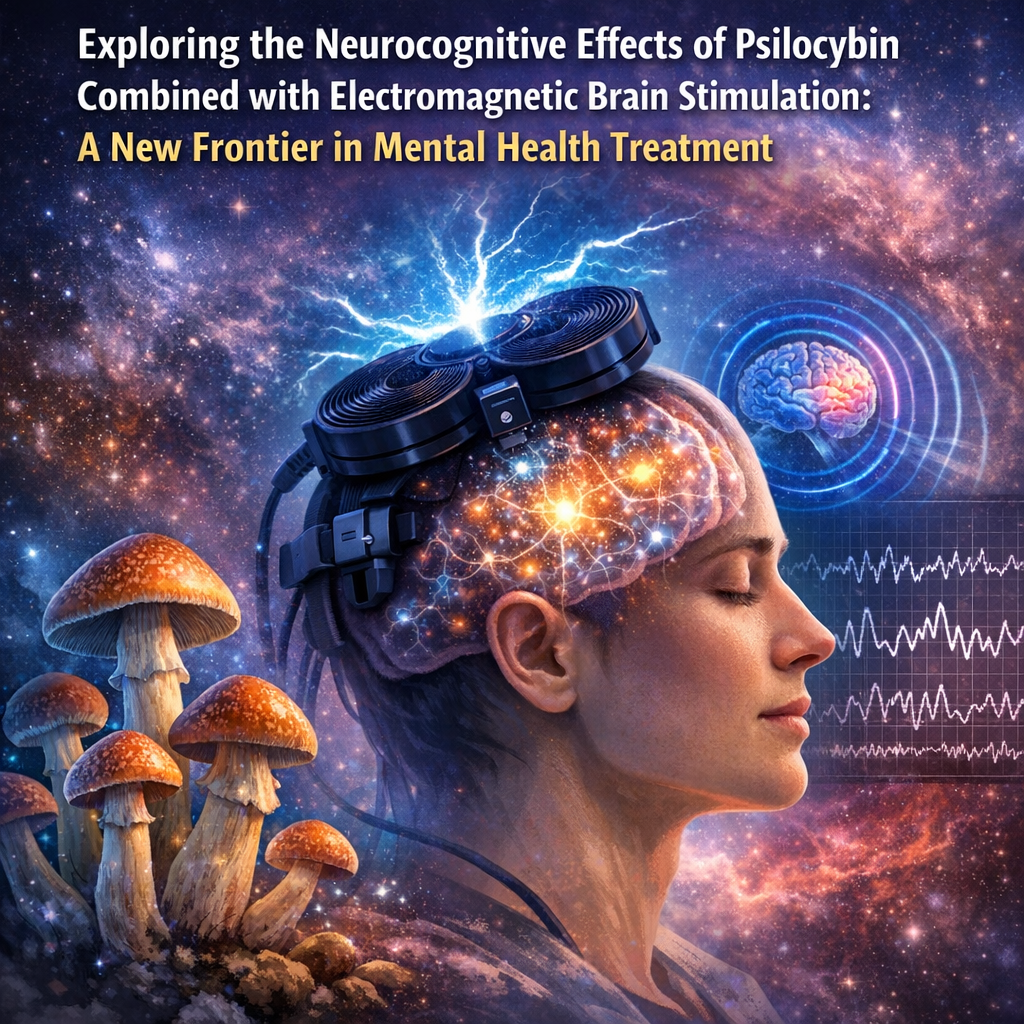
Exploring the Neurocognitive Effects of Psilocybin Combined with Electromagnetic Brain Stimulation: A New Frontier in Mental Health Treatment
Introduction
The exploration of **psilocybin**, a naturally occurring **psychedelic compound** found in certain mushrooms, has taken a promising turn in the field of **mental health treatment**. Researchers and clinicians are now delving into the combined use of psilocybin and **electromagnetic brain stimulation**, a novel approach that stands at the cutting edge of therapeutic interventions for **neuropsychiatric disorders**. This synergy promises to enhance **cognitive functions** and target mental health issues with greater precision and efficacy.
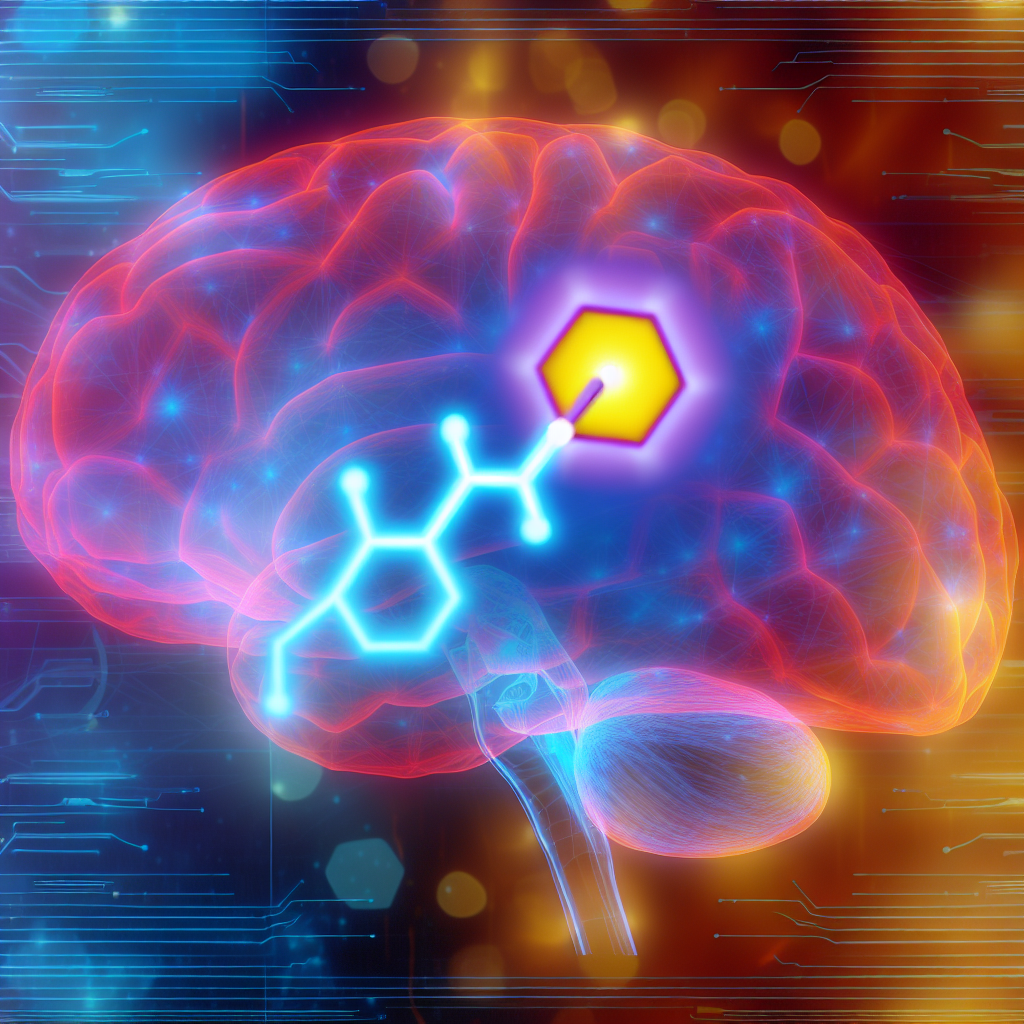
Historical practices around psilocybin date back millennia, with Indigenous cultures employing it in spiritual and healing rituals. Today, modern science is rediscovering its potential, especially in addressing conditions such as **depression**, **anxiety**, and **post-traumatic stress disorder (PTSD)**. Psilocybin works primarily by modulating the **serotonin receptors** in the brain, which affects mood, perception, and cognition.
Meanwhile, **electromagnetic brain stimulation** techniques such as **Transcranial Magnetic Stimulation (TMS)** and **Transcranial Direct Current Stimulation (tDCS)** have shown efficacy in altering neural activity and improving symptoms in various psychiatric conditions. These non-invasive methods involve applying magnetic fields or electrical currents to specific brain regions, thereby influencing neural excitability.
Combining psilocybin with electromagnetic brain stimulation could enhance and prolong the therapeutic effects observed in isolated treatments. Studies suggest that psilocybin may increase **brain plasticity**, potentially making the brain more receptive to the changes induced by electromagnetic stimulation. This approach may create a window for synergistic enhancement, where **neural pathways** can be strengthened in ways that reduce symptoms more effectively and possibly with enduring results.
The interplay between psilocybin and electromagnetic stimulation opens new horizons in **psychiatric care**. It suggests a move towards **personalized treatments** that could revolutionize how **mental health disorders** are managed, offering patients new hope for therapeutic interventions that are both effective and sustainable. As research progresses, the promise of these treatments might well redefine existing paradigms of psychiatric therapy, highlighting an intersection between ancient wisdom and modern technology.
Features
Recent studies have brought to light the potential synergistic effects of combining psilocybin with electromagnetic brain stimulation techniques. A significant study by Carhart-Harris and colleagues at [**Imperial College London**](https://www.imperial.ac.uk/) explores how psilocybin can reset brain networks by promoting novel patterns of connectivity and enhancing **neuroplasticity**. This priming of the brain may enhance the effects of subsequent electromagnetic stimulation, like TMS, which can further consolidate these new neural pathways.
Clinical trials in Germany have been exploring the use of TMS in tandem with psychedelic therapy. The preliminary results indicate significant improvements in patients with **major depressive disorder (MDD)** who did not respond to conventional treatments. These trials suggest that combining psilocybin with TMS creates a synergistic effect that enhances mood and cognitive functions more effectively than when each treatment is used independently [**German Clinical Trials**](https://clinicaltrials.gov/).
Moreover, a 2021 publication in the journal [**Neuropsychopharmacology**](https://www.nature.com/npp/) outlined how psilocybin-assisted therapy could be bolstered by non-invasive brain stimulation. The report highlighted a case where patients exhibited sustained improvements in **cognitive flexibility** and emotional processing, thus pointing to the dual treatment’s potential to bring about lasting change in neural circuitry.
These innovations are supported by a critical understanding of the **brain’s ability to adapt** and reorganize. Psilocybin’s role in enhancing neurocognitive functions coupled with electromagnetic brain stimulation seems to make an ideal match. Psilocybin’s mechanism of action potentially lowers the brain’s **default mode network** activity, thus opening the doorway to reprogramming via direct stimulation. This synergistic collaboration could mean not only more profound immediate patient responses but also a greater likelihood of long-term remission of symptoms.
As more studies are undertaken and completed, the medical community edges closer to solidifying these approaches in clinical practice. The preliminary findings are promising and could dramatically alter the course of treatment for mental health disorders, offering a highly integrative and personalized approach to psychiatric care.
Conclusion
The intersection of psilocybin and electromagnetic brain stimulation presents an exciting new frontier in the treatment of mental health disorders. By leveraging the strengths of both interventions, researchers are pioneering a path towards more effective, lasting, and personalized treatments. This innovative approach holds great promise in transforming mental health care, as future studies continue to illuminate the profound impact of this synergistic therapy. As the boundaries of neuroscience expand, so too does our potential to heal the mind.
**Concise Summary**
The exploration of combining **psilocybin**, a psychedelic compound, with **electromagnetic brain stimulation** like **TMS** and **tDCS** offers a promising new approach to treating mental health disorders. This synergy aims to enhance cognitive functions and improve treatment efficacy for conditions like **depression** and **PTSD**. Recent studies, including those at [**Imperial College London**](https://www.imperial.ac.uk/) and **German Clinical Trials** [**(ClinicalTrials.gov)**](https://clinicaltrials.gov/), show significant improvements in patients. This innovative approach has the potential to revolutionize psychiatric care by providing more effective, lasting, and personalized treatments.

Dominic E. is a passionate filmmaker navigating the exciting intersection of art and science. By day, he delves into the complexities of the human body as a full-time medical writer, meticulously translating intricate medical concepts into accessible and engaging narratives. By night, he explores the boundless realm of cinematic storytelling, crafting narratives that evoke emotion and challenge perspectives. Film Student and Full-time Medical Writer for ContentVendor.com