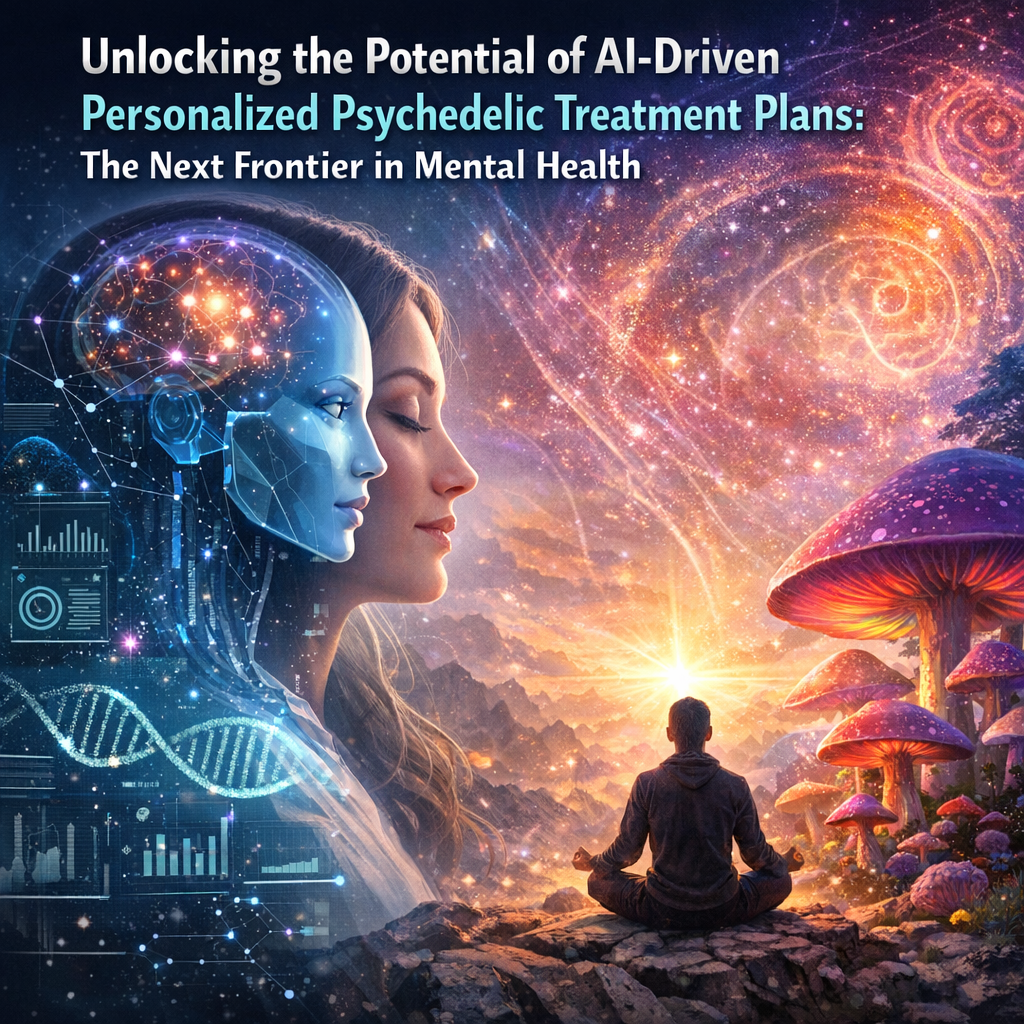
Unlocking the Potential of AI-Driven Personalized Psychedelic Treatment Plans: The Next Frontier in Mental Health
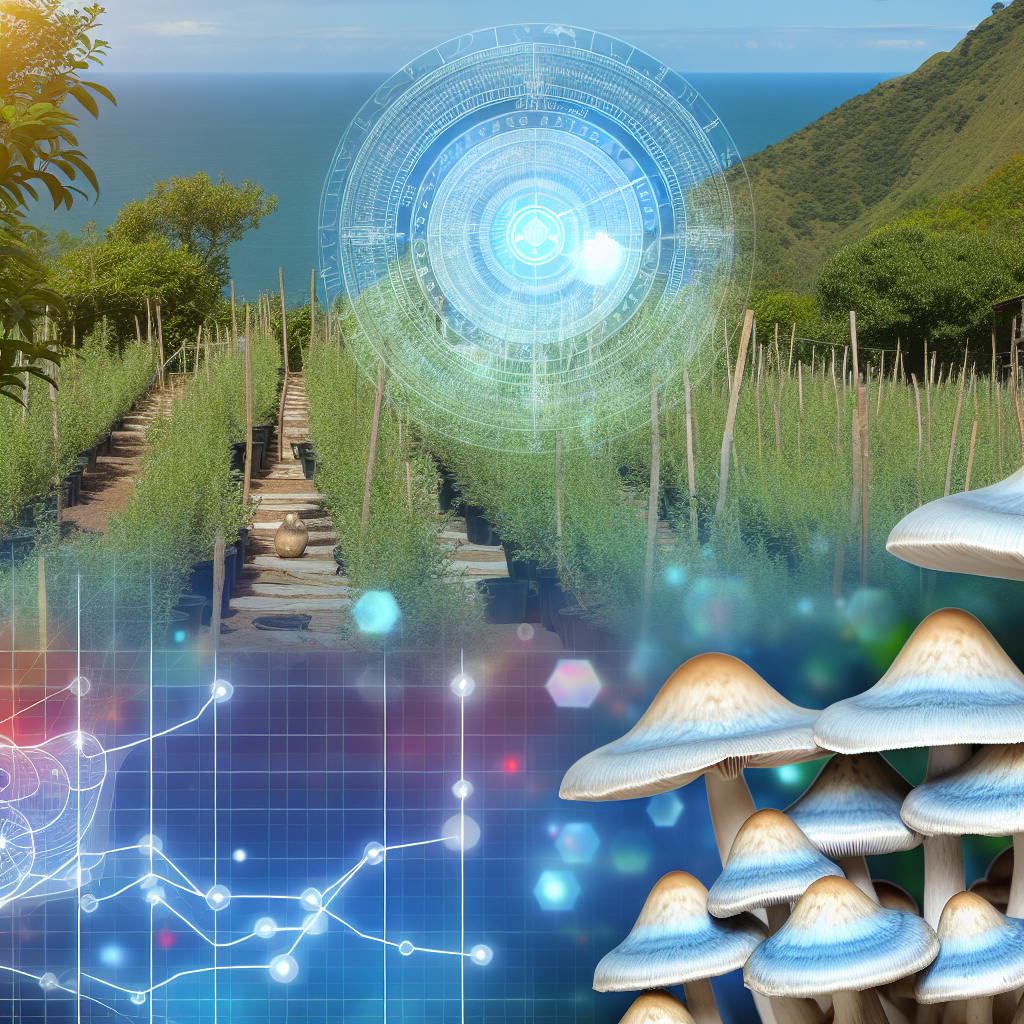
In recent years, the fields of **mental health** and **technology** have increasingly intersected, leading to revolutionary ways to treat various psychological issues. One of the most promising areas is **psychedelic treatments**, particularly those involving **psilocybin mushrooms**. Psilocybin, a naturally occurring psychedelic compound, shows promise in treating conditions like **depression**, **anxiety**, and **PTSD**. As these treatments gain recognition, integrating **artificial intelligence (AI)** marks a groundbreaking development. AI can revolutionize how psychedelic-based therapies are developed and implemented, transforming the landscape of mental health treatment.
Personalization is becoming key in modern medicine, especially in mental health. Generic treatment plans often fall short, given the unique nature of each individual’s psychological health. This gap creates an opportunity for AI to design highly personalized treatment plans. AI, powered by **machine learning** algorithms and vast databases, can analyze an individual’s mental health history, genetic data, lifestyle, and previous treatment responses. It suggests customized **psilocybin treatment regimens**, maximizing therapeutic outcomes and minimizing side effects.
Moreover, **AI-driven personalized treatment plans** offer continuous monitoring and adjustments. Traditional treatment plans are often reactive, based on patient feedback. AI can proactively modify strategies in real-time by analyzing data streams, enabling a more dynamic approach. This adaptability is vital in psychedelic treatments, where individual responses vary widely between sessions.
Features: Exploring Professional Studies and Their Implications
Research in psychedelic treatments has seen a renaissance over the last decade. Studies underline psilocybin’s benefits in addressing mental health disorders. A notable **Johns Hopkins University** study found significant reductions in depressive symptoms post-psilocybin therapy [Johns Hopkins University Study](https://www.hopkinsmedicine.org). Similarly, research in *Psychopharmacology* indicated anxiety and depression decreases in psilocybin therapy patients [Psychopharmacology Study](https://link.springer.com).
Combining AI with psychedelic treatments caters to individual neurochemistry nuances. AI analysis highlights precise psychological and neurological pathways, enhancing practitioners’ understanding of psilocybin therapy. AI also facilitates **VR and AR platforms** that simulate controlled environments, enhancing the therapeutic experience safely.
AI’s role is critical in predictive analysis and risk assessment. It evaluates data to estimate treatment success likelihood and identifies potential risks, crucial in psychedelic therapies where set, setting, and nutritional status impact outcomes.
AI also advances **research and development** in psychedelics. By processing complex datasets, AI uncovers new therapeutic potentials for psilocybin, leading to more effective and innovative treatments. This confluence of AI, psychedelics, and personalized medicine is paving the way for a novel mental health disorder treatment approach, acknowledging the human mind’s intricacy and leveraging technology.
Conclusion: The Road Ahead
The fusion of AI technologies with psychedelic therapies symbolizes a new horizon in mental health care. As psilocybin treatments gain validation and acceptance, AI’s capacity for personalized, efficient treatment plans offers substantial promise. By employing AI’s analytical and predictive strengths alongside psychedelic experiences, meaningful and enduring relief for mental health sufferers is possible. This synergy heralds a hopeful future where mental health treatments are more intelligent, efficient, and personal.
**Concise Summary**
AI-driven personalized psychedelic treatment plans are transforming mental health care by using machine learning to customize psilocybin therapies. By considering individual histories, genes, and previous responses, AI creates optimized plans for conditions like depression and PTSD. AI’s real-time monitoring adapts treatments dynamically, crucial for variable psychedelic responses. Ongoing research at places like **Johns Hopkins University** (link to study) supports these benefits. Combining AI with psychedelic treatments also involves predictive analysis, risk assessment, and involves VR/AR, enhancing safety and effectiveness. This intersection of AI and psychedelics points to innovative and more personal mental health treatments.

Dominic E. is a passionate filmmaker navigating the exciting intersection of art and science. By day, he delves into the complexities of the human body as a full-time medical writer, meticulously translating intricate medical concepts into accessible and engaging narratives. By night, he explores the boundless realm of cinematic storytelling, crafting narratives that evoke emotion and challenge perspectives. Film Student and Full-time Medical Writer for ContentVendor.com