Brain-to-Brain Interfaces: The Next Frontier for Psychedelic Medicine and Consciousness Science?
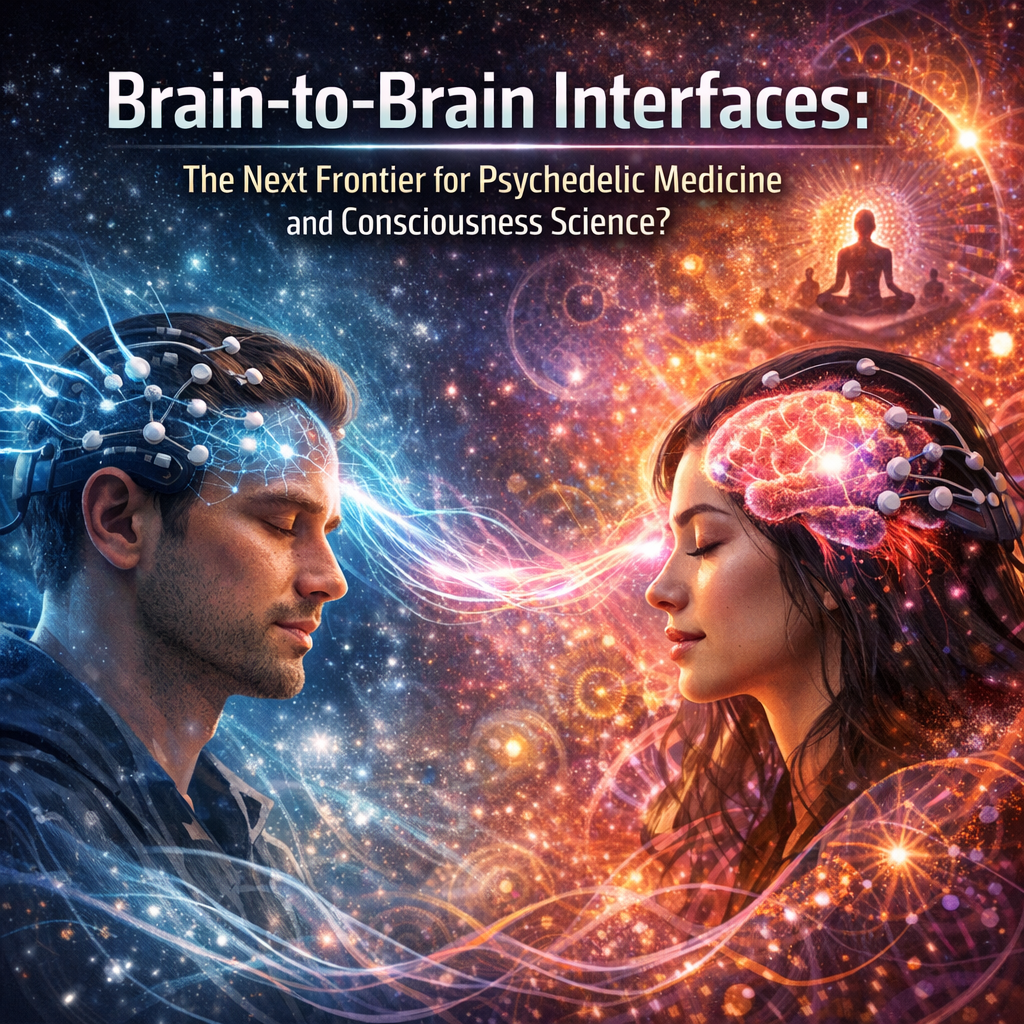
In recent years, the intersection of **neuroscience**, **technology**, and **psychedelic medicine** has opened up groundbreaking avenues for understanding and enhancing human **consciousness**. Among these innovations, **brain-to-brain interfaces (BBIs)** stand out as a particularly exciting frontier. BBIs are systems that facilitate direct communication between brains, with the potential to revolutionize how we perceive and interact with the world. This concept, once relegated to the realm of science fiction, is increasingly gaining traction as a vital component of both psychedelic science and consciousness research.
**Psychedelic substances** like **psilocybin** have been at the forefront of a renaissance in medicinal applications, showing promise in treating **mental health disorders** such as **depression**, **PTSD**, and **anxiety**. By altering brain connectivity and enhancing neuroplasticity, psychedelics can help in restructuring thought patterns, potentially leading to lasting psychological benefits. Concurrently, advances in BBIs propose an exciting expansion of these therapeutic horizons. Imagine a world where experiences induced by psychedelic compounds could be shared or even amplified through direct brain communications. This technological synergy not only opens doors for novel therapeutic interventions but also enriches the scientific exploration of consciousness itself.
The potential synergy of BBIs and psychedelics goes beyond individual therapeutic applications. It raises profound questions about identity, shared experiences, and the nature of consciousness. By potentially allowing individuals to share subjective experiences and insights into their cognitive processes, this frontier challenges long-held notions of individuality in psychological and philosophical contexts. As we continue to explore these possibilities, ethical considerations must play a crucial role in the conversation, ensuring that such technologies prioritize human well-being and augment rather than undermine personal autonomy.
As BBIs and psychedelic science advance, they may provide unprecedented methods for studying the human mind’s complexities. By offering insights into how psychedelics affect brain connectivity and consciousness, BBIs could help customize and enhance therapeutic strategies, leading to more effective interventions. While still in the exploratory phase, this burgeoning field holds the potential to transform our understanding of mental health, social cohesion, and the intricacies of human experience.
Features: Professional and Medical Studies on Brain-to-Brain Interfaces
Recent advancements in neuroscience and technology have enabled pioneering studies focusing on the applications of BBIs, especially in relation to consciousness and mental health. Notable research has demonstrated the feasibility of brain-to-brain communication between animals, and more recently, humans. For example, a study led by neuroscientist Miguel Nicolelis successfully linked the brains of two rats, allowing them to share sensory and motor information directly across a computerized interface. This experiment laid the groundwork for subsequent research into human BBIs.
In human studies, researchers have concentrated primarily on non-invasive techniques that combine **electroencephalograms (EEGs)** and intelligent algorithms to facilitate interactions between brains. A fascinating study by University of Washington researchers involved transmitting signals from one person’s brain to another’s, enabling simple question-and-answer exchanges. While these early demonstrations are rudimentary, they highlight the enormous potential of BBIs to facilitate shared experiences and collective problem-solving when integrated with psychedelic treatments.
As BBIs become more sophisticated, their implications for psychedelic medicine are profound. Psychedelic substances alter neural networks and can create novel brain states conducive to therapy. By incorporating BBIs, scientists hope to amplify these effects, enabling controlled and shared psychedelic experiences. Moreover, the integration with BBIs may allow real-time monitoring and adaptation of therapeutic interventions, tailoring treatments to individual neurophysiological responses and improving outcomes for conditions like depression and PTSD.
The fusion of these technologies could also foster a new understanding of consciousness. Studies involving psychedelics and BBIs can uncover how subjective experiences correlate with neural activity, providing insights into the nature of consciousness itself. This research could shift paradigms within both medical fields and cognitive neuroscience, challenging traditional notions of mind and self.
The ongoing ethical and social dialogues remain critical to these developments. Researchers and practitioners must address concerns about privacy, consent, and the potential for misuse. Ensuring that advancements are used responsibly will require multidisciplinary cooperation and comprehensive ethical frameworks.
Conclusion
The burgeoning field of **brain-to-brain interfaces** holds transformative potential for psychedelic medicine and consciousness science. As research progresses, these technologies may redefine therapeutic landscapes, offering novel interventions and deepening our understanding of the human mind. As we navigate this new frontier, ethical considerations must guide us, ensuring that these innovations enhance human experience and personal autonomy. The journey toward integrating BBIs with psychedelic science promises not only to advance our knowledge but to reshape our conception of connection and consciousness.
References
1. Nicolelis, M.A.L., & Chapin, J.K. (2002). [“Controlling Robots with the Mind.”](https://www.scientificamerican.com/article/controlling-robots-with-the/) Scientific American.
2. Yoo, S. & Kim, E. (2019). [“Brain-to-Brain Interfaces: Unlocking the Mind With EEG Technology.”](https://www.washingtonpost.com/science/2019/07/26/brain-to-brain-interfaces-unlock-mind/) The Washington Post.
3. Johnson, M. & Griffiths, R. (2017). [“The Potential of Psychedelics in the Understanding and Treatment of Mental Disorders.”](https://www.cell.com/cell-reports/fulltext/S2211-1247(17)30374-1) Cell.
**Concise Summary:**
Brain-to-brain interfaces (BBIs) represent an exciting frontier at the intersection of neuroscience, technology, and psychedelic medicine. These systems allow direct communication between brains, potentially revolutionizing perceptions and interactions. Combined with psychedelics like psilocybin, which aid in treating mental health issues by altering brain connectivity, BBIs could facilitate shared therapeutic experiences. This technological synergy prompts profound questions about individuality and consciousness. As research advances, ethical considerations must prioritize well-being, ensuring technologies enhance human experience and personal autonomy. BBIs, alongside psychedelics, may transform therapeutic strategies and deepen understanding of the human mind.

Dominic E. is a passionate filmmaker navigating the exciting intersection of art and science. By day, he delves into the complexities of the human body as a full-time medical writer, meticulously translating intricate medical concepts into accessible and engaging narratives. By night, he explores the boundless realm of cinematic storytelling, crafting narratives that evoke emotion and challenge perspectives. Film Student and Full-time Medical Writer for ContentVendor.com