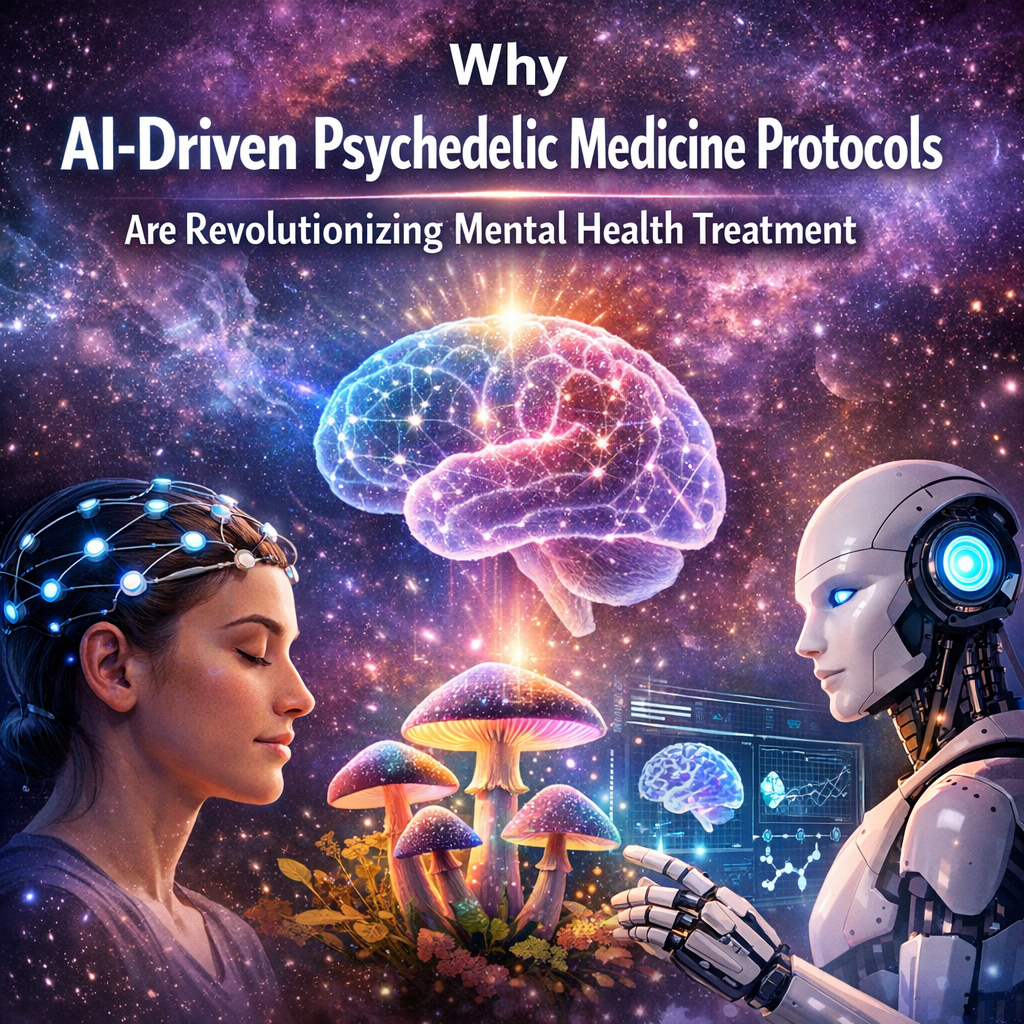
Why AI-Driven Psychedelic Medicine Protocols Are Revolutionizing Mental Health Treatment
In recent years, the intersection of **artificial intelligence (AI)** and **psychedelic medicine** has emerged as one of the most promising frontiers in **mental health treatment**. This revolutionary approach promises to redefine how we comprehend, diagnose, and treat various **mental health disorders**, offering hope to millions coping with conditions like **depression**, **PTSD**, and **anxiety**.
At its core, psychedelic medicine exploits the therapeutic potential of substances like **psilocybin**, **LSD**, and **MDMA**, which are known to produce profound changes in perception, mood, and cognitive processes. Historically bound by stigma and legal restrictions, these compounds are now experiencing a renaissance backed by rigorous scientific research. Studies indicate that psychedelics can lead to transformational psychological experiences, increase emotional openness, and foster new perspectives, which are invaluable for mental health healing.
Enter AI, a cutting-edge technology capable of sifting through massive **data sets** to identify patterns, optimize protocols, and predict **treatment outcomes**. When integrated with psychedelic treatments, AI-driven protocols can analyze individual patient data to personalize treatment plans, adjusting factors such as dosage, therapy duration, and integration techniques to accommodate personal health histories and genetic predispositions. This level of **precision medicine** ensures safety, efficacy, and a higher likelihood of positive outcomes.
Moreover, AI can assist in tracking patient progress in real-time, providing therapists with insights into the patient’s journey that were previously unavailable. Such insights enable dynamic adjustments to the therapeutic protocols, ensuring that the treatment evolves with the patient’s needs. This continuous feedback loop fosters a deeper understanding of psychedelic substances and their impacts on mental health, paving the way for more informed applications of these therapies in clinical settings.
Organizations and startups are stepping up to harness this synergy between AI and psychedelics. For instance, platforms are being developed that use **machine learning** to analyze therapy sessions and patient feedback, optimizing therapeutic outcomes. These innovations not only make psychedelic therapy more accessible but also sharpen our understanding of its mechanisms.
AI-driven **psychedelic medicine protocols** represent a significant leap forward in mental health care. By blending the transformative potential of psychedelics with the analytical power of AI, mental health professionals can offer treatments that are tailored, dynamic, and effective. This combination of technologies heralds a new era in mental health treatment, offering a beacon of hope to those who need it most.
Features
Scientific research underpins the optimism surrounding AI-driven psychedelic therapies. A notable study published in *Nature Medicine* examined the effects of MDMA-assisted therapy on PTSD patients. The study found that 67% of participants no longer qualified for a PTSD diagnosis after two MDMA-assisted therapy sessions. This highlights the significant therapeutic potential of psychedelics when integrated with structured psychological support.
Another groundbreaking study by *Imperial College London* reported that psilocybin therapy showed significant efficacy in treating treatment-resistant depression. Using functional magnetic resonance imaging (fMRI), researchers observed changes in brain activity patterns associated with emotional processing. These alterations were linked to the therapeutic outcomes, suggesting that psilocybin’s ability to “reset” neural circuits might be responsible for relieving depressive symptoms.
AI’s role in enhancing these outcomes cannot be overstated. According to *Frontiers in Neuroscience*, AI algorithms have been used to predict patient responses to psychiatric drugs by examining genetic markers and historical medical data. These predictive models can be adapted to psychedelic therapies to forecast individual responses and optimize treatment plans accordingly.
Recent developments in AI-driven analysis include a project by *MAPS Public Benefit Corporation* and the clinical research organization *Quantified Citizen*. Together, they are developing an AI-powered platform that uses patient data to optimize psychedelic therapy protocols. By employing machine learning, the platform can analyze variables including session duration, the therapeutic setting, and post-session integration strategies, creating a meticulously tailored treatment journey for each patient.
Conclusion
AI-driven psychedelic medicine protocols are not just an advancement in mental health treatment; they represent a paradigm shift. By marrying the discoveries of modern neuroscience with the computational prowess of AI, we can offer personalized, efficient, and more effective interventions for complex mental health issues. As research continues and legal landscapes evolve, this novel synergy holds the promise of ushering in a new era of mental well-being, fostering healing in ways previously unimaginable.
Concise Summary
The integration of artificial intelligence (AI) with psychedelic medicine is revolutionizing mental health treatment, offering personalized and effective interventions. AI enhances the therapeutic use of psychedelics like psilocybin and MDMA by analyzing patient data to tailor treatment plans for conditions such as depression and PTSD. Studies, such as those from Nature Medicine and Imperial College London, demonstrate the potential of these therapies, showing significant improvements in mental health. The collaborative efforts of organizations, like MAPS Public Benefit Corporation with AI-driven platforms, underscore the dynamic evolution of this field, heralding a new era in mental health care.

Dominic E. is a passionate filmmaker navigating the exciting intersection of art and science. By day, he delves into the complexities of the human body as a full-time medical writer, meticulously translating intricate medical concepts into accessible and engaging narratives. By night, he explores the boundless realm of cinematic storytelling, crafting narratives that evoke emotion and challenge perspectives. Film Student and Full-time Medical Writer for ContentVendor.com