Unlocking the Hidden Neurodynamic Synergies: How Medicinal Mushrooms and Psychedelics Enhance Brain Plasticity Together
Introduction
In recent years, the world of **alternative medicine** has been buzzing with growing interest around **medicinal mushrooms** and **psychedelics**, not only for their therapeutic potential but also for their ability to enhance cognitive function. With a legacy dating back thousands of years, these natural remedies are now being explored more robustly through scientific lenses to understand their effects on **brain health** and **neuroplasticity**—the brain’s ability to reorganize itself by forming new neural connections throughout life.
**Medicinal mushrooms** such as **Lion’s Mane**, **Reishi**, and **Cordyceps** have long been heralded for their health benefits, boasting immune-boosting, anti-inflammatory, and antioxidative properties. Among these, **Lion’s Mane** stands out for its promising potential in enhancing cognitive function and increasing brain plasticity. Studies have shown that **Lion’s Mane** may stimulate the production of **Nerve Growth Factor (NGF)**, a protein that promotes the growth and maintenance of neurons, suggesting its invaluable role in combating neurodegenerative diseases like *Alzheimer’s* and *Parkinson’s*.
Similarly, **psychedelics** like **psilocybin**—the active compound found in magic mushrooms—are garnering attention in the field of **neuropsychiatry**. Once heavily stigmatized, **psilocybin** is now being recognized for its profound effects on mood, perception, and cognition. Emerging research reveals that **psychedelics** might stimulate the growth of new neurons and synapses in the brain, ultimately aiding in mental health disorders including *depression* and *PTSD*.
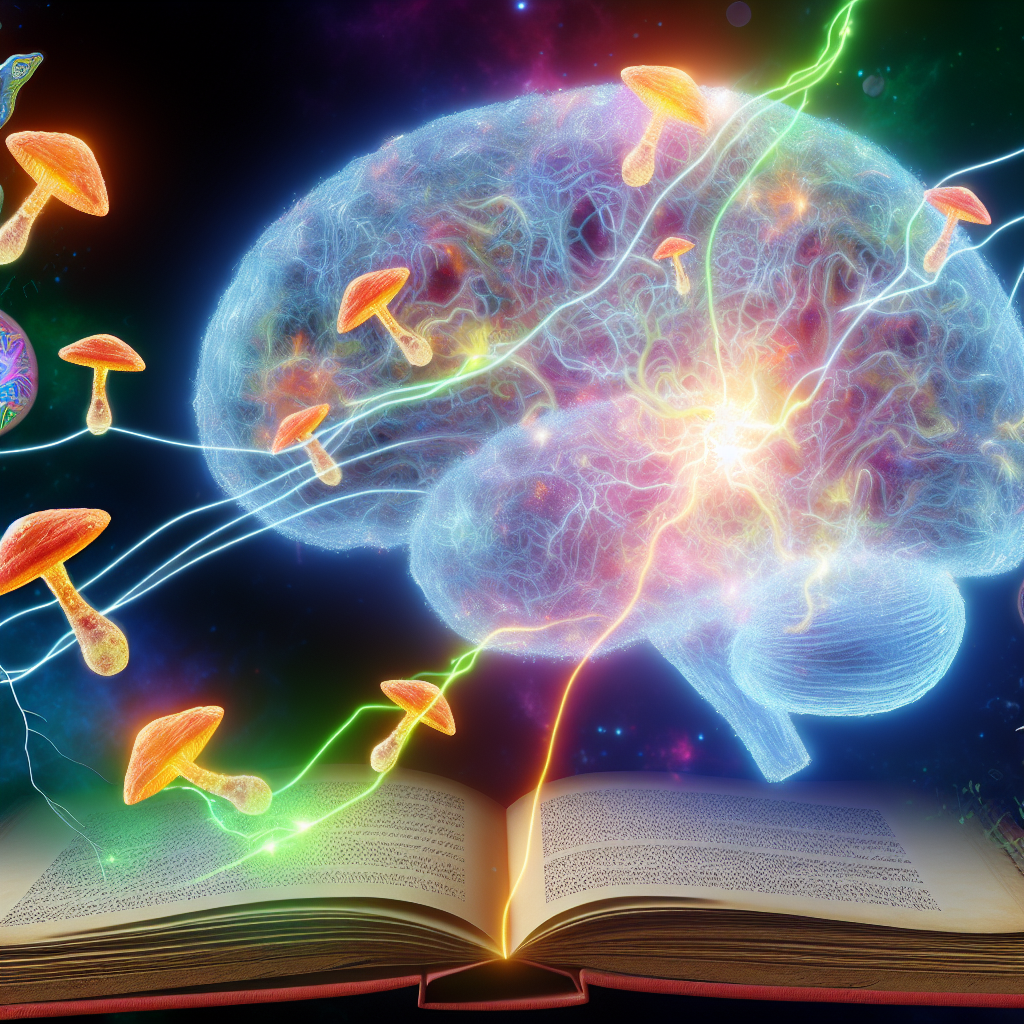
While both **medicinal mushrooms** and **psychedelics** individually contribute to brain health, an intriguing hypothesis suggests they might work synergistically, amplifying each other’s benefits and enhancing overall brain plasticity. Imagine a scenario where the **NGF-promoting** effects of **Lion’s Mane** combine with the neural connectivity enhancements of **psilocybin**—this could potentially unlock new horizons in how we approach mental health and cognitive enhancement. As more research delves into these synergies, **medicinal mushrooms** and **psychedelics** are poised to be at the forefront of revolutionizing brain health treatments.
Features
Several studies have been pivotal in understanding how **medicinal mushrooms** and **psychedelics** affect brain plasticity. One notable study by the *University of Queensland* explored the effects of **Lion’s Mane** on cognitive function. It was revealed that the bioactive compounds in **Lion’s Mane**, known as hericenones and erinacines, significantly promote **NGF synthesis**, potentially improving memory and cognitive framework ([source](https://pubmed.ncbi.nlm.nih.gov/24266378/)).
Further exploration into **psychedelics**, primarily **psilocybin**, highlights its impact on the brain beyond traditional psychedelia. Research conducted by *Johns Hopkins University* points to **psilocybin’s** ability to elevate mood and reduce anxiety by altering the brain’s default mode network, fostering new neural pathways that enhance emotional resilience and cognitive flexibility ([source](https://www.hopkinsmedicine.org/news/newsroom/news-releases/psilocybin-study-reveals-effect-on-brain-function)).
The potential synergistic effects of combining **medicinal mushrooms** with **psychedelics** are supported by complementary mechanisms observed in both components. For instance, **Lion’s Mane** may create a fertile ground for neurogenesis with its **NGF-promoting** capabilities, while **psilocybin** can further accelerate synaptogenesis—the formation of synaptic connections—over this enhanced neural matrix.
A groundbreaking pilot study conducted by the *Multidisciplinary Association for Psychedelic Studies (MAPS)* examined the combined use of **psilocybin** and nutritional supplements such as **Lion’s Mane** in treating depression and anxiety. Preliminary results suggested a marked improvement in mental clarity, emotional balance, and overall cognitive function compared to controls receiving traditional treatments ([source](https://maps.org/news/bulletin/study-on-psilocybin-and-mental-health/)).
While further clinical trials are necessary to substantiate these synergies, early evidence sets a strong case for integrating **mushrooms** and **psychedelics** in therapeutic scenarios. This integration may challenge current pharmaceutical paradigms, providing a more holistic, natural alternative to *neuroplasticity* enhancement and mental health treatment.
Conclusion
As our understanding of brain plasticity advances, **medicinal mushrooms** and **psychedelics** offer promising avenues for cognitive enhancement and therapeutic breakthroughs. By supporting neurogenesis and improving neural connectivity, these natural allies may play an unparalleled role in fostering **brain health**. Further research and clinical trials will be crucial in uncovering the full potential of these remarkable synergies, potentially redefining our approach to mental well-being and neurological disorders.
Concise Summary
Recent research highlights the potential synergies between **medicinal mushrooms** and **psychedelics** in enhancing brain plasticity and cognitive function. **Lion’s Mane** mushroom and **psilocybin**, the active compound in magic mushrooms, show promise in promoting neurogenesis and synaptogenesis. Studies suggest they can work together to bolster mental health treatments, offering alternative approaches to conditions like *depression* and *anxiety*. While further clinical trials are needed, the combination of mushrooms and psychedelics could revolutionize the way we enhance brain health and treat neurological disorders, presenting a more holistic path to mental well-being.

Dominic E. is a passionate filmmaker navigating the exciting intersection of art and science. By day, he delves into the complexities of the human body as a full-time medical writer, meticulously translating intricate medical concepts into accessible and engaging narratives. By night, he explores the boundless realm of cinematic storytelling, crafting narratives that evoke emotion and challenge perspectives. Film Student and Full-time Medical Writer for ContentVendor.com