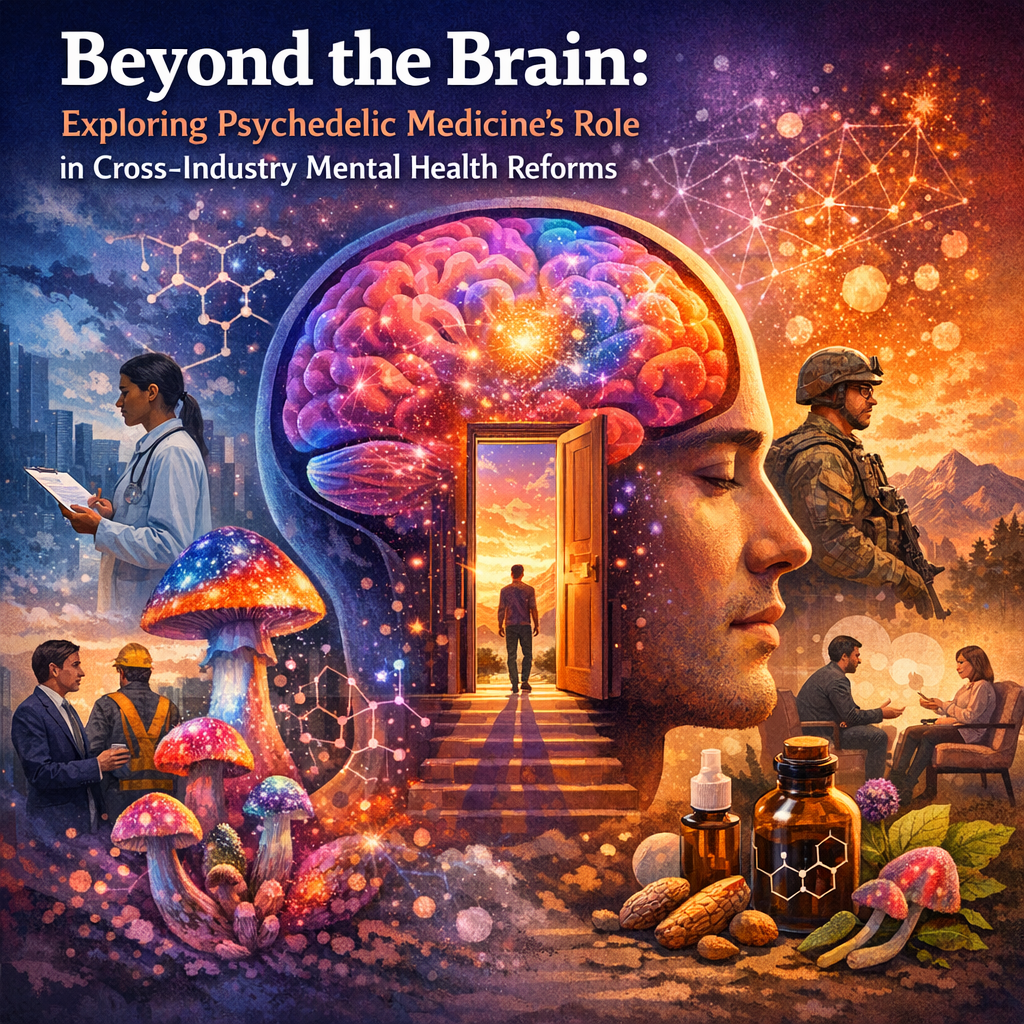
Beyond the Brain: Exploring Psychedelic Medicine’s Role in Cross-Industry Mental Health Reforms
In recent years, the conversation surrounding **mental health** has gained unprecedented momentum, catalyzing necessary reforms across various industries. At the forefront of this crucial dialogue is the burgeoning field of **psychedelic medicine**, particularly the use of **psilocybin**, a naturally occurring psychedelic compound found in certain mushrooms. Historically overshadowed by stringent regulations and societal stigma, psychedelics are now being re-evaluated for their exceptional potential in treating mental health disorders. This shift is driven by a convergence of progressive clinical research and changing public perceptions, which together are pushing the boundaries of mental health treatment beyond the conventional.
Historically used in therapeutic and ceremonial settings by indigenous cultures, **psilocybin** is now emerging as a beacon of hope in contemporary psychiatric medicine. What sets psilocybin and other **psychedelics** apart from traditional pharmacotherapy is their capacity to foster profound, transformative experiences within a relatively short span. Instead of merely masking symptoms, psychedelics encourage deep introspection and emotional catharsis, addressing the root causes of psychological distress. This transformative process not only holds promise for individuals but also suggests broader implications for institutional approaches to mental health treatment.
The current crisis in **mental health care systems** globally underscores the need for innovative solutions. Traditional treatment modalities—relying heavily on long-term pharmaceutical interventions and therapy—often fall short due to the complexity and individuality of mental health disorders. As a society, we find ourselves at a pivotal juncture where embracing alternative therapeutic avenues is not just desirable, but essential. **Psilocybin’s emerging role** in this landscape presents a compelling case for cross-industry reforms, calling for collaborative efforts between **policymakers**, **healthcare providers**, and **industry leaders** to facilitate safe and regulated access to these transformative treatments.
Features
A growing body of scientific literature highlights the efficacy of **psilocybin** in treating conditions ranging from **depression** and **anxiety** to **PTSD** and **addiction**. A landmark study conducted by researchers at Johns Hopkins University demonstrated that psilocybin can produce substantial and sustained reductions in depression and anxiety symptoms in patients with life-threatening cancer diagnoses. This study, published in the [*Journal of Psychopharmacology*](https://journals.sagepub.com/home/jop), provided some of the most convincing evidence to date regarding the potential of psychedelics in psychological healing.
Further reinforcing these findings, a clinical trial published by [*The New England Journal of Medicine*](https://www.nejm.org/) compared the effects of psilocybin and a leading antidepressant, **escitalopram**. Remarkably, the study found psilocybin to be at least as effective and, in some cases, superior in alleviating symptoms of **major depressive disorder**, achieving more rapid and lasting results. These outcomes have prompted a re-evaluation of psilocybin’s classification and therapeutic applications, sparking changes in regulatory policies across various countries.
Moreover, the implications of psilocybin research extend beyond clinical settings, influencing mental health practices in corporate environments as well. With rampant employee burnout and mental health challenges impacting productivity, forward-thinking companies are exploring integrative wellness programs that incorporate psilocybin therapy as part of a holistic approach to workforce wellbeing. Initiatives led by organizations such as [COMPASS Pathways](https://www.compasspathways.com/) are actively working to create a framework for psilocybin therapy that aligns with regulatory standards, ensuring safe and ethical treatment delivery.
These scientific advancements, coupled with increasing social acceptance, are driving a cross-industry push towards more inclusive, evidence-based mental health strategies. By embracing the potential of **psychedelic medicine**, industries can foster environments that prioritize mental wellbeing, ultimately paving the way for a healthier society.
Conclusion
The exploration of **psychedelic medicine**, specifically psilocybin, represents a transformative shift in how mental health disorders are perceived and treated across industries. By bridging the gap between research and real-world application, we can craft innovative, holistic mental health strategies that are as diverse as the challenges they aim to solve. As we move forward, the collaborative efforts of scientists, policymakers, and practitioners will be crucial in realizing the full potential of psychedelic medicine in fostering sustainable mental health reforms.
**Concise Summary:**
The rising interest in **psychedelic medicine**, especially **psilocybin**, is transforming mental health treatment across industries. Psilocybin shows promise in treating various mental health disorders by fostering transformative experiences, challenging traditional therapeutic methods. A growing body of research supports its efficacy, driving regulatory changes and inspiring workplace wellness innovations. As stigma diminishes and acceptance grows, collaborative efforts from scientists, policymakers, and industry leaders are crucial in integrating these therapies. This shift towards inclusive, evidence-based mental health strategies suggests potential for significant reform, enhancing treatment accessibility and efficacy globally.

Dominic E. is a passionate filmmaker navigating the exciting intersection of art and science. By day, he delves into the complexities of the human body as a full-time medical writer, meticulously translating intricate medical concepts into accessible and engaging narratives. By night, he explores the boundless realm of cinematic storytelling, crafting narratives that evoke emotion and challenge perspectives. Film Student and Full-time Medical Writer for ContentVendor.com