Rethinking Neuroplasticity: How Psychedelics and AI Could Reshape Mental Health Treatment
Introduction
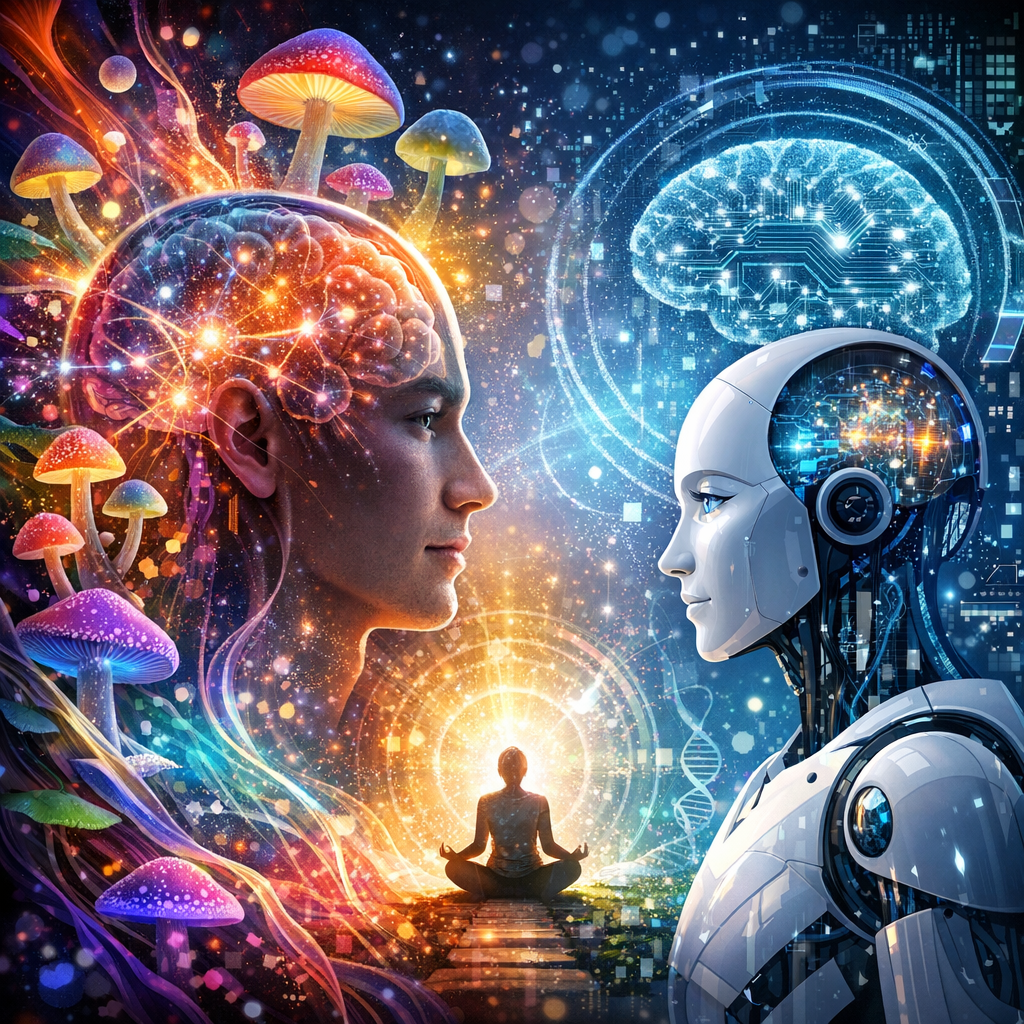
In recent years, a groundbreaking frontier in **mental health treatment** has emerged at the convergence of two seemingly disparate fields: **psychedelics** and **artificial intelligence (AI)**. Revered by indigenous cultures for centuries for their **spiritual** and **healing properties**, psychedelics are now recognized for their potential to significantly influence **neuroplasticity**—the brain’s ability to rewire and adapt over time. Meanwhile, AI processes immense data sets and identifies patterns beyond human capability, inviting a revolutionary approach to mental health care.
The concept of **neuroplasticity** offers hope in understanding mental illnesses that are notoriously difficult to treat, such as **depression**, **anxiety**, **PTSD**, and **addiction**. Traditional treatments often focus on symptom management rather than addressing underlying neurobiological challenges. This is where psychedelics come into play. Compounds like **psilocybin**, **LSD**, and **MDMA** have demonstrated the ability to foster profound neural adaptations, potentially offering more holistic treatment for mental disorders. These substances are thought to open up “critical periods” in the brain—windows of **heightened plasticity** where the brain is primed for reorganization and healing.
Simultaneously, AI is redefining mental health care by providing personalized treatment options at an unprecedented scale. **Machine learning** algorithms analyze patient data to predict responses to various interventions, tailoring treatments to individual needs. Furthermore, AI applications monitor treatment progress in real-time, offering insights into effective interventions and flagging potential adverse reactions before they escalate.
The synergistic potential of psychedelics and AI represents an exciting reimagining of neuroplasticity, aiming to enhance **mental wellness** and transformation. Ongoing research continues to validate these advances, making the possibility of navigating and healing the mind’s complex landscapes through precise, evidence-based interventions increasingly promising.
Features
A growing body of research underscores the therapeutic benefits of **psychedelics** in mental health. A landmark study published in [Nature Medicine](https://www.nature.com/) found that **MDMA-assisted therapy** significantly reduced **PTSD** symptoms compared to traditional therapy. Participants undergoing this novel treatment showed impressive improvements, with 67% no longer meeting PTSD criteria two months after treatment.
Similarly, **psilocybin**—the psychoactive compound in so-called “magic mushrooms”—has shown potential in enhancing neuroplasticity. A 2021 study in [Neuron](https://www.cell.com/neuron/fulltext) demonstrated that psilocybin results in increased neuronal connections in the brain, suggesting pathways for lasting changes in thought patterns and emotional regulation.
**AI** adds a complementary dimension to this transformative potential. Tools powered by **machine learning**, like IBM’s Watson, handle vast amounts of genetic, cognitive, and psychosocial data, identifying correlations that slip past human cognition. This capability could inform more precise and effective psychedelic interventions tailored to the individual, as supported by a 2020 study from the [Journal of Medical Internet Research](https://www.jmir.org/). The study highlights AI’s ability to improve mental health outcomes by predicting treatment responses and personalizing therapeutic pathways.
Ongoing research at institutions like **Johns Hopkins University** is exploring the collaborative use of AI and psychedelics. Initial findings show a promising trend toward developing AI algorithms that enhance psychedelic treatment modalities using real-time feedback and data analytics. This indicates not just a superficial merging of technologies, but a profound potential to achieve unprecedented efficacy levels in mental health care.
Conclusion
The convergence of **psychedelic treatments** and **AI** presents an innovative horizon in mental health care, rethinking traditional notions of **neuroplasticity** and therapeutic intervention. By bridging ancient wisdom with modern technology, we are poised to deliver more targeted, effective, and enduring mental health solutions. As research and clinical trials continue to validate these approaches, we edge closer to a future where psychedelics and AI are not only complementary tools but cornerstone strategies for mental wellness and recovery.
**Concise Summary:**
The synergistic potential of **psychedelics** and **AI** in mental health treatment reimagines traditional approaches to **neuroplasticity**. Psychedelics such as **MDMA** and **psilocybin** show promise in fostering neural adaptations, while AI provides personalized treatment pathways. This intersection offers innovative solutions for disorders like **depression**, **anxiety**, and **PTSD**, emphasizing holistic healing and real-time intervention effectiveness. As ongoing research supports these advances, psychedelics and AI may become foundational strategies for mental wellness, bridging ancient practices with cutting-edge technology to navigate complex brain landscapes.

Dominic E. is a passionate filmmaker navigating the exciting intersection of art and science. By day, he delves into the complexities of the human body as a full-time medical writer, meticulously translating intricate medical concepts into accessible and engaging narratives. By night, he explores the boundless realm of cinematic storytelling, crafting narratives that evoke emotion and challenge perspectives. Film Student and Full-time Medical Writer for ContentVendor.com