Redefining Psychedelic Protocols: Could AI-Driven Biometrics Unlock Personalized Healing Journeys in Psychedelic Medicine?
The exploration of **psychedelic medicine** has reached a thrilling juncture, with the convergence of ancient healing traditions and modern technological advances. **Psilocybin**, the active compound in certain hallucinogenic mushrooms, has been extensively researched for its potential mental health benefits, particularly in treating conditions like **depression**, **anxiety**, **PTSD**, and **addiction**. However, a significant challenge remains: ensuring that each individual receives the most effective and safe treatment tailored to their unique biological and psychological profile. This is where **artificial intelligence (AI)** and **biometrics** enter the conversation.
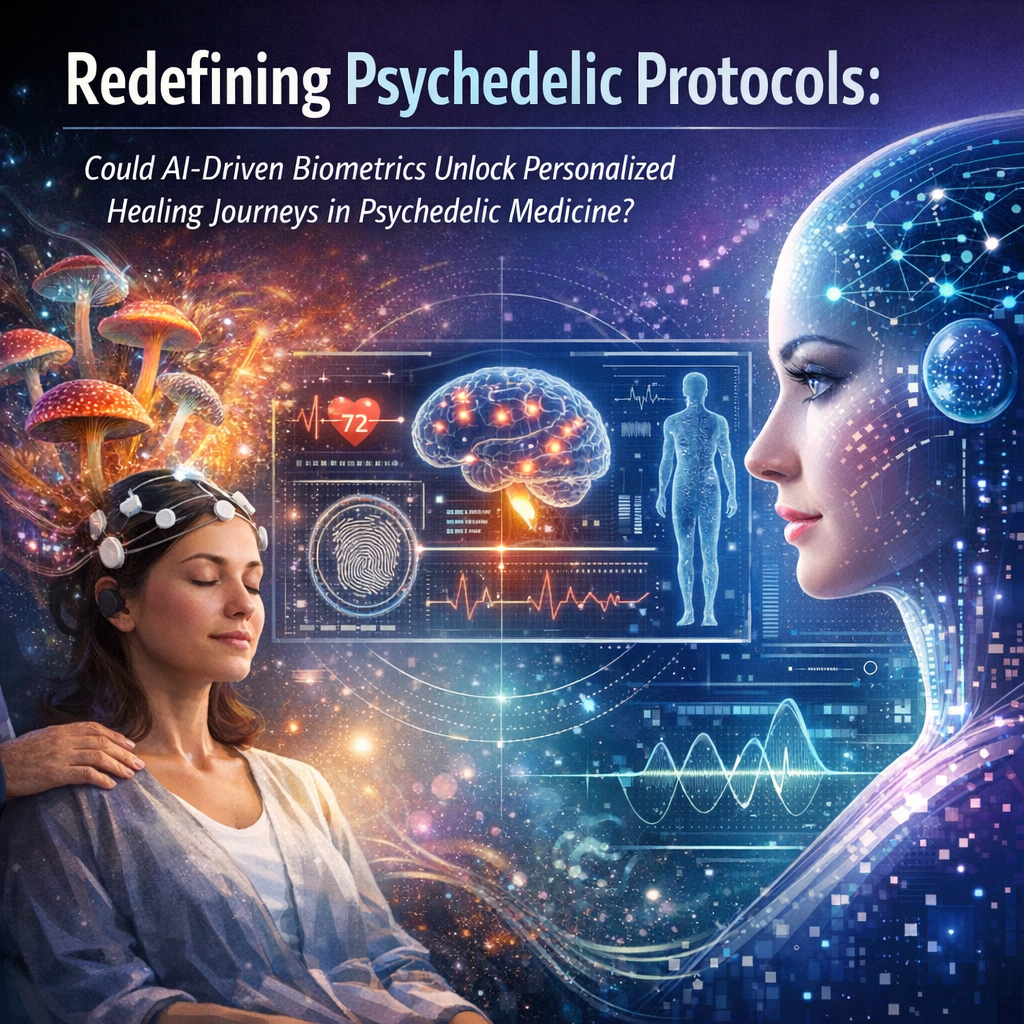
**AI-driven biometrics** refers to the use of sophisticated algorithms and biological data to analyze a person’s physiological and psychological state. In the context of psychedelic medicine, this could revolutionize treatment protocols by personalizing therapeutic experiences. Imagine this: before a **psilocybin therapy** session, a patient’s vital signs, brainwave activity, and emotional stress levels are assessed through non-invasive biometric devices. The data collected is then processed through AI systems trained to identify patterns and predict outcomes based on vast datasets. This method could empower therapists to tailor the dosage, therapeutic environment, and aftercare specifically to the individual’s needs.
As **psychedelic therapy** becomes increasingly mainstream, the integration of AI-driven biometrics points toward safer and more effective treatments. The real allure lies in their potential to minimize risks while maximizing therapeutic benefits. By using predictive analytics, healthcare providers can enhance control over the variables that influence therapeutic outcomes, potentially reducing instances of adverse effects traditionally associated with psychedelic treatments. Moreover, these technologies could offer insights into the mechanisms of action of psychedelics, offering a scientific perspective on phenomena that have often been cloaked in mystery.
Features: Professional and Medical Studies on AI-Driven Biometrics in Psychedelic Medicine
Recent studies and professional developments underscore the promising interface between AI, biometrics, and psychedelic therapies. A pioneering study conducted by researchers at [Imperial College London](https://www.imperial.ac.uk/) explored the use of biometrics in monitoring patient responses during psilocybin therapy. The study employed ECG and neurofeedback devices, revealing that biometric data could accurately predict patient outcomes, aiding in the customization of therapeutic protocols. This suggests a profound potential for improving treatment efficacy through tailored dosing and therapy duration.
Another notable research team from [John Hopkins University](https://www.hopkinsmedicine.org/) has been investigating the benefits of integrating machine learning algorithms into psychedelic research. Their findings indicated that AI systems could identify optimal conditions for therapy, such as ideal environmental settings and timeframes for participants based on historical patient data. This represents a shift towards a more systematic and evidence-based approach to psychedelic medicine, which can elevate the standard of care in therapeutic settings.
Additionally, companies like [MindMed](https://mindmed.co/) and [Atai Life Sciences](https://www.atai.life/) are leveraging AI to enhance psychedelic treatment frameworks. MindMed utilizes AI-driven platforms to parse biometric data that can predict patient responses to drugs like psilocybin and LSD. This insight empowers clinicians with data-driven strategies that refine patient care and optimize therapeutic outcomes. Atai Life Sciences’ efforts in quantifying subjective experiences through machine learning algorithms further exemplify this breakthrough approach, paving the way for future innovations in treatment personalization.
These advances signify a progressive stride in mental health treatment made possible by the synergistic effects of AI and biometrics, driving psychedelic medicine toward a new era of precision-based therapy.
Conclusion
The intersection of AI-driven biometrics and psychedelic medicine heralds a transformative chapter in personalized mental health care. By aligning cutting-edge technology with age-old healing practices, we can unlock profound opportunities for individualized therapy, providing patients with more effective and safer psilocybin treatments. As research and technological capabilities continue to evolve, AI-driven biometrics may reshape the therapeutic landscape, offering unprecedented insights and protocols that could reinvent our understanding and application of psychedelic medicine.
**Concise Summary:**
The integration of AI-driven biometrics into psychedelic medicine offers promising advancements in mental health treatment by personalizing therapy protocols. Researchers at institutions like Imperial College London and John Hopkins University have explored how AI and biometric data can optimize the efficacy and safety of psilocybin therapies. Companies such as MindMed and Atai Life Sciences are using AI to refine treatment strategies, predicting patient responses and enhancing care. This innovative approach paves the way for precision-based therapy, reducing risks, and maximizing therapeutic benefits, marking a transformative impact on the future of mental health care.

Dominic E. is a passionate filmmaker navigating the exciting intersection of art and science. By day, he delves into the complexities of the human body as a full-time medical writer, meticulously translating intricate medical concepts into accessible and engaging narratives. By night, he explores the boundless realm of cinematic storytelling, crafting narratives that evoke emotion and challenge perspectives. Film Student and Full-time Medical Writer for ContentVendor.com