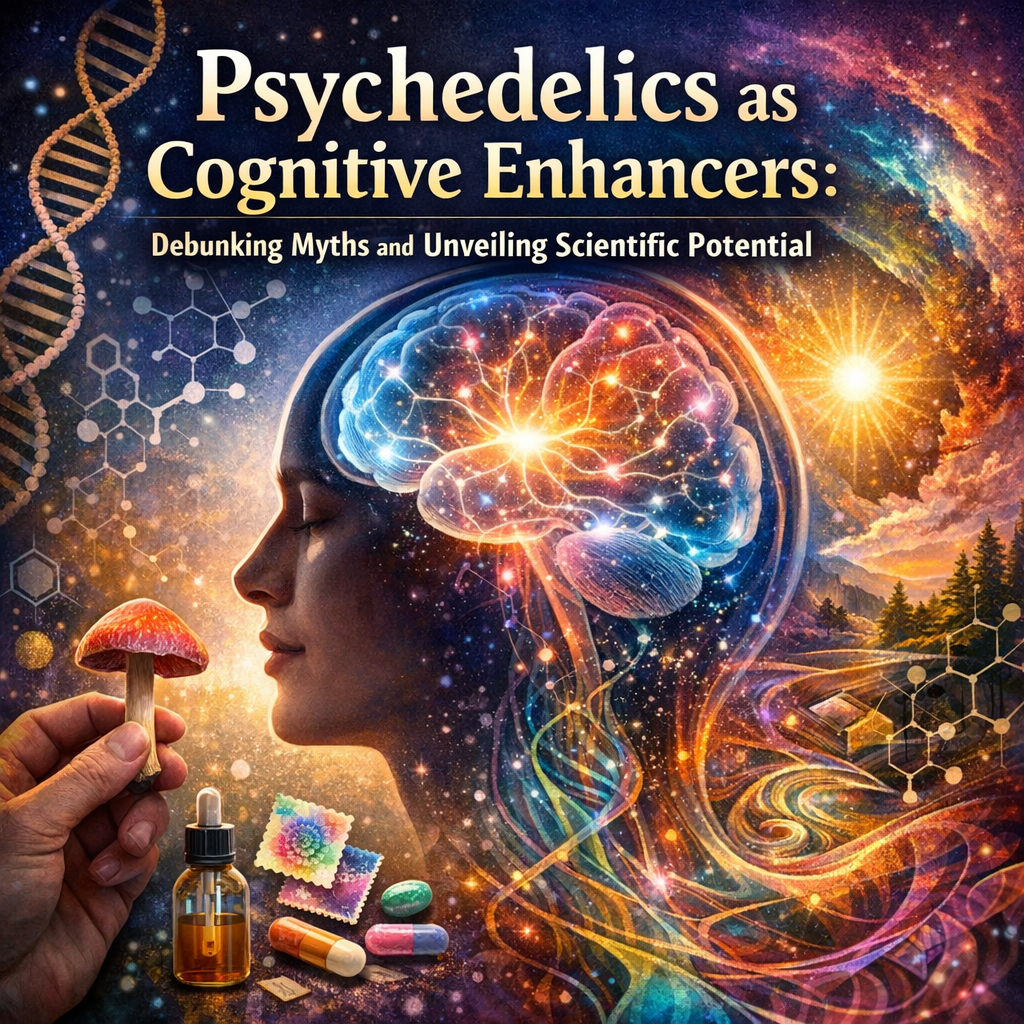
Psychedelics as Cognitive Enhancers: Debunking Myths and Unveiling Scientific Potential
In recent years, the concept of **psychedelics** as **cognitive enhancers** has gained momentum amidst sweeping societal changes in the perception of psychedelics. Long viewed primarily as recreational substances or catalysts for spiritual experiences, psychedelics are now receiving a fresh wave of scientific inquiry into their potential effects on cognitive function. Traditionally, the term “cognitive enhancer” has been associated with pharmaceuticals or **nootropics** aimed at improving **memory**, **creativity**, and other mental faculties. However, psychedelics such as **psilocybin**, **LSD**, and **mescaline** have started to pique the interest of scientists and laypeople alike for their fascinating effects on the human mind.
Despite their growing popularity, psychedelics are often surrounded by myths and misconceptions that make it difficult to discern their true potential. For instance, many still mistakenly believe that these substances only serve to alter reality in unpredictable and potentially dangerous ways. But contemporary research suggests that psychedelics could offer more than **psychedelic experiences**: they may enhance **creativity**, reduce symptoms of **depression**, and potentially boost certain cognitive functions. Notably, **microdosing**—consuming sub-perceptual doses of psychedelic substances—has been widely reported to improve focus, energy levels, and problem-solving skills without the hallucinogenic effects traditionally associated with higher doses.
However, this new interest must be balanced with scientific rigor. While early studies show promise, it is crucial to approach the topic with an understanding based on evidence rather than anecdotal testimonies. Research institutions worldwide are scrutinizing the role of psychedelics to explore both their potential benefits and risks. As we venture into this exciting frontier, it’s essential to debunk myths and pursue a comprehensive understanding of how psychedelics might impact cognitive abilities, mental health, and overall well-being.
Features
One of the most compelling studies in this arena was conducted by **Roland R. Griffiths** and colleagues at *Johns Hopkins University*. Their 2016 paper, published in the [Journal of Psychopharmacology](https://journals.sagepub.com/doi/10.1177/0269881116675513), demonstrated that a single dose of **psilocybin** can lead to significant improvements in **emotional well-being** and **life satisfaction**, effects that lasted for months after administration. More recent research from *Imperial College London* has revealed that psychedelics can increase the brain’s capacity for higher-level cognitive functions such as creativity and problem-solving. In 2018, a landmark study by **Robin Carhart-Harris** highlighted how psychedelics might increase brain connectivity, encouraging flexible thinking and enhancing creative problem-solving.
Another 2019 study by **Luisa Prochazkova** and colleagues, published in [Psychopharmacology](https://link.springer.com/article/10.1007/s00213-019-05210-0), looked into the effects of microdosing on cognition. The researchers found that participants reported heightened levels of **convergent** and **divergent thinking**, forms of creativity crucial for problem-solving and innovation. This aligns with anecdotal reports from Silicon Valley entrepreneurs who claim microdosing psychedelics boosts their creativity and productivity.
A 2020 study by the *University of California, San Bernardino*, explored the psychological and cognitive enhancements linked to psychedelic use among a group of participants engaging in microdosing. The study supported previous findings by showcasing improved mood, focus, and creativity in participants, highlighting potential applications ranging from therapy to performance enhancement in various professional fields.
These studies underscore the need for robust, placebo-controlled trials, as current research often relies heavily on self-reported data. Despite the enthusiasm around psychedelics as cognitive enhancers, it’s critical to approach findings with caution and continue further research to fully understand the implications.
Conclusion
The exploration of psychedelics as cognitive enhancers remains an exciting and rapidly evolving field. While the current body of scientific research provides promising insights, it is imperative to proceed with a balanced perspective, recognizing both the potential benefits and limitations. As we continue to study and understand psychedelics, they may soon transform from misunderstood substances to powerful tools for cognitive enhancement and mental well-being, provided they are backed by solid scientific evidence and approached with informed caution.
References
1. [Griffiths, R. R., et al. (2016). Psilocybin produces substantial and sustained decreases in depression and anxiety in patients with life-threatening cancer: A randomized double-blind trial. *Journal of Psychopharmacology*.](https://journals.sagepub.com/doi/10.1177/0269881116675513)
2. [Carhart-Harris, R. L., et al. (2018). Psychedelics and the Science of Self Discovery. *Cell Reports*.](https://www.cell.com/cell-reports/fulltext/S2211-1247(18)31351-0)
3. [Prochazkova, L., et al. (2019). Exploring the effects of microdosing psychedelics on creativity in the workplace. *Psychopharmacology*.](https://link.springer.com/article/10.1007/s00213-019-05210-0)
4. [Research from University of California, San Bernardino on microdosing and cognition can be accessed for deeper insights.](https://scholarworks.lib.csusb.edu/)
**Concise Summary**
The perception of **psychedelics** as cognitive enhancers is evolving, driven by scientific research indicating potential benefits in enhancing creativity, reducing depression, and bolstering cognitive function. Groundbreaking studies highlight improvements in emotional well-being, creativity, and problem-solving with substances like **psilocybin**. **Microdosing** is particularly noted for enhancing focus and productivity without hallucinogenic effects. However, reliance on anecdotal evidence necessitates rigorous scientific validation. As more controlled studies emerge, psychedelics may become recognized as valuable tools for mental health and cognitive enhancement, contingent on evidence-based application.

Dominic E. is a passionate filmmaker navigating the exciting intersection of art and science. By day, he delves into the complexities of the human body as a full-time medical writer, meticulously translating intricate medical concepts into accessible and engaging narratives. By night, he explores the boundless realm of cinematic storytelling, crafting narratives that evoke emotion and challenge perspectives. Film Student and Full-time Medical Writer for ContentVendor.com