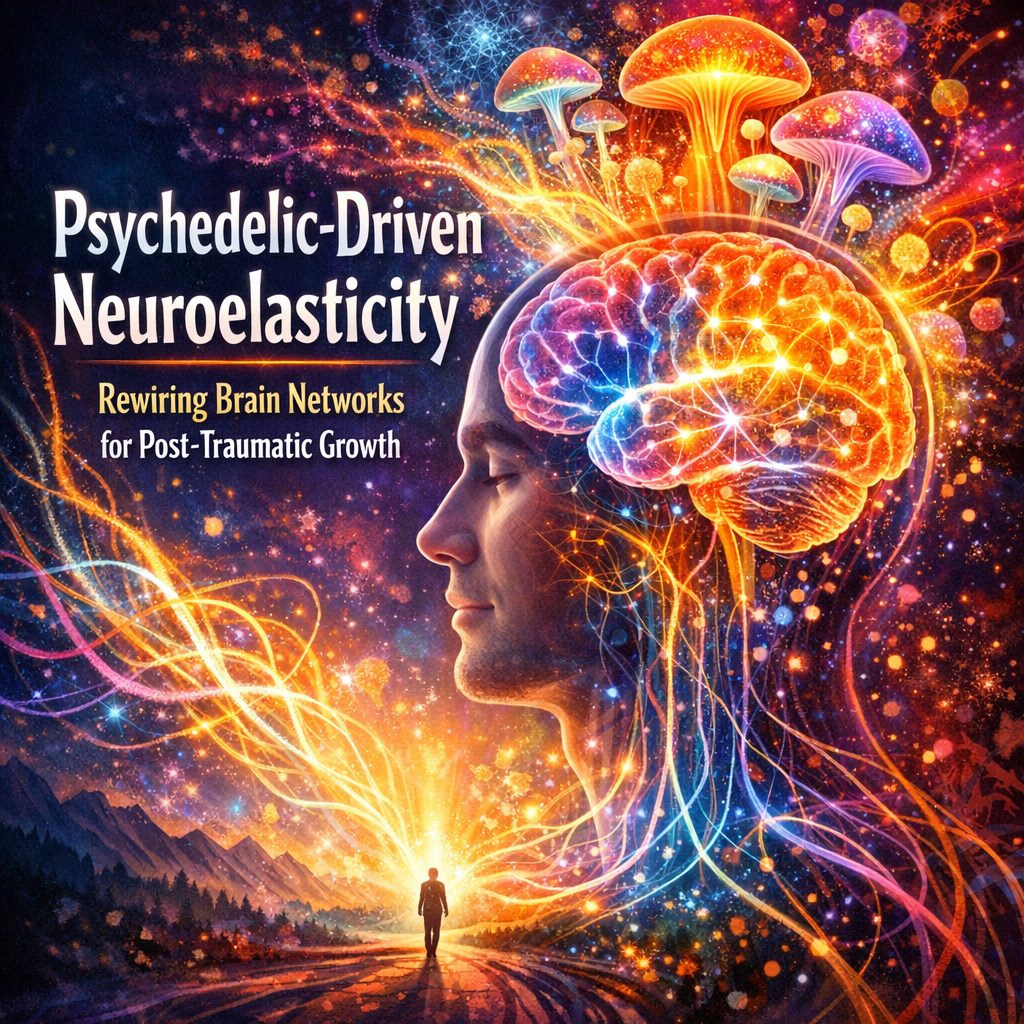
Psychedelic-Driven Neuroelasticity: Rewiring Brain Networks for Post-Traumatic Growth
In recent years, the exploration of **psychedelic substances** has transitioned from the fringes of **counterculture** into the realm of **cutting-edge medical research**. At the forefront of this promising frontier is the use of **psilocybin**, the psychoactive compound found in certain **mushrooms**, to foster **neuroplasticity** and support **post-traumatic growth**. **Traumatic experiences** often leave deep psychological imprints, potentially culminating in disorders like **PTSD**, **depression**, and **anxiety**. Traditional treatments offer varying degrees of success, but the potential for psychedelics to profoundly alter neural pathways presents a groundbreaking alternative.
**Neuroplasticity**, the brain’s ability to reorganize itself by forming new neural connections, is essential for learning, memory, and recovery from brain injuries. **Psychedelic substances** like psilocybin amplify this intrinsic brain feature by interacting with serotonin receptors, particularly the 5-HT2A receptor. This interaction enhances the brain’s capacity to rewire itself in beneficial ways, potentially opening pathways to process traumatic experiences from new, healing perspectives.
Research into **psychedelic-driven neuroplasticity** holds vast promise for individuals seeking to transform post-traumatic stress into **post-traumatic growth**. These substances appear to encourage a state of **expanded consciousness** where participants can reevaluate past traumas and foster empathy, self-forgiveness, and an integrative understanding of their experiences. This transformative journey is often described as a “cognitive reset,” providing a fresh canvas on which individuals can rebuild healthier cognitive and emotional frameworks.
Growing interest from the **medical community**, coupled with promising early research findings, underscores the potential of psychedelics to enhance therapeutic outcomes. While the path to mainstream clinical approval is complex, the integration of these substances into **mental health treatment regimens** could revolutionize the field, offering renewed hope to millions affected by trauma.
Features:
The therapeutic potential of psychedelics is supported by a burgeoning body of research. A seminal study conducted by researchers at **Johns Hopkins University** found that psilocybin therapy produced substantial and sustained improvements in individuals suffering from **treatment-resistant depression** ([Johns Hopkins Medicine](https://www.hopkinsmedicine.org/news/articles/psychedelic-drug-eases-existential-anxiety-in-people-with-life-threatening-cancer)). Participants reported a decrease in symptom severity and an improvement in their general sense of well-being, with some effects lasting beyond six months post-treatment.
Further support comes from the **Multidisciplinary Association for Psychedelic Studies (MAPS)**, which has been pioneering research into the therapeutic effects of psychedelics for **PTSD** ([MAPS](https://maps.org/research/)). Their studies suggest that psilocybin-assisted therapy may provide significant relief to veterans and others who have suffered severe trauma. By fostering a state of increased neural connectivity and introspective insight, psilocybin therapy helps individuals process traumatic memories in a safe and guided environment.
The mechanisms underlying these profound effects are still being unraveled, but current theories suggest that psychedelics reduce the brain’s **default mode network (DMN)** activity. By dampening the **DMN**, which is typically associated with the ego and self-referential thought, psychedelics can enable alternative cognitive processes and heightened emotional awareness. Simultaneously, increased connectivity across various brain regions supports the breaking of rigid thinking patterns, allowing new insights and emotional breakthroughs.
Crucial to the efficacy of psychedelic therapy is the controlled setting in which it occurs. Professional guidance and a supportive environment are essential to ensure that the cognitive restructuring and emotional processing facilitated by psychedelics translate into tangible, long-term benefits. Guided sessions often include preparatory discussions, the monitored administration of psilocybin, and integration sessions to help participants contextualize and solidify their experiences ([PubMed](https://pubmed.ncbi.nlm.nih.gov/)).
Conclusion:
The intersection of psychedelic therapy and neuroplasticity represents a novel frontier in **mental health treatment**. By harnessing the intrinsic rewiring capabilities of the brain, psilocybin offers a unique avenue for transforming trauma into opportunities for growth, healing, and renewed self-understanding. While further research and clinical validation are necessary, the therapeutic potential of psychedelics holds immense promise for reshaping the landscape of trauma and emotional recovery in the years to come.
**Concise Summary:**
The use of psychedelic substances, particularly **psilocybin**, has emerged as a promising approach in medical research to facilitate **neuroplasticity** and support **post-traumatic growth**. Psilocybin interacts with serotonin receptors to enhance the brain’s ability to rewire itself, offering a potential alternative to traditional treatments for trauma-related disorders like **PTSD** and **depression**. By reducing **default mode network** activity, psilocybin assists in emotional breakthroughs and cognitive restructuring, providing a transformative “cognitive reset.” Promising early research, including studies by **Johns Hopkins University** and **MAPS**, highlights its potential in therapeutic settings, offering hope for broader clinical applications.

Dominic E. is a passionate filmmaker navigating the exciting intersection of art and science. By day, he delves into the complexities of the human body as a full-time medical writer, meticulously translating intricate medical concepts into accessible and engaging narratives. By night, he explores the boundless realm of cinematic storytelling, crafting narratives that evoke emotion and challenge perspectives. Film Student and Full-time Medical Writer for ContentVendor.com