Harnessing AI for Personalized Psychedelic Therapy: The Future of Mental Health Treatment
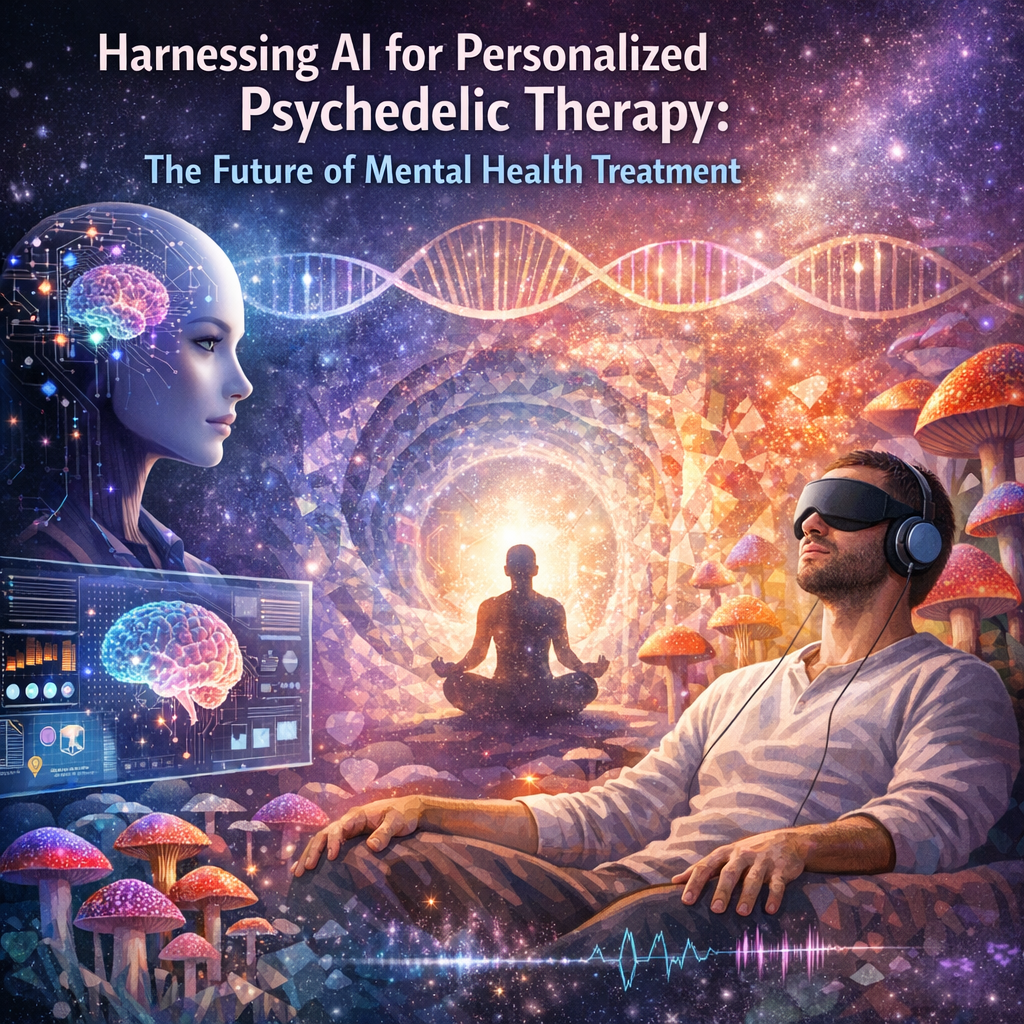
In recent years, the intersection of **artificial intelligence (AI)** and **psychedelic therapy** has begun to revolutionize **mental health treatment**. As the digital age rapidly progresses, **AI technologies** have infiltrated various sectors, and healthcare is no exception. This remarkable fusion of technology and medicine has delivered advanced, innovative solutions, specifically within the sphere of mental health, where traditional therapeutic methods may fall short. For decades, **mental health disorders** have been treated with standardized approaches, often lacking the personalization needed to address individual patient needs. However, **AI-driven psychedelic therapy** is set to change this paradigm, tailoring treatments to unique patient profiles and potentially reshaping the future of mental health care.
**Psychedelics**, including substances like **psilocybin**, **LSD**, and **MDMA**, have demonstrated promising results in treating various mental health conditions, from **depression** and **anxiety** to **PTSD**. However, the nuances of dosage, timing, and environment—all crucial to the success of psychedelic therapy—can vary significantly from one individual to another. In this context, **AI** provides a game-changing advantage. By analyzing large datasets and recognizing patterns that might be invisible to humans, AI can offer insights into how different patients might respond to psychedelic therapies. This capability allows for highly personalized treatment plans that cater to each patient’s specific needs and circumstances, optimizing therapeutic outcomes and minimizing potential risks.
AI’s efficacy in personalization stems from its ability to manage vast datasets containing genetic, psychological, and environmental factors associated with mental health. **Machine learning algorithms** can identify individual biomarkers that predict a patient’s response to psychedelic substances, thus facilitating **precision medicine** approaches. This level of individualized care offers an unprecedented opportunity to transform the therapeutic landscape, making mental health treatments more precise, effective, and accessible. As this technological innovation continues to evolve, it holds the potential to break down barriers that have long impeded effective mental health treatment, fostering a new era in personalized healthcare.
Features: Relevant Studies on AI and Psychedelic Therapy
Emerging research underscores the promising intersection of AI and psychedelic therapy. In a landmark study published in Nature Medicine, researchers explored the potential of AI to predict mental health outcomes in patients undergoing psychedelic therapy. By employing machine learning algorithms, they could identify specific biomarkers indicative of positive therapeutic responses to psilocybin, a classic psychedelic. The study highlighted AI’s capability to enhance the precision and efficiency of **psychedelic-assisted treatments**, paving the way for more personalized approaches.
Moreover, a collaborative study between **Imperial College London** and the **University of Oxford**, published in The Journal of Psychopharmacology, examined how AI could optimize dosage and timing of psilocybin administration based on individual patient profiles. The research revealed that AI-driven models could significantly improve therapeutic efficacy while reducing adverse effects by identifying the optimal conditions under which to administer psychedelics. This optimization was particularly beneficial for patients suffering from **treatment-resistant depression**, showcasing AI’s transformative potential in tackling complex mental health disorders.
Another pivotal research endeavor, featured in Frontiers in Psychology, focused on how AI tools could integrate electronic health records, genetic data, and patient self-reported outcomes to tailor psychedelic therapies. The study’s results suggested a marked improvement in the personalization and adaptability of mental health interventions, ultimately leading to enhanced **patient satisfaction** and **treatment adherence**. By utilizing AI to process expansive datasets, healthcare providers can better predict patient responses and craft individualized treatment regimens that align with personal values, goals, and psychiatric histories.
These studies collectively affirm that **AI’s integration** into psychedelic therapy holds substantial promise for revolutionizing mental health care. By personalizing treatment strategies, reducing risks, and improving patient outcomes, AI is poised to lead the charge in modernizing and humanizing mental health interventions, thus offering a more hopeful outlook for those struggling with mental illnesses.
**Conclusion**
The amalgamation of AI and psychedelic therapy marks a groundbreaking milestone in mental health treatment. As AI continues to evolve, its applications in personalizing psychedelic-assisted therapies will likely transform the mental health landscape, shifting from a one-size-fits-all approach to a more individualized and effective paradigm. This innovation not only holds the potential to enhance therapeutic outcomes but also to democratize access to mental health care, offering new hope for patients worldwide. As we embrace this future, the synergy between AI and psychedelics may very well define the next frontier in mental health interventions.
**Concise Summary**
The intersection of **AI** and **psychedelic therapy** is transforming mental health treatment, moving toward highly personalized care. AI’s ability to analyze vast datasets allows for customized therapeutic plans, addressing individual needs. Promising studies, such as those published in **Nature Medicine**, **The Journal of Psychopharmacology**, and **Frontiers in Psychology**, highlight AI’s potential to optimize dosage, predict patient responses, and enhance treatment personalization. This innovation could revolutionize mental health care by making it more precise, effective, and accessible, breaking away from standardized approaches and offering new hope to patients globally.

Dominic E. is a passionate filmmaker navigating the exciting intersection of art and science. By day, he delves into the complexities of the human body as a full-time medical writer, meticulously translating intricate medical concepts into accessible and engaging narratives. By night, he explores the boundless realm of cinematic storytelling, crafting narratives that evoke emotion and challenge perspectives. Film Student and Full-time Medical Writer for ContentVendor.com