The Brain-Boosting Intersection of Quantum Neuroscience and Psilocybin Therapy
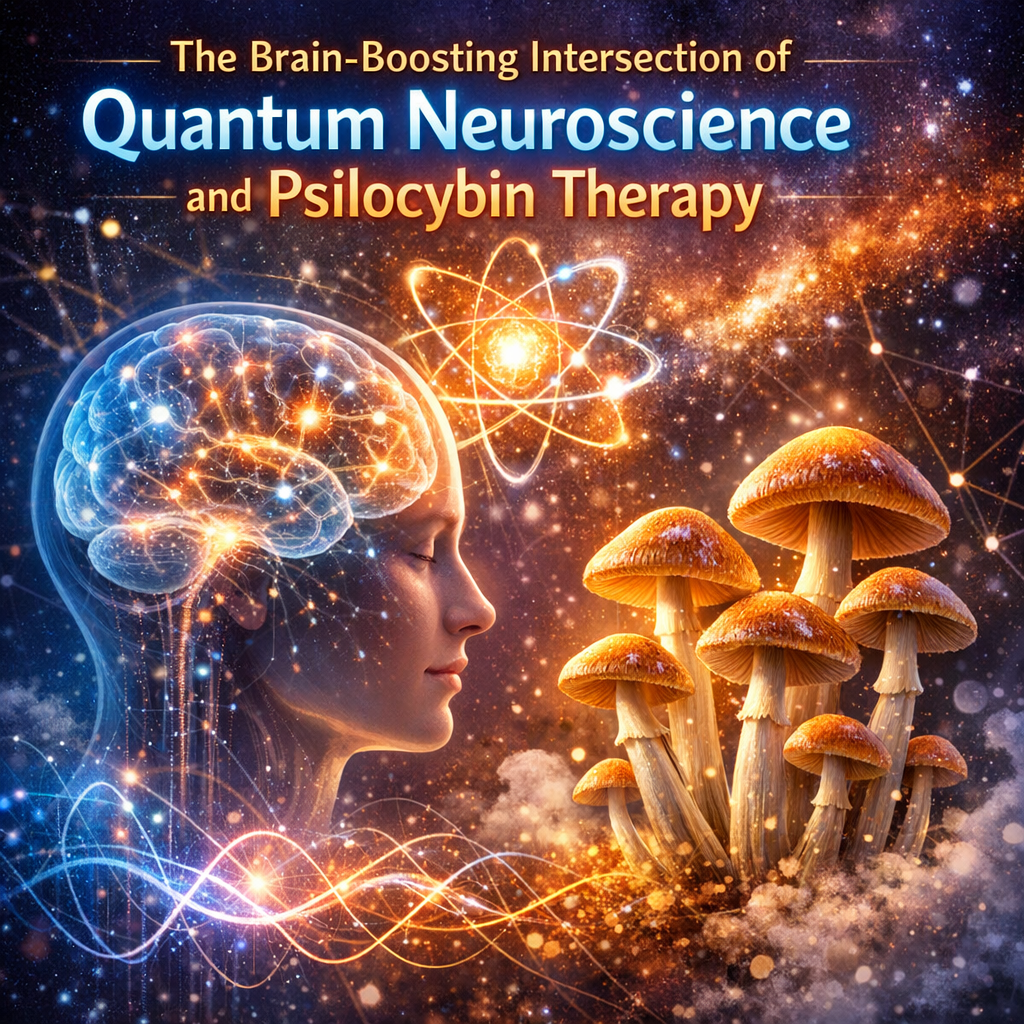
In recent years, the scientific community has experienced a paradigm shift in understanding the complex interactions between the mind, brain, and consciousness. At the forefront of this revolution is the burgeoning field of **quantum neuroscience**, which explores the intersection of **quantum physics** and **neurobiology** to unravel the mysteries of human cognition. Meanwhile, **psilocybin**, the naturally occurring psychedelic compound found in certain mushrooms, is garnering significant attention for its potential therapeutic benefits. When these two cutting-edge domains converge, they present an intriguing landscape of possibilities for brain health and cognitive enhancement.
Quantum neuroscience postulates that cognitive processes may not be solely the result of classical physics but instead involve **quantum mechanics** at a fundamental level. Researchers suggest that subatomic particles within the brain could exhibit quantum properties such as **entanglement** and **superposition**, contributing to the vast complexity of human consciousness. This revolutionary perspective challenges traditional views of neuroscience and opens up new avenues for understanding and treating mental health disorders.
Psilocybin, on the other hand, has been used for centuries by indigenous cultures for its mind-altering effects. Recent clinical studies indicate that psilocybin can induce profound changes in perception, mood, and cognition by interacting with **serotonin receptors** in the brain. These interactions are believed to promote **neuroplasticity**—the brain’s ability to reorganize itself by forming new neural connections. Such properties make psilocybin a promising candidate for therapeutic applications in addressing depression, anxiety, PTSD, and other mental health conditions.
As we explore the convergence of **quantum neuroscience** and **psilocybin therapy**, the potential for accelerated brain health improvements emerges. By potentially leveraging quantum effects within neural circuits, psilocybin may enhance cognitive functions more effectively than traditional treatments. Innovative research is delving into this hypothesis, examining how psilocybin-induced neuroplasticity may be amplified by underlying quantum processes in neurons. This investigation is crucial as cognitive enhancement and mental well-being become increasingly prioritized in our fast-paced, modern world.
Professional and Medical Studies
Several pioneering studies provide insight into the intersection of quantum neuroscience and psilocybin therapy. Researchers are increasingly intrigued by how quantum entanglement could play a role in consciousness and brain function. A notable study conducted at the University of California, Santa Barbara, suggests that **quantum coherence**, a state where particles exist in multiple states simultaneously, may be present in microtubules within the brain. These structures are believed to support neural communication on a quantum level, potentially impacting cognitive processes.
Moreover, clinical trials investigating psilocybin’s therapeutic potential have yielded promising results. A groundbreaking study at Johns Hopkins University assessed psilocybin’s effects on individuals with treatment-resistant depression. Published in “The Journal of Psychopharmacology,” the study reported significant reductions in depressive symptoms following psilocybin-assisted therapy, with 67% of participants experiencing a clinically meaningful response. The findings suggest that psilocybin could pave the way for more effective treatments for difficult-to-treat mood disorders.
Quantum neuroscience and psilocybin therapy research are paving a new path forward in achieving heightened brain function and mental health resilience. The synchronized exploration of these fields highlights the intricate dance between quantum processes and neural pathways. As we delve deeper, future research endeavors will determine whether these quantum phenomena hold the key to unlocking improved treatments and enhanced cognition.
This emerging frontier challenges conventional notions of brain function and therapy, suggesting that a nuanced understanding of quantum principles might be essential for unlocking the full potential of consciousness-altering compounds like psilocybin. The union of these disciplines holds revolutionary implications for holistic brain health, offering an exciting avenue of investigation that merges the mysteries of the quantum world with the tangible benefits of psychedelic therapy.
Conclusion
The intersection of quantum neuroscience and psilocybin therapy represents an exciting frontier in cognitive enhancement and mental health treatment. By unraveling the quantum mysteries within our neural frameworks, while harnessing the therapeutic potential of psilocybin, we can envisage a future where mental well-being is optimized and treatment-resistant conditions are addressed more effectively. As researchers continue to explore this fascinating nexus, society stands on the brink of unlocking transformative advancements in understanding and improving brain health.
**References**
– University of California, Santa Barbara Study on Quantum Coherence in Microtubules
– Johns Hopkins University Psilocybin Study in the Journal of Psychopharmacology
**Concise Summary:**
Quantum neuroscience explores the intersection of quantum physics and neurobiology, suggesting that cognitive processes may involve quantum mechanics. Psilocybin, known for its therapeutic effects on mood and cognition, is being studied for its potential to enhance neuroplasticity, possibly through quantum effects. The convergence of these fields promises advancements in mental health, potentially offering more effective treatments for conditions like depression and PTSD. Research into this nexus is paving the way for transformative developments in cognitive enhancement and holistic brain health.

Dominic E. is a passionate filmmaker navigating the exciting intersection of art and science. By day, he delves into the complexities of the human body as a full-time medical writer, meticulously translating intricate medical concepts into accessible and engaging narratives. By night, he explores the boundless realm of cinematic storytelling, crafting narratives that evoke emotion and challenge perspectives. Film Student and Full-time Medical Writer for ContentVendor.com