Revolutionizing Recovery: How AI-Driven Integration Tools Are Shaping the Future of Psychedelic Therapy
Introduction
The intersection of technology and psychedelic therapy marks an exciting frontier in mental health treatment. With the increasing acceptance of psilocybin and other psychedelics as valuable tools in addressing mental health disorders, the need for effective and personalized integration methods becomes more pressing. Integration, in the context of psychedelic therapy, refers to the incorporation of experiences and insights gained from psychedelic sessions into daily life, promoting long-lasting positive changes. However, integration can be complex and requires tailored approaches to meet individual needs.
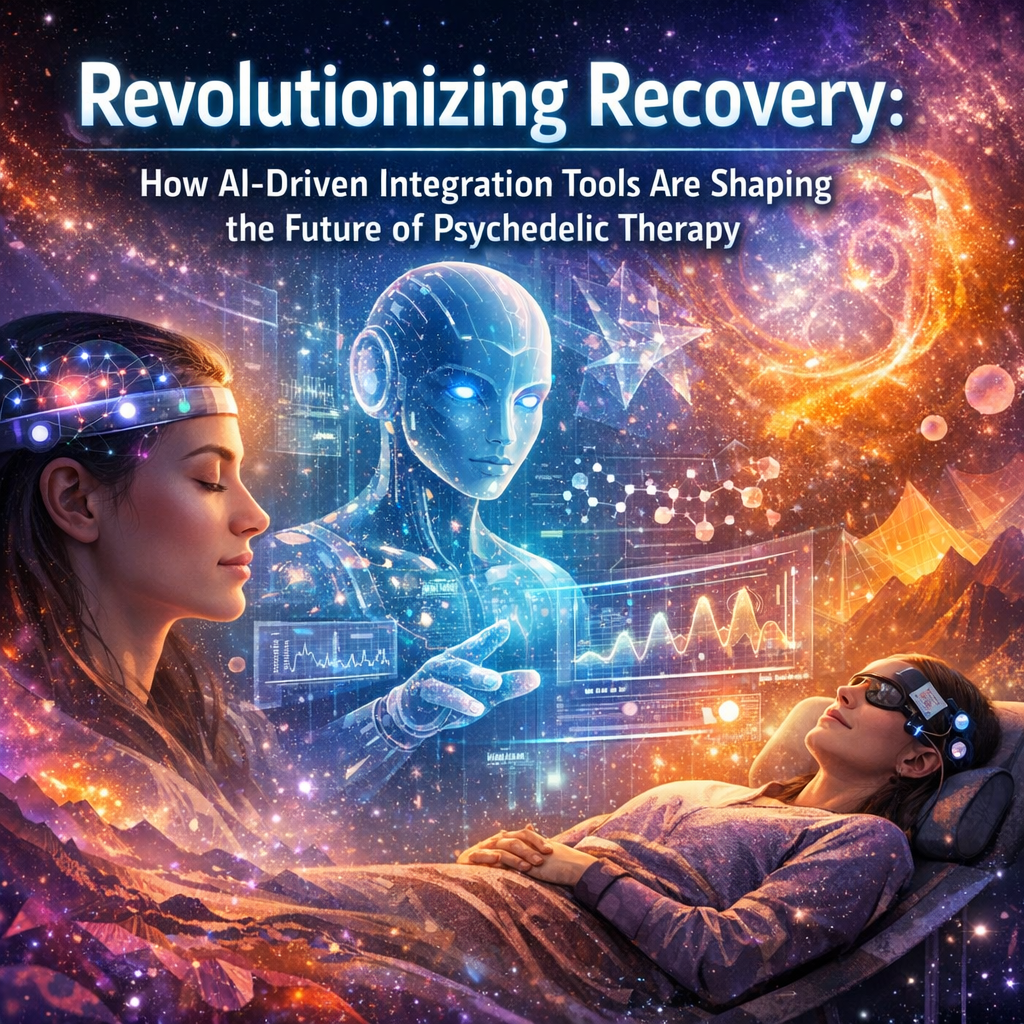
This is where Artificial Intelligence (AI) steps in, offering groundbreaking solutions that revolutionize recovery through personalized, adaptive integration strategies. As traditional therapy encounters limitations related to accessibility, scalability, and personalization, AI-driven tools are emerging as viable solutions to address these challenges. By harnessing the power of AI, therapists and patients can unlock new dimensions in personalized mental health care, making integration more effective, accessible, and sustainable.
AI-driven integration tools leverage an array of techniques, such as natural language processing, predictive analytics, and machine learning, to develop personalized therapeutic paths. These tools analyze vast datasets, deriving insights into individual patient needs, preferences, and outcomes. They offer adaptive feedback and care strategies, ensuring a bespoke therapeutic experience that evolves with the patient’s progress.
Moreover, AI facilitates real-time monitoring of patient progress, providing therapists with valuable insights into treatment efficacy and areas needing adjustment. This dynamic approach not only enhances the integration process but also supports better patient outcomes by continuously refining therapeutic strategies based on objective data. As we explore these AI-driven tools and their impact on psychedelic therapy, it becomes evident that the future of mental health care is being reshaped by this powerful synergy between technology and therapy.
Features
Evidence supporting the efficacy of AI-driven integration tools in psychedelic therapy is gradually emerging from the medical and research communities. A pioneering study conducted by the [Center for Psychedelic Research at Imperial College London](https://www.imperial.ac.uk/psychedelic-research-centre), for instance, demonstrated how AI algorithms could predict treatment outcomes for patients undergoing psilocybin therapy for depression. The study utilized advanced machine learning models to analyze patient data, uncovering patterns that were predictive of therapeutic success.
Another significant study published in the [Nature Journal](https://www.nature.com) focused on employing AI to enhance the treatment of PTSD using MDMA-assisted therapy. The researchers utilized AI to tailor integration activities based specifically on psychological profiles and previous patient data, resulting in more personalized and effective interventions. These studies underscore the potential of AI in enhancing the predictive power and personalization of psychedelic therapy.
Furthermore, AI-driven chatbots and virtual therapists are becoming increasingly prevalent in supporting psychedelic integration. These tools, developed by companies like [Woebot Health](https://woebothealth.com), use natural language processing to engage with patients, offering real-time support, guidance, and exercises that facilitate integration. They represent a paradigm shift in accessibility, providing a scalable solution to meet the rising demand for psychedelic-assisted therapy resources.
AI also aids in ongoing research and data analysis within the field of psychedelic therapy. Platforms like [Psychedelic Science Tracker](https://psychedelicsciencetracker.com) utilize AI to compile and analyze data from numerous clinical trials and studies, providing valuable insights for researchers and clinicians striving to optimize integration protocols. This resource supports evidence-based practices, ensuring that the integration processes used in psychedelic therapy are informed by the latest scientific findings.
Conclusion
AI-driven integration tools are indeed revolutionizing the landscape of psychedelic therapy by offering personalized, adaptive, and data-driven approaches to recovery. This innovative synergy between AI and therapy holds promise for addressing the growing demand for effective mental health solutions, paving the way for a future where psychedelic therapy can achieve its full transformative potential. As research continues to evolve, the role of AI in psychedelic therapy is likely to expand, offering new and exciting possibilities for personalized mental health care.
References
– [Center for Psychedelic Research at Imperial College London](https://www.imperial.ac.uk/psychedelic-research-centre)
– [Nature Journal](https://www.nature.com)
– [Woebot Health](https://woebothealth.com)
– [Psychedelic Science Tracker](https://psychedelicsciencetracker.com)
Concise Summary
The synergy between AI and psychedelic therapy is revolutionizing mental health care. By employing techniques like natural language processing and machine learning, AI-driven tools develop personalized therapeutic paths that adapt to patient progress. Studies from Imperial College London and Nature Journal have demonstrated AI’s predictive power in treatment outcomes for depression and PTSD. Companies like Woebot Health use chatbots to provide real-time support. Platforms like Psychedelic Science Tracker enhance research and protocol optimization. As research progresses, AI’s role in expanding accessible, personalized integration methods in psychedelic therapy continues to show promising potential.

Dominic E. is a passionate filmmaker navigating the exciting intersection of art and science. By day, he delves into the complexities of the human body as a full-time medical writer, meticulously translating intricate medical concepts into accessible and engaging narratives. By night, he explores the boundless realm of cinematic storytelling, crafting narratives that evoke emotion and challenge perspectives. Film Student and Full-time Medical Writer for ContentVendor.com