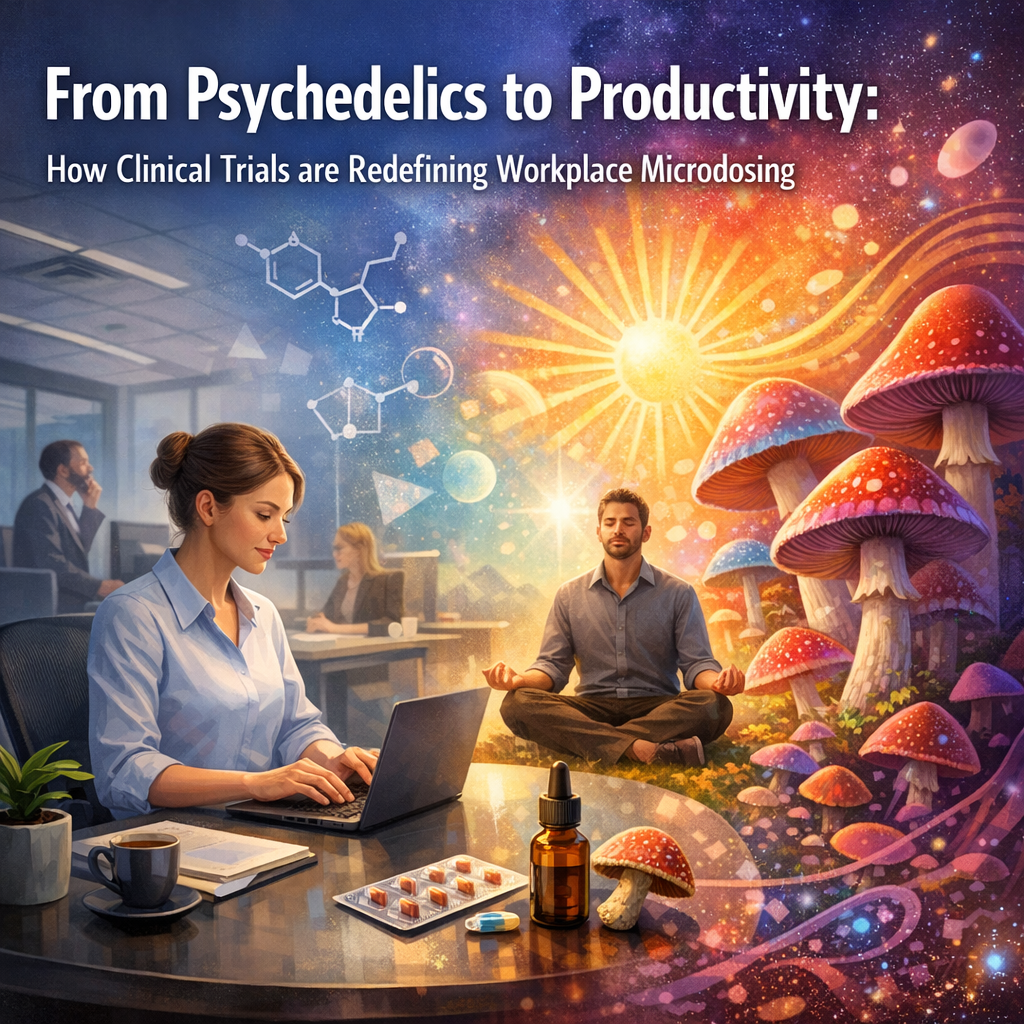
From Psychedelics to Productivity: How Clinical Trials are Redefining Workplace Microdosing
In recent years, the concept of **microdosing psychedelics**, particularly **psilocybin mushrooms**, has captured the attention of professionals and wellness enthusiasts worldwide. Traditionally associated with 1960s counterculture, **psychedelic substances** have made a surprising comeback, this time as potential allies in boosting workplace productivity and enhancing mental health. As scientific inquiry expands into these intriguing compounds, a new trend is emerging: microdosing to harness cognitive benefits without the hallucinatory effects.
Microdosing involves consuming sub-perceptual amounts of a psychedelic substance, typically about one-tenth of a regular dose. Proponents claim that this practice can lead to improved concentration, heightened creativity, better emotional balance, and even enhanced problem-solving abilities. As this approach gains traction, an increasing number of organizations and professionals are exploring these potential benefits in controlled settings.
The rekindled interest in psychedelics for productivity can be seen as a reflection of a broader shift towards more progressive and open-minded **mental health** strategies. With workplace stress at an all-time high and conventional treatments sometimes falling short, people are eager to explore alternative options. Consequently, microdosing psilocybin, thanks in part to its historical role in spiritual and therapeutic contexts, is seen by some as a promising avenue for enhancing day-to-day life’s cognitive demands.
Features:
The growing body of research into microdosing’s effects on productivity is a testament to **the scientific community’s** evolving perspective on psychedelics. One of the most notable studies in this area, conducted by the **Beckley Foundation**, aims to demystify the subtle impacts of microdosing on human cognition. Preliminary results suggest that microdosing may indeed have measurable benefits on mood and creativity, presenting a feasible approach to enhancing workplace performance (Carhart-Harris, R. L. & Goodwin, G. M., 2017).
Another study led by **Maastricht University** in the Netherlands explored the cognitive implications of microdosing with psychedelics. The researchers observed improvements in convergent and divergent thinking, both critical for problem-solving and innovation. The findings suggest that microdosing may influence the brain’s connectivity patterns, thereby supporting more flexible and creative thinking that is essential in dynamic work environments (Prochazkova, L. et al., 2018).
However, it is important to approach microdosing with caution. Critics argue that the hype surrounding microdosing may skew perceptions of its actual efficacy. A comprehensive review by the **University of Chicago** highlighted that many positive anecdotal reports might be attributed to the placebo effect. Thus, more rigorous, placebo-controlled trials are needed to substantiate claims and understand potential long-term effects (Polito, V. & Stevenson, R. J., 2019).
Nonetheless, this burgeoning field of research is unlocking new discussions on how psychedelics could be responsibly integrated into our lives. As scientists continue to investigate, it’s clear that the potential for using psychedelics like psilocybin for workplace productivity is an exciting area ripe for exploration.
Conclusion:
As clinical trials continue to shed light on the effects of psychedelics in workplace settings, microdosing may become an increasingly acceptable practice for boosting productivity and creativity. While promising early results encourage optimistic outlooks, it is vital for ongoing research to establish the safety and efficiency of microdosing. As we navigate the complexities of modern work environments, innovative approaches like these may redefine the standards of productivity and mental wellness.
**References:**
1. [Carhart-Harris, R. L., & Goodwin, G. M. (2017). The Therapeutic Potential of Psychedelic Drugs: Past, Present, and Future. Psychopharmacology](https://link.springer.com/article/10.1007/s00213-017-4773-0).
2. [Prochazkova, L., et al. (2018). Exploring the Effect of Microdosing Psychedelics on Creativity in an Open-label Natural Setting. Psychopharmacology](https://link.springer.com/article/10.1007/s00213-018-5133-6).
3. [Polito, V., & Stevenson, R. J. (2019). A systematic study of microdosing psychedelics. Journal of Psychopharmacology](https://journals.sagepub.com/doi/abs/10.1177/0269881119824482).
**Concise Summary:**
The concept of microdosing psychedelics, especially psilocybin, is gaining popularity among professionals aiming to enhance productivity and mental well-being. This practice involves taking sub-perceptual doses to improve cognition and creativity without hallucinations. Research, such as studies by the Beckley Foundation and Maastricht University, suggests potential benefits, yet critics warn against placebo effects, emphasizing the need for more rigorous study. Despite ongoing debate, microdosing represents an innovative mental health strategy as workplace stress increases, presenting a promising avenue for future exploration and potential widespread acceptance.

Dominic E. is a passionate filmmaker navigating the exciting intersection of art and science. By day, he delves into the complexities of the human body as a full-time medical writer, meticulously translating intricate medical concepts into accessible and engaging narratives. By night, he explores the boundless realm of cinematic storytelling, crafting narratives that evoke emotion and challenge perspectives. Film Student and Full-time Medical Writer for ContentVendor.com