Brain Synchrony: How Psilocybin Orchestrates Cognitive Symphonies Beyond Neuroplasticity
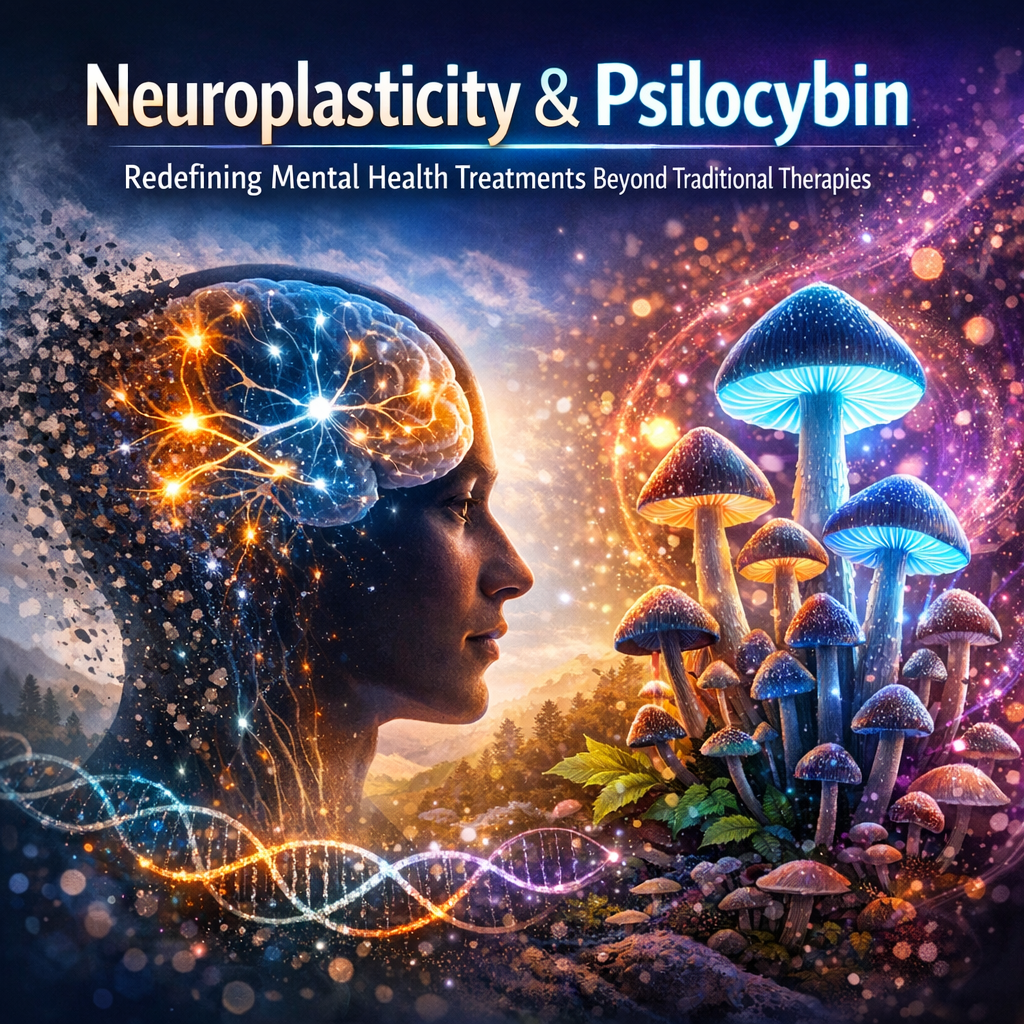
In the ever-evolving realm of **neuroscience** and **mental health**, **psilocybin**—a naturally occurring **psychedelic** compound found in certain mushrooms—is gaining significant attention not just for its potential **therapeutic benefits**, but for its capacity to harmonize the brain’s **cognitive processes** in ways previously unimagined. This article delves into the intriguing phenomenon of **brain synchrony** orchestrated by psilocybin, its potential to foster enhanced cognitive integration beyond traditional **neuroplasticity**, and what this means for treating various **psychological conditions**.
At its core, neuroplasticity refers to the brain’s remarkable ability to reorganize itself by forming new neural connections throughout life. This adaptability is vital for **learning**, **memory**, and recovery from injuries. However, traditional perceptions of neuroplasticity might be only the initial strokes in the vast canvas of the mind’s potential. Enter psilocybin, with its unique ability to trigger profound shifts in **consciousness** and cognition, facilitating a state of brain synchrony, or ‘cognitive symphony.’
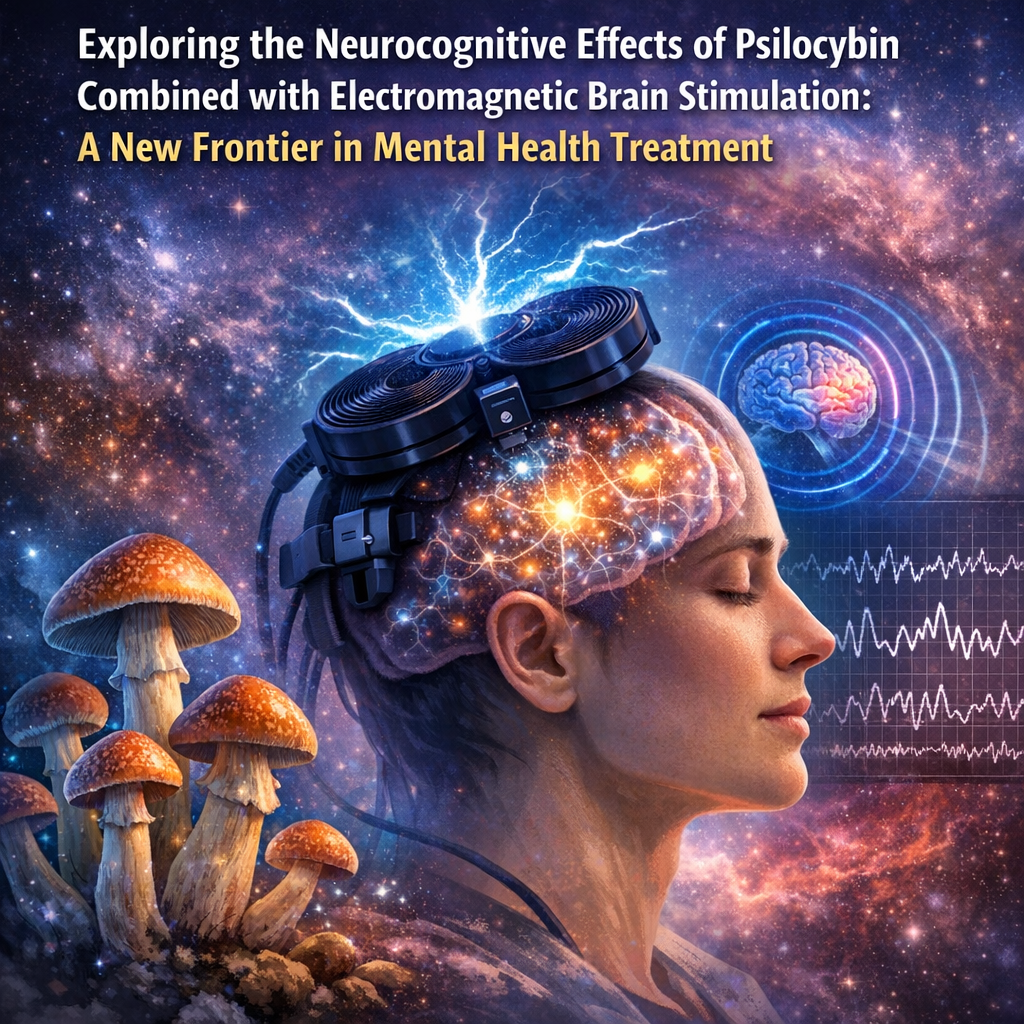
The concept of brain synchrony involves the coordinated activity across distinct neural circuits leading to enhanced communication between regions of the brain. Psilocybin appears to amplify this synchrony, essentially ‘orchestrating’ a more cohesive and integrated cognitive experience. According to a study published in the journal “Scientific Reports,” researchers used **functional MRI imaging** to observe how psilocybin induces a hyperconnected brain state, suggesting a breakdown of conventional neural networks and the formation of new pathways. [source](https://www.nature.com/articles/srep00349).
This amplified connectivity is believed to contribute to psilocybin’s **therapeutic effects**. It can foster new perspectives, insight, and emotional release, all essential components in addressing mental health challenges such as **depression**, **PTSD**, and **anxiety**. With ongoing research, psilocybin’s potential to re-tune the brain’s **default mode network**—a crucial player in self-referential thoughts and mental health—is becoming clearer, offering hope that extends beyond the limitations of neuroplasticity.
Features
Psilocybin’s potential to orchestrate cognitive symphonies is supported by a plethora of professional and medical studies. One such pivotal research, published in the “Journal of Psychopharmacology,” demonstrated how psilocybin facilitates enduring personality changes towards **openness**, a trait associated with **imagination** and **creativity**. [source](https://journals.sagepub.com/doi/10.1177/0269881111420188). The study highlights that psilocybin can amplify the brain’s ability to break down and reorganize rigid thought patterns, fostering psychological growth and emotional healing.
Furthermore, a landmark study at **Imperial College London** using both **fMRI** and **MEG scans** has illustrated how psilocybin quiets the brain’s **default mode network (DMN)** and enhances connectivity in other networks, such as the **salience network**, which is crucial for focusing attention on important tasks. [source](https://www.ncbi.nlm.nih.gov/pmc/articles/PMC5367556/). This finding supports the idea that psilocybin doesn’t just enhance neural plasticity; it promotes a profoundly altered state of brain functioning that could be likened to an orchestrated symphony where previously silent instruments (neural pathways) now play a harmonized and dynamic role.
Psilocybin’s orchestration of cognitive symphonies also holds promise for treating **chronic pain** and **substance use disorders**. A study from **Johns Hopkins University** explored psilocybin-assisted therapy for **smoking cessation**, revealing dramatically improved quit rates compared to traditional methods. [source](https://journals.sagepub.com/doi/10.1177/0269881112456610). By instigating a harmonious state of cognitive symphony, psilocybin might help rewire the brain circuits involved in addiction, offering a path to recovery through enhanced **self-understanding** and **behavioral change**.
Conclusion
Psilocybin is on the frontier of transcending traditional neuroplasticity by fostering a state of brain synchrony that harmonizes our neural orchestration. As research progresses, its potential to treat complex psychological conditions through enhanced connectivity and cognitive integration becomes increasingly promising. With new studies continually adding to our understanding, the symphonic possibilities of psilocybin suggest a future where mental health treatment is not only about altering brain chemistry but about orchestrating the mind’s symphony.
**Concise Summary:**
Psilocybin is making strides in neuroscience beyond conventional neuroplasticity, facilitating brain synchrony—a coherent cognitive state. Studies highlight its role in enhanced connectivity across neural circuits. This hyperconnected state leads to novel therapeutic benefits, aiding in treating mental health issues like depression, PTSD, anxiety, and addiction. Psilocybin’s potential extends to inducing enduring personality changes, improved creativity, and insightful perspectives. Ongoing research showcases promising results for psilocybin-assisted therapies, driving advancements in mental health treatments through a newly orchestrated interplay of the brain’s neural pathways.

Dominic E. is a passionate filmmaker navigating the exciting intersection of art and science. By day, he delves into the complexities of the human body as a full-time medical writer, meticulously translating intricate medical concepts into accessible and engaging narratives. By night, he explores the boundless realm of cinematic storytelling, crafting narratives that evoke emotion and challenge perspectives. Film Student and Full-time Medical Writer for ContentVendor.com