Navigating Psilocybin Commercialization: The Balancing Act Between Medical Integrity and Market Pressures
In recent years, the resurgence of interest in **psilocybin**—a naturally occurring psychedelic compound found in certain mushrooms—has ushered in a fascinating yet complex era in both **medical research** and the marketplace. Historically, psilocybin has been associated with ancient rituals and cultural practices. However, modern science is beginning to uncover its potential therapeutic benefits, particularly for conditions such as **depression**, **anxiety**, and **PTSD**. As a result, the **commercialization** of psilocybin is gaining momentum, backed by emerging clinical evidence.
The push towards commercializing psilocybin is driven by an evolving understanding of its potential benefits. Researchers have pointed to a growing body of evidence that supports its therapeutic use, sparking both excitement and investment in the sector. **Psychedelic-assisted therapy** is no longer confined to the fringes of medical research but is entering the mainstream with robust scientific backing. The FDA’s “breakthrough therapy” designation for psilocybin has accelerated interest, legitimizing the compound’s investigation for **treatment-resistant depression**.
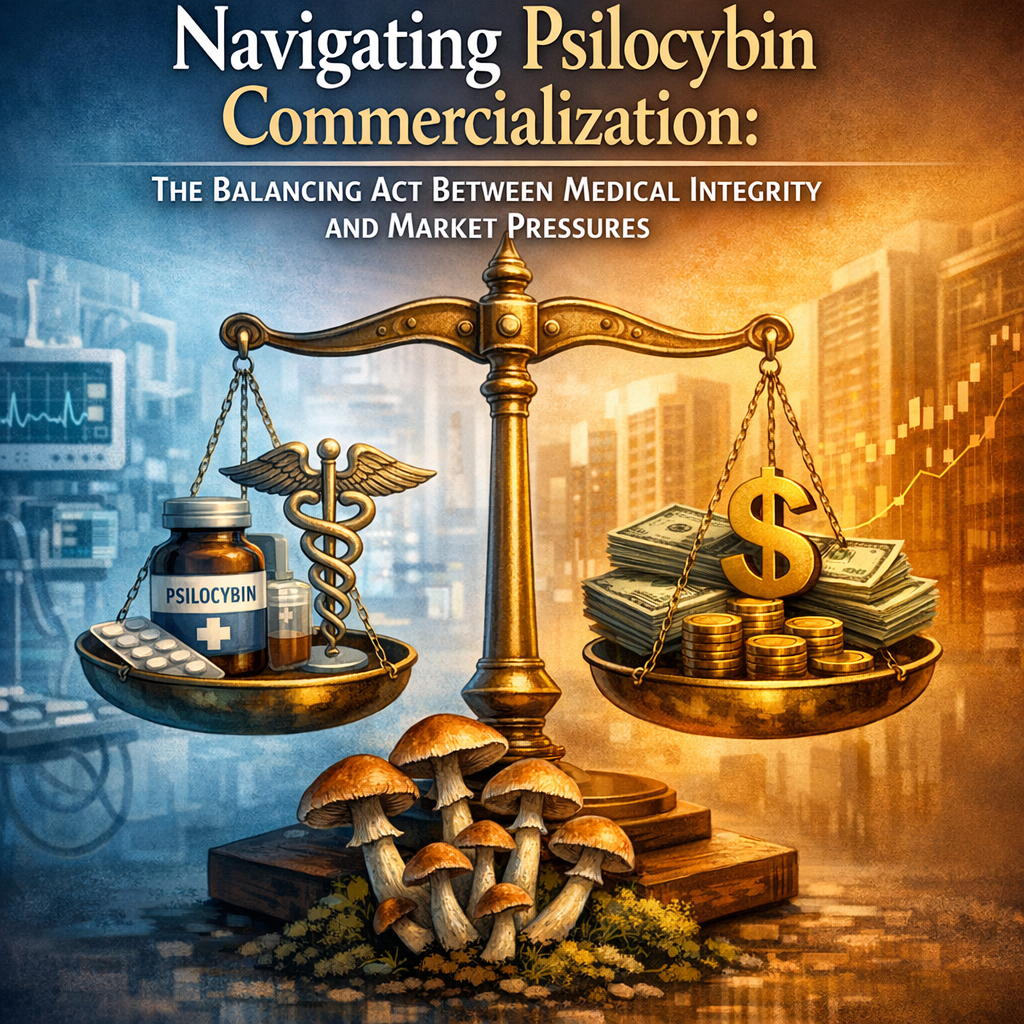
However, with commercialization comes inevitable pressures. As pharmaceutical companies and investors see the profit potential, there is a risk that economic incentives might overshadow medical integrity. Maintaining a balance between scientific rigor and market dynamics is crucial to ensure the safe and effective use of psilocybin in medical treatments. The market must avoid the pitfalls of prior pharmaceutical commercialization efforts, where sometimes efficacy and safety may have been compromised for financial gains.
The challenge lies in ensuring that commercial interests do not overshadow the patient-centered approach that should be the core of **medical psilocybin** treatment. Standards and regulations to monitor the purity, dosage, and efficacy of psilocybin products will play a critical role in safeguarding patient health. As such, the trajectory of psilocybin commercialization will heavily depend on the collaborative effort between researchers, healthcare providers, policymakers, and businesses to maintain integrity and prioritize patient wellbeing over profit.
Features:
Recent studies have significantly contributed to the understanding of psilocybin’s potential therapeutic benefits. In 2020, a landmark study published by Johns Hopkins University highlighted psilocybin’s effectiveness in alleviating major depressive symptoms in adults. The study reported that patients experienced substantial improvements, sustained for weeks following treatment, which bolsters confidence in psilocybin as a viable therapy.
Another notable study conducted by the **Imperial College London** demonstrated that psilocybin therapy increased connectivity between different brain regions, which is often disrupted in individuals suffering from depression (source). Such neurological insights suggest that psilocybin could indeed “reset” brain circuits associated with mood disorders, offering a new dimension in mental health treatments.
Despite promising early results, the commercialization of psilocybin must be underpinned by rigorous scientific validation. The **Multidisciplinary Association for Psychedelic Studies (MAPS)** emphasizes the need for comprehensive clinical trials to explore safety parameters fully and establish standardized protocols (source). Furthermore, ethical considerations, particularly related to informed consent and therapeutic contexts, should guide research practices to ensure that psilocybin is administered safely and ethically.
As regulations evolve to accommodate emerging psychedelic treatments, maintaining robust oversight and ensuring adherence to ethical practices will be essential. Countries like Canada and the Netherlands are exploring models where psilocybin can be integrated into mental healthcare systems, setting precedents for global policies.
Conclusion:
The journey toward integrating psilocybin into mainstream medical practice is just beginning. Balancing medical integrity with the pressures of commercialization will require vigilance, robust regulation, and an unwavering commitment to patient safety and benefit. As this field grows, stakeholders must work collaboratively to navigate these challenges and responsibly unlock psilocybin’s potential as a transformative tool for mental health.
**Concise Summary:**
Psilocybin is gaining interest for its potential therapeutic benefits in treating conditions like depression and PTSD. Its commercialization is growing, with significant investments and FDA’s “breakthrough therapy” designation endorsing its research. However, commercialization brings pressures of prioritizing profit over medical integrity. The key lies in balancing scientific rigor and market demands, ensuring patient safety through robust regulation. Landmark studies, such as those from Johns Hopkins and Imperial College London, highlight psilocybin’s benefits. As regulations evolve, global models, like those in Canada and the Netherlands, could guide the integration of psilocybin in healthcare systems responsibly.

Dominic E. is a passionate filmmaker navigating the exciting intersection of art and science. By day, he delves into the complexities of the human body as a full-time medical writer, meticulously translating intricate medical concepts into accessible and engaging narratives. By night, he explores the boundless realm of cinematic storytelling, crafting narratives that evoke emotion and challenge perspectives. Film Student and Full-time Medical Writer for ContentVendor.com