**
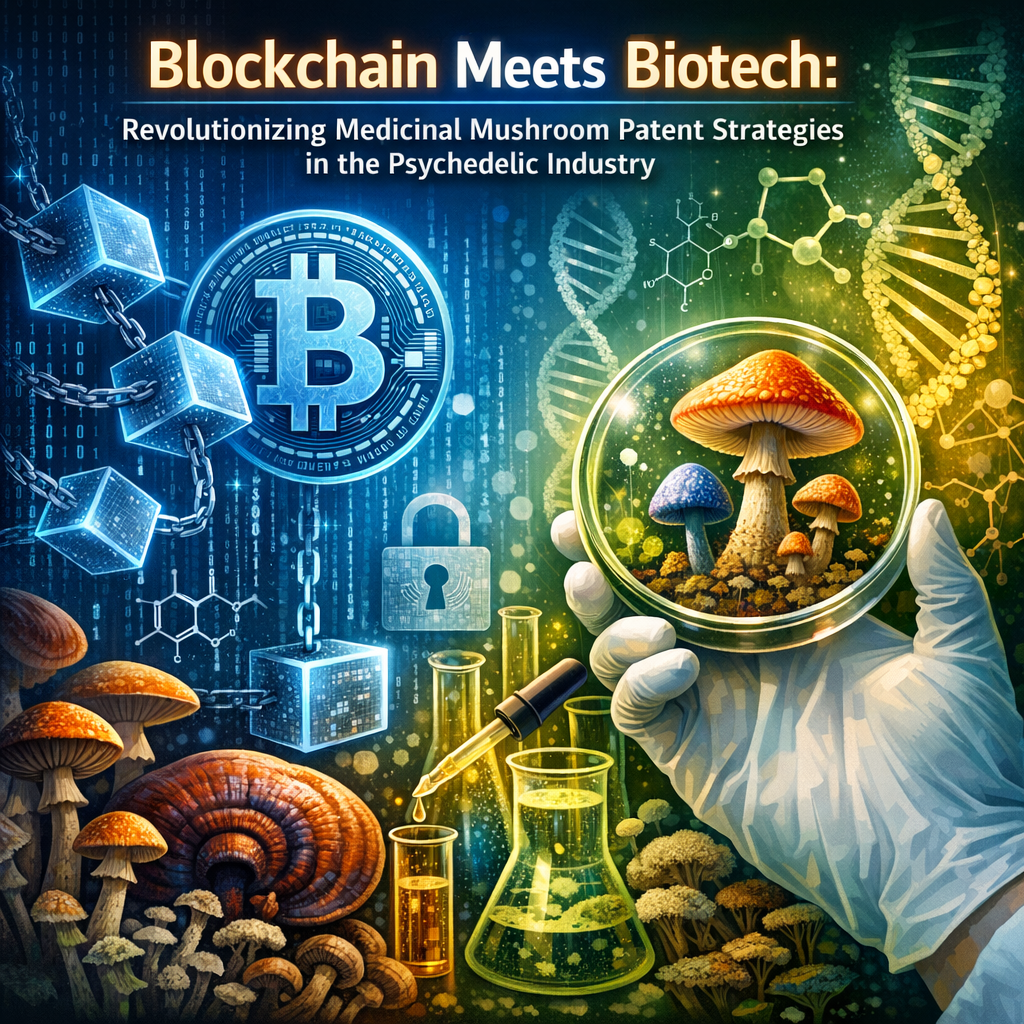
Blockchain Meets Biotech: Revolutionizing Medicinal Mushroom Patent Strategies in the Psychedelic Industry
**
**
Introduction
**
In the ever-evolving realm of **biotechnology** and **medicine**, the resurgence of interest in **psychedelic mushrooms**, particularly **psilocybin fungi**, has sparked an innovative intersection between two disparate worlds: **blockchain technology** and **medical biotech**. As the therapeutic potential of psilocybin mushrooms gains recognition for addressing mental health issues such as **depression**, **anxiety**, and **PTSD**, the demands for robust patent systems and transparent frameworks have never been higher. Enter blockchain technology—a digital ledger system that promises to revolutionize how patents are handled and shared in the psychedelic industry.
Traditionally, patenting biotech innovations, such as developments surrounding medicinal mushrooms, has encountered numerous challenges. The complexities of **intellectual property (IP) laws**, coupled with a competitive market eager for proprietary advancements, often result in convoluted, expensive patent processes. These challenges are further amplified in the field of psychedelics, where the cultural and existential significance of these substances necessitates careful navigation of regulatory and economic landscapes.
Blockchain, a decentralized digital ledger best known for underpinning **cryptocurrencies** like **Bitcoin**, offers profound potential in streamlining these processes. By providing an immutable, time-stamped, and transparent record of innovation, blockchain could offer a more equitable platform for patenting psychedelic biotech breakthroughs. This advancement is particularly significant for medicinal mushrooms, which require a sensitive approach to IP rights given the natural origins of these fungi.
Implementing blockchain in the patenting process could democratize access to these innovations, allowing for a more inclusive and collaborative approach. This would not only accelerate the development of mushroom-based therapies but also foster shared knowledge across the scientific community. As the psychedelic industry continues to burgeon, this synergy between blockchain and biotech stands to revolutionize the way we approach, protect, and disseminate groundbreaking therapeutic resources.
**
Features
**
Recent studies and professional discussions lend credibility to the integration of blockchain into the biotech field, particularly in the context of psychedelic medicinal mushrooms. Biotech and pharmaceutical sectors have long grappled with the patenting of natural products, an issue compounded by ethical considerations in psychedelic therapy. For instance, a study from the [Journal of Nature Biotechnology](https://www.nature.com/nbt/) explored how blockchain technology can streamline patent processing by ensuring transparency and authenticity in documenting innovation dates and details. This study highlighted that blockchain’s decentralized nature could reduce patent disputes by providing undeniable, verified proof of invention and chronology.
Furthermore, blockchain’s potential to facilitate open-access data sharing aligns with current trends toward collaborative scientific inquiry. By allowing researchers across the globe to access and contribute to shared databases of knowledge without compromising proprietary information, blockchain can significantly reduce redundancy and foster innovative breakthroughs. For example, a study published in the [MIT Technology Review](https://www.technologyreview.com/) demonstrated blockchain’s efficacy in maintaining secure databases that nonetheless encourage shared use—a vital feature for the rapidly advancing field of psychedelic research.
Medical research into psilocybin and other psychedelic compounds supports the development of novel treatment pathways for mental illnesses, evidenced by studies such as those from the [Johns Hopkins Center for Psychedelic and Consciousness Research](https://hopkinspsychedelic.org/). Blockchain could accelerate these developments by providing an unimpeachable record of clinical trials and research progress, thus promoting transparency and trust within the sector.
Additionally, the ethical considerations surrounding the commodification of naturally occurring substances like psilocybin mushrooms can be addressed through blockchain’s equitable framework. By preventing monopolization and fostering shared ownership of innovations, blockchain ensures a fairer distribution of the benefits arising from psychedelic research. This can help harmonize the economic interests with the moral imperatives in the field, providing a balanced approach to integrating these compounds into mainstream medicine.
**
Conclusion
**
As the entwinement of **blockchain technology** and **biotech** continues to unfold, its potential to reshape patent strategies for **medicinal mushrooms** in the **psychedelic industry** becomes increasingly apparent. Through greater transparency, protection, and democratization of knowledge, blockchain offers an innovative, ethically sound path forward. In redefining how we handle, share, and protect advancements in **psilocybin therapy**, this synergy holds promise to the future of medicine, opening doors to revolutionary treatments while honoring the integrity of natural therapies.
**Concise Summary**
Blockchain technology is revolutionizing patent strategies in the psychedelic industry, particularly for medicinal mushrooms like psilocybin fungi. The challenges of traditional patenting methods are magnified in this field, where the balance of ethical considerations and IP rights is critical. Blockchain offers a transparent and democratic approach, enabling secure, open-access patenting, and data sharing, which could accelerate breakthroughs in psychedelic therapies for mental health issues. Studies underscore blockchain’s potential in reducing patent disputes and fostering innovation, advocating for its pivotal role in aligning the economic, regulatory, and ethical landscapes of psychedelic medical research.

Dominic E. is a passionate filmmaker navigating the exciting intersection of art and science. By day, he delves into the complexities of the human body as a full-time medical writer, meticulously translating intricate medical concepts into accessible and engaging narratives. By night, he explores the boundless realm of cinematic storytelling, crafting narratives that evoke emotion and challenge perspectives. Film Student and Full-time Medical Writer for ContentVendor.com