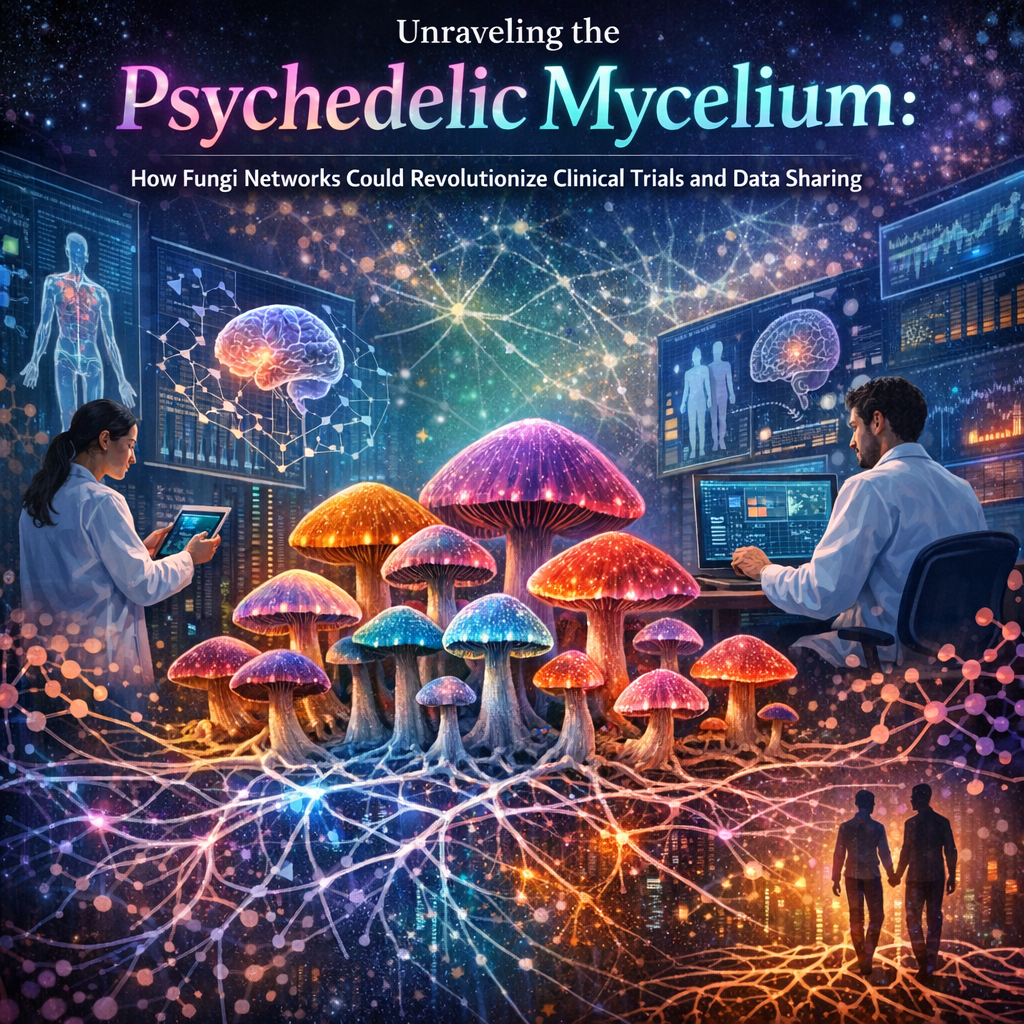
Unraveling the Psychedelic Mycelium: How Fungi Networks Could Revolutionize Clinical Trials and Data Sharing
In recent years, the world of **psychedelic research** has experienced a renaissance, driven predominantly by the burgeoning interest in **psilocybin**, the active compound in **magic mushrooms**. This resurgence is not just limited to understanding the therapeutic effects of psilocybin on mental **health disorders** but is also ushering in innovative methodologies that may revolutionize **clinical trials** and **data sharing** within the **medical community**. At the heart of this transformation is the concept of the **fungal network**, or **mycelium**, a fundamental element in the life cycle of fungi. The unique properties of these intricate networks, which closely resemble **neural** and **digital networks**, have sparked curiosity among researchers, potentially heralding a new era of holistic and integrative medical research.
**Mycelium**, the vegetative part of fungi, operates as a complex communication network, sharing resources and information within the ecosystem. It’s a natural internet, demonstrating how interconnected systems can thrive symbiotically. In many ways, the mycelium’s architecture parallels the idea of **decentralized studies** and **open-source platforms** in research, where data isn’t held in silos but rather shared across a spectrum of stakeholders. Such a model could significantly streamline the way clinical trials are conducted, making them more inclusive and expansive.
Imagine a global network where data from psilocybin trials isn’t confined within institutional walls but is shared responsibly across borders, facilitating accelerated discovery processes and broader consensus within the scientific community. Psilocybin research, guided by these principles, could advance rapidly, helping to uncover novel treatment pathways for conditions like **PTSD**, **depression**, and **addiction**, disorders that have remained challenging to treat using traditional pharmacotherapy.
Moreover, the cross-disciplinary nature of **mycelium studies** brings together **neuroscientists**, **ecologists**, **data analysts**, and **medico-legal experts**, all working collaboratively toward a unified goal. This holistic approach not only enhances the quality of data collected but also ensures ethical compliance and safety standards, factors crucial for the integration of psychedelics into approved treatment protocols.
Features
Numerous studies and professional inquiries are underway to understand the potential of **mycelium-inspired networks** in clinical research. One significant study is the collaboration between the [Johns Hopkins Center for Psychedelic and Consciousness Research](https://www.hopkinsmedicine.org) and various tech companies, exploring **blockchain technologies** as models for decentralized trial data management. Blockchain, much like the mycelial networks, is renowned for its ability to maintain secure, verifiable records of transactions, or in this context, data exchanges.
Another pivotal initiative is the [MycoRise project](https://maps.org/news/media/), which aims to simulate mycelium’s networking capabilities using **AI-driven bioinformatics tools** to improve data sharing among psychedelic research institutions globally. This project highlights the use of **machine learning** to analyze vast amounts of data collected from psilocybin trials, identifying patterns and correlations that human researchers might overlook.
The [University of California, Los Angeles (UCLA)](https://www.uclahealth.org) has also embarked on comprehensive studies examining the **neuroplasticity effects** of psilocybin. These studies emphasize the need for robust data sharing systems akin to mycelium networks to allow real-time collaboration and validation of findings across research teams. Such collaborations can potentially expedite the translation of findings from bench to bedside, bringing effective therapies to patients sooner than ever before.
Furthermore, the ethical implications of such interconnected research frameworks are being rigorously evaluated. The **Open Science movement**, advocating for accessible and transparent dissemination of research findings, aligns well with the principles of mycelium-inspired networks. It stresses the collective benefit and accelerated innovation over proprietary developments (source: [The Open Science Framework](https://osf.io)).
Conclusion
Unraveling the mycelium’s potential to transform clinical trials and data sharing represents an exciting frontier in psychedelic research. By emulating these natural networks, we can foster unprecedented collaboration, transparency, and efficiency, driving forward the therapeutic applications of psilocybin and other psychedelics. As we continue to understand and harness the power of fungi, we edge ever closer to a paradigm shift that prioritizes not just scientific discovery, but equitable and accessible healthcare solutions worldwide.
**Concise Summary**
This article explores the potential of utilizing fungal networks, specifically mycelium, to enhance clinical trials and data sharing in psychedelic research. The mycelium network, akin to a natural internet, offers a model for decentralized data management and collaborative research frameworks. By mimicking these networks, research into psilocybin can become more efficient, inclusive, and transparent, potentially accelerating the development of therapies for disorders like PTSD and depression. Cross-disciplinary collaborations, bolstered by technologies like blockchain and AI, promise to usher in a new era of open science and accessible healthcare.

Dominic E. is a passionate filmmaker navigating the exciting intersection of art and science. By day, he delves into the complexities of the human body as a full-time medical writer, meticulously translating intricate medical concepts into accessible and engaging narratives. By night, he explores the boundless realm of cinematic storytelling, crafting narratives that evoke emotion and challenge perspectives. Film Student and Full-time Medical Writer for ContentVendor.com