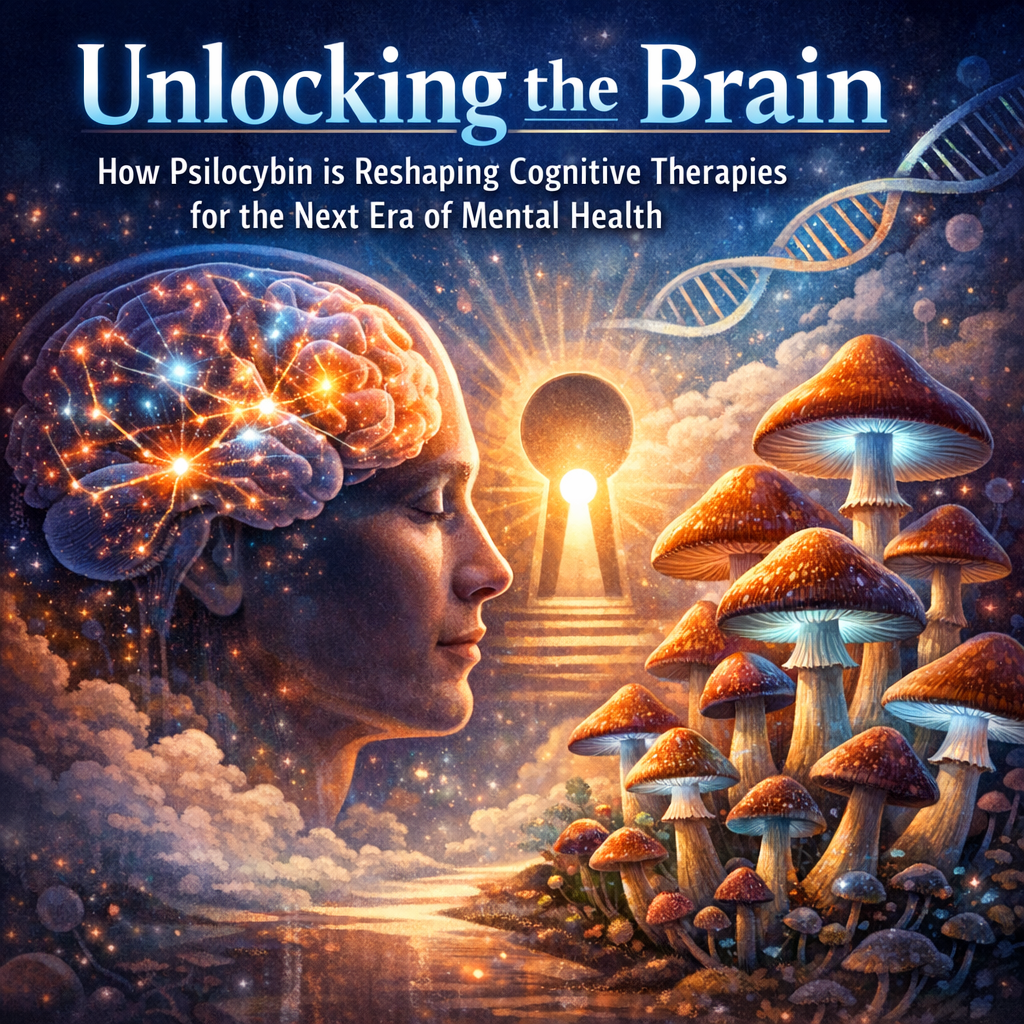
Unlocking the Brain: How Psilocybin is Reshaping Cognitive Therapies for the Next Era of Mental Health
In recent years, the world of **mental health** has witnessed a groundbreaking shift with the re-emergence of **psilocybin**—a naturally occurring **psychedelic compound** found in certain species of **mushrooms**—as a promising treatment for a variety of **mental health disorders**. Historically dismissed and classified as a **Schedule I substance**, psilocybin is now at the forefront of discussions in **neuroscience** and **psychiatry**, offering a novel approach to **cognitive therapy** and understanding of the **human brain**.
The resurgence of interest in psilocybin is part of a broader movement known as the “psychedelic renaissance,” characterized by a growing body of research that explores the therapeutic potential of **psychedelic substances**. This movement aims to unlock new insights into the brain and develop innovative treatments for conditions such as **depression**, **anxiety**, **PTSD**, and **addiction**—filling critical gaps in mental health care where existing therapies have fallen short. Unlike traditional pharmaceuticals that often mask symptoms, psilocybin therapies work at a systems level, potentially addressing root causes and enhancing long-term mental health outcomes.
Beyond changing how we perceive mental health treatments, psilocybin facilitates a transformative experience that many describe as one of increased clarity, emotional insight, and interconnectedness. The profound experiences reported under the influence of psilocybin are linked to altered brain activity, particularly affecting areas associated with mood regulation, thought patterns, and self-reflection. This has led to a paradigm shift in therapeutic approaches, where the subjective experience becomes an integral component of healing and recovery.
This article delves into the kaleidoscope of insights emerging from contemporary psilocybin research and its applications in cognitive therapy, offering a glimpse into the future of mental health treatment. As the scientific community continues to unlock the mysteries of the brain, psilocybin stands out as a beacon of hope and innovation, reshaping therapies and opening new pathways for exploration and healing.
Features: A Closer Look at the Science
The exploration of psilocybin’s therapeutic potential is supported by an impressive array of scientific studies and clinical trials. One of the most notable studies, conducted by researchers at [Johns Hopkins University](https://www.hopkinsmedicine.org/news/media/releases/hallucinogenic_drug_psilocybin_eases_existential_anxiety_in_people_with_life_threatening_cancer), demonstrated the effectiveness of psilocybin in reducing symptoms of depression and anxiety in patients with life-threatening cancer diagnoses. The study found that a single dose of psilocybin led to significant improvements in mood and emotional stability, effects that lasted for months after administration.
Another pivotal study published in the [New England Journal of Medicine](https://www.nejm.org/doi/full/10.1056/NEJMoa2032994) compared psilocybin therapy to the conventional antidepressant escitalopram. The results revealed that psilocybin was at least as effective, if not more so, in alleviating symptoms of depression, with a more rapid onset of action and fewer side effects. This study underscores the compound’s potential to revolutionize depression treatment, offering a faster and possibly more sustainable alternative to traditional medications.
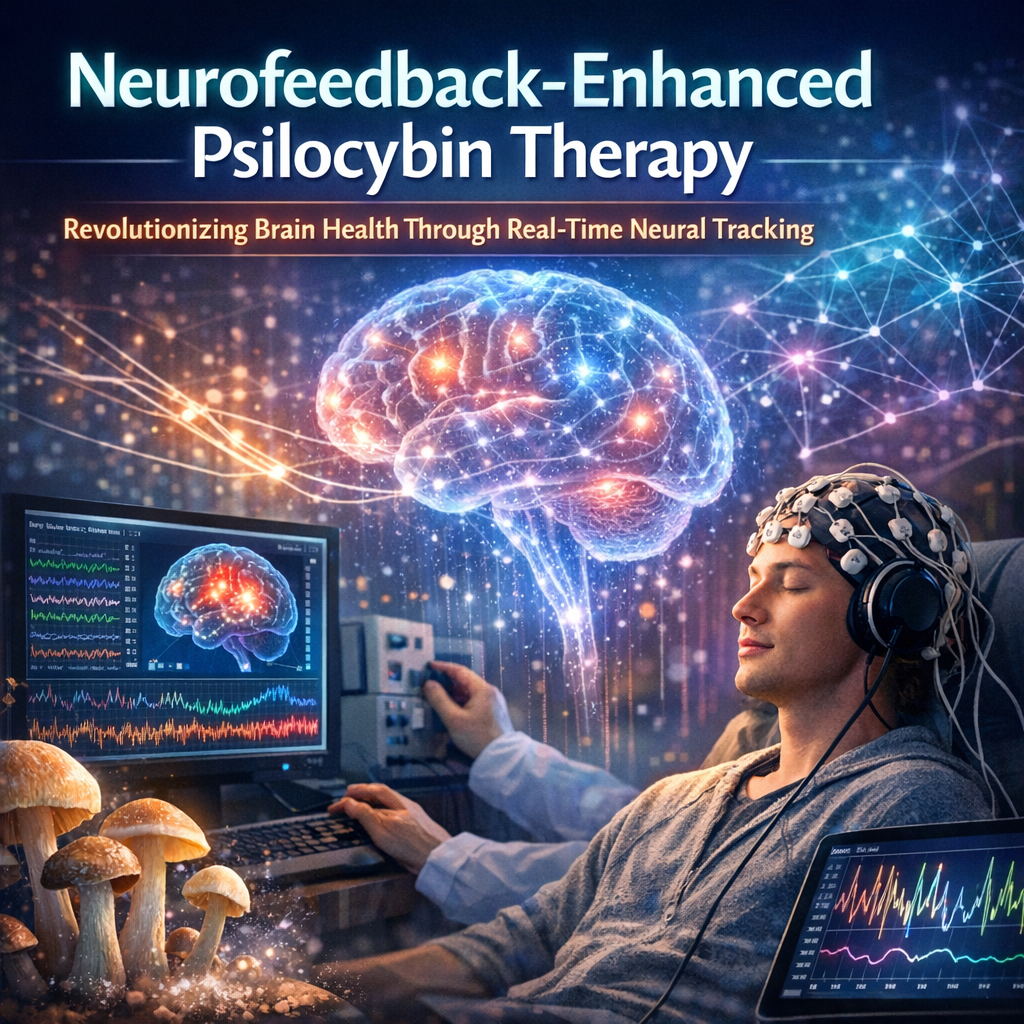
Moreover, research from [Imperial College London](https://www.frontiersin.org/articles/10.3389/fnhum.2014.00020/full) has provided compelling evidence that psilocybin increases brain connectivity, particularly between areas involved in thought and emotional processing. Neuroimaging studies using fMRI have shown that psilocybin reduces activity in the default mode network (DMN), a brain system associated with self-referential thoughts, and promotes the formation of new neural pathways. These changes may facilitate a “resetting” of the brain, analogous to the rebooting of a computer, potentially liberating patients from entrenched negative thought patterns.
As we navigate the complex landscape of mental health treatment options, psilocybin could hold the key to personalized and effective therapies, tailored to the unique neurobiological and psychological needs of each individual. The integration of psilocybin into cognitive therapy represents a holistic approach, one that considers the interplay between mind, body, and consciousness and its impact on overall wellness.
Conclusion
The future of mental health treatment is poised for a transformation, with psilocybin leading the charge as a tool for deep cognitive and emotional renewal. By reshaping our understanding of consciousness and altering brain function, psilocybin offers a promising horizon where mental health professionals can devise therapies that are both innovative and deeply humanistic. As research continues to expand, psilocybin holds the potential to reformulate our baseline methods for healing, providing hope and healing to those walking the difficult path of mental illness.
**Summary:** The world of mental health is experiencing a renaissance with the re-emergence of **psilocybin** as a promising treatment for various disorders. Recent studies have highlighted its potential in addressing **depression**, **anxiety**, **PTSD**, and **addiction**, often providing benefits that far surpass traditional therapies. Psilocybin works at a systems level, addressing the root causes of mental health issues. It enhances **brain connectivity** and alters activity within the **default mode network**. As we strive to unlock the mysteries of the brain, psilocybin offers a beacon of hope and the potential for personalized therapies oriented towards long-term healing.

Dominic E. is a passionate filmmaker navigating the exciting intersection of art and science. By day, he delves into the complexities of the human body as a full-time medical writer, meticulously translating intricate medical concepts into accessible and engaging narratives. By night, he explores the boundless realm of cinematic storytelling, crafting narratives that evoke emotion and challenge perspectives. Film Student and Full-time Medical Writer for ContentVendor.com