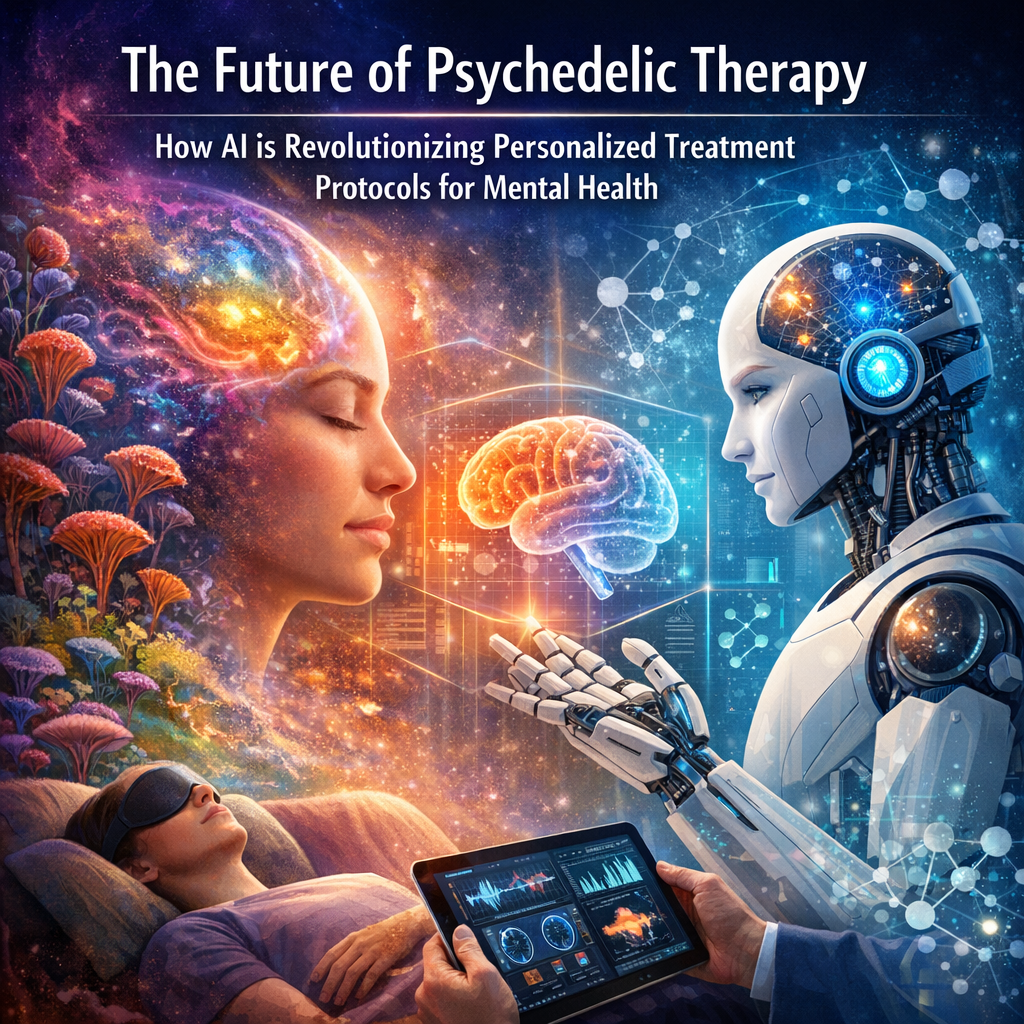
The Future of Psychedelic Therapy: How AI is Revolutionizing Personalized Treatment Protocols for Mental Health
Introduction
In recent years, there has been a growing interest in the potential of **psychedelics**, such as **psilocybin**, for treating a variety of mental health conditions. As research continues to unveil promising results, the integration of **artificial intelligence (AI)** into **psychedelic therapy** is poised to take treatment protocols to the next level. The fusion of **AI and psychedelics** marks a significant advancement in personalizing mental health care, offering innovative solutions for conditions such as **depression**, **anxiety**, **PTSD**, and more.
**Psychedelic substances** have long been a topic of intrigue, largely due to their powerful impact on consciousness and perception. Historically, psychedelics were used for **spiritual and religious purposes**, but contemporary research has shifted towards their therapeutic potential. Psilocybin, the active compound in **magic mushrooms**, is at the forefront of this research, showing promise in creating lasting changes in brain connectivity and emotional processing.
The application of AI in psychedelic therapy is a game-changer. AI’s ability to analyze vast amounts of **data** allows for the development of highly personalized treatment plans. By assessing individual **biomarkers**, **genetic information**, and mental health histories, AI can predict which psychedelic therapy approaches will be most effective for a particular individual. This technological advancement is crucial because psychedelic experiences can vary widely between individuals, making personalized approaches essential for optimizing therapeutic outcomes.
Moreover, AI can assist therapists in monitoring and adjusting treatment protocols in real-time. Through **wearable technology** and digital platforms, AI systems can track physiological responses and emotional states during and after therapy sessions. This **data-driven approach** enables therapists to tailor interventions dynamically, enhancing the safety and efficacy of psychedelic treatments.
As the stigmatization of psychedelics diminishes and legal frameworks shift, the integration of AI is set to enhance the scalability of psychedelic therapy. By streamlining the therapeutic process and providing personalized insights, AI has the potential to reach a broader demographic, leading to more widespread acceptance and accessibility. This synergy between technology and therapy underscores a transformative shift in how we approach mental health care, setting the stage for a future where treatment protocols are more effective, efficient, and inclusive.
Features
Multiple professional and medical studies highlight the efficacy and potential of **psychedelic-assisted therapy**, providing a foundation for the integration of AI technology. A landmark study published in the **New England Journal of Medicine** demonstrated that psilocybin therapy was as effective as the selective serotonin reuptake inhibitor (SSRI) escitalopram in treating major depressive disorder. Participants who received psilocybin treatments reported significant improvements in emotional well-being and quality of life compared to those who received traditional pharmacotherapy alone. [Read the study](https://www.nejm.org/doi/full/10.1056/NEJMoa2032994).
AI’s role in personalizing these treatments is further explored in research focusing on data science and psychiatric care. A study by the **Massachusetts Institute of Technology (MIT)** showcased an AI model that could predict the likelihood of success in various mental health therapies by analyzing data from electronic health records and patient surveys. The study highlighted AI’s potential to transform treatment customization, leading to improved patient outcomes and reduced relapse rates. [Read more about AI and Mental Health](https://news.mit.edu/2020/ai-depression-treatment-1027).
Another emerging application of AI in psychedelic therapy is in monitoring and safety. Clinical trials conducted by **COMPASS Pathways** incorporated **AI-based tools** to monitor patient vitals and sensory data during psilocybin sessions. This approach aimed to enhance patient safety by providing real-time alerts to therapists, allowing for immediate intervention if required. This technology is invaluable in minimizing risks associated with altered states of consciousness and ensuring a controlled therapeutic environment. [Learn more](https://compasspathways.com/2020-press-release-01).
Furthermore, the collaboration between AI and psychedelics extends into predictive analytics. Companies like **MindMed** are investing in AI-driven platforms to analyze patterns in patient data, ultimately enabling the detection of early warning signs of mental health deterioration. Such proactive measures can facilitate timely interventions, potentially averting full-blown mental health crises. [Explore MindMed’s innovations](https://mindmed.co/ai-technology).
The integration of AI with psychedelic treatments is paving the way for a revolution in mental health care, marking a departure from one-size-fits-all models. By offering a nuanced understanding of individual needs and responses, AI enhances the therapeutic potential of psychedelics, providing a new dimension to patient-centered care.
Conclusion
The combination of AI technology and psychedelic therapy represents a frontier in **personalized mental health treatment**. By harnessing the power of data and **machine learning**, AI personalizes and optimizes psychedelic experiences, resulting in safer and more effective outcomes. As research progresses and these technologies become increasingly integrated, mental health care could transform into a more tailored, accessible, and impactful experience for those in need.
Concise Summary
AI is revolutionizing psychedelic therapy by personalizing treatment plans, predicting therapeutic outcomes, and enhancing safety through real-time monitoring. By integrating AI, therapists can develop tailored strategies based on individual data, improving treatment efficiency for mental health conditions like depression and anxiety. As stigmas fade and legal frameworks adapt, AI’s role in psychedelic therapy marks a significant step forward in mental health care, promising more inclusive and effective treatments. Advances in AI-driven platforms offer insights into patient data, facilitate proactive intervention strategies, and aid in the transformation from one-size-fits-all models to personalized care.

Dominic E. is a passionate filmmaker navigating the exciting intersection of art and science. By day, he delves into the complexities of the human body as a full-time medical writer, meticulously translating intricate medical concepts into accessible and engaging narratives. By night, he explores the boundless realm of cinematic storytelling, crafting narratives that evoke emotion and challenge perspectives. Film Student and Full-time Medical Writer for ContentVendor.com