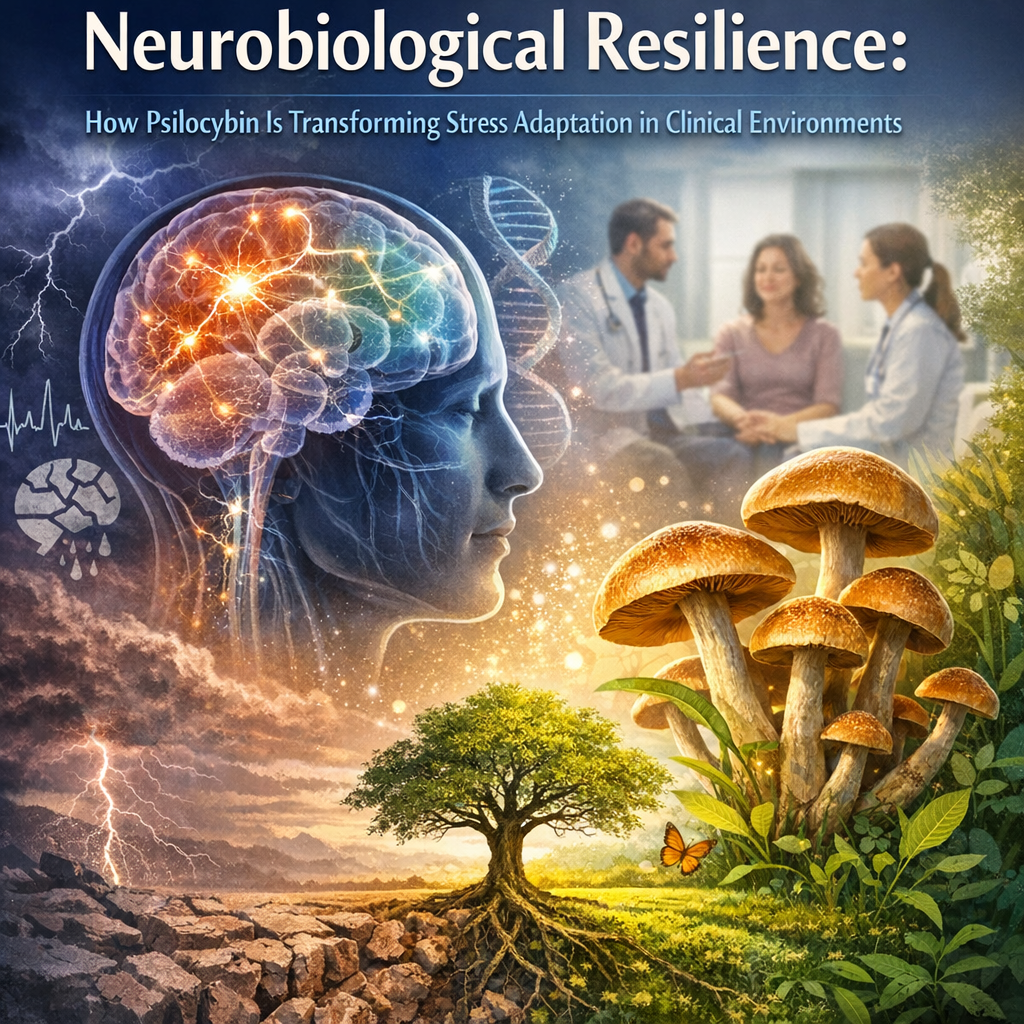
Neurobiological Resilience: How Psilocybin Is Transforming Stress Adaptation in Clinical Environments
Introduction
In an ever-evolving world characterized by rapid technological advances, social pressures, and global challenges, **stress** has become a pervasive aspect of daily life. The impact of **chronic stress** on human health is significant, leading to both psychological and physiological ailments. Traditional **stress management** approaches, predominantly reliant on pharmaceuticals, often fall short due to side effects and incomplete relief. This has driven the exploration of alternative therapies, notably **psilocybin**, a psychoactive compound found in certain mushrooms.
Psilocybin has a historical precedent of use in various cultural rituals and healing practices. Its reintroduction in clinical settings is significant, with studies beginning to reveal its potential to foster **neurobiological resilience**. In essence, psilocybin may help the brain adapt more effectively to stress by altering neural pathways, promoting emotional regulation, and enhancing **mental flexibility**.
Recent advances in **neuroimaging** and psychology have allowed scientists to delve into the mechanisms behind psilocybin’s effects. Psilocybin primarily interacts with **serotonin receptors** in the brain, especially the **5-HT2A receptor**. This interaction facilitates altered states of consciousness and profound introspective experiences, often resulting in a reset in how individuals perceive stress. The concept of **“ego dissolution,”** frequently reported during psilocybin experiences, may play a key role in reducing the cognitive rigidity that chronic stress can induce.
In clinical environments, psilocybin is being examined for its potential to support **treatment-resistant depression**, **post-traumatic stress disorder**, and **anxiety**. Research suggests these conditions, often exacerbated by stress, may be alleviated through the careful administration of psilocybin. Unlike traditional antidepressants or anxiolytics requiring daily use, psilocybin therapy involves a few guided sessions, leading to lasting changes in mental health outcomes. As exploration continues into how psilocybin is transforming stress adaptation, it is evident that this compound holds promise not only for individual healing but potentially for reshaping our overall approach to mental wellness.
Features
The role of psilocybin in clinical settings is attracting significant interest within the scientific community. A study published in the journal [**Nature**](https://www.nature.com/articles/nsmb.3302) investigated how psilocybin affects the brain’s **default mode network** (DMN), a network of interacting brain regions known to be overactive in individuals suffering from depression and anxiety. By modulating the DMN, psilocybin appears to diminish patterns of negative self-referential thinking, a common byproduct of chronic stress. This modulation is believed to be central to psilocybin’s ability to enhance **resilience** against stress.
Furthermore, a study at [**Imperial College London**](https://journals.sagepub.com/home/jop) utilized **functional magnetic resonance imaging** (fMRI) to observe psilocybin’s effects on participants with treatment-resistant depression. Results revealed that psilocybin decreased activity in the **amygdala**, the brain region responsible for processing fear and emotional responses, thereby alleviating symptoms associated with chronic stress and anxiety. Researchers concluded that this reduction in amygdala activity contributed to an enhanced sense of emotional stability and well-being.
On a molecular level, psilocybin promotes **neuroplasticity**, the brain’s ability to reorganize itself by forming new neural connections. A 2021 study in [**Cell Reports**](https://www.cell.com/cell-reports) indicates that psilocybin can enhance dendritic growth, leading to stronger and more numerous synaptic connections, crucial for adapting to new stressors and overcoming negative emotional patterns.
Additionally, clinical trials, including those conducted by [**Johns Hopkins University**](https://www.hopkinsmedicine.org/psychiatry/research/psychedelics-research/psilocybin-studies.html), have demonstrated that psilocybin can effectively reduce the psychological impact of existential distress in patients with life-threatening illnesses. The profound shifts in awareness and coping mechanisms enabled by psilocybin underscore its capacity to instill a deeper sense of interconnectedness and acceptance, essential for stress adaptation.
The use of psilocybin in a controlled therapeutic context highlights its potential as an adjunct to psychotherapy, offering a new perspective on mental health treatment by moving beyond symptom management to address underlying psychological and neurobiological processes. As research progresses, psilocybin emerges as a promising tool in the pursuit of enhancing human resilience amid mounting stress.
Conclusion
In conclusion, psilocybin is gaining recognition as a powerful catalyst for **neurobiological resilience**, capable of revolutionizing how individuals adapt to stress. By modulating cortical networks and encouraging neuroplasticity, psilocybin therapy provides a unique approach in clinical settings, complementing mental health treatment beyond conventional methods. As our understanding grows, psilocybin’s role in fostering emotional and psychological balance could herald a paradigm shift in stress adaptation and mental wellness strategies. Continuous research will be essential for unlocking its full potential and ensuring its safe incorporation into therapeutic practices.
Concise Summary
Psilocybin, a psychoactive compound found in certain mushrooms, is being explored for its potential to foster neurobiological resilience in clinical environments. Interacting with serotonin receptors, it promotes neuroplasticity and alters neural pathways to enhance mental flexibility and emotional regulation. Studies reveal its ability to modulate brain networks associated with stress, suggesting benefits for treatment-resistant depression, PTSD, and anxiety. Unlike conventional antidepressants, psilocybin requires only a few sessions to achieve significant, lasting mental health improvements. As research progresses, psilocybin shows promise in revolutionizing stress adaptation and overall mental wellness.

Dominic E. is a passionate filmmaker navigating the exciting intersection of art and science. By day, he delves into the complexities of the human body as a full-time medical writer, meticulously translating intricate medical concepts into accessible and engaging narratives. By night, he explores the boundless realm of cinematic storytelling, crafting narratives that evoke emotion and challenge perspectives. Film Student and Full-time Medical Writer for ContentVendor.com