“`html
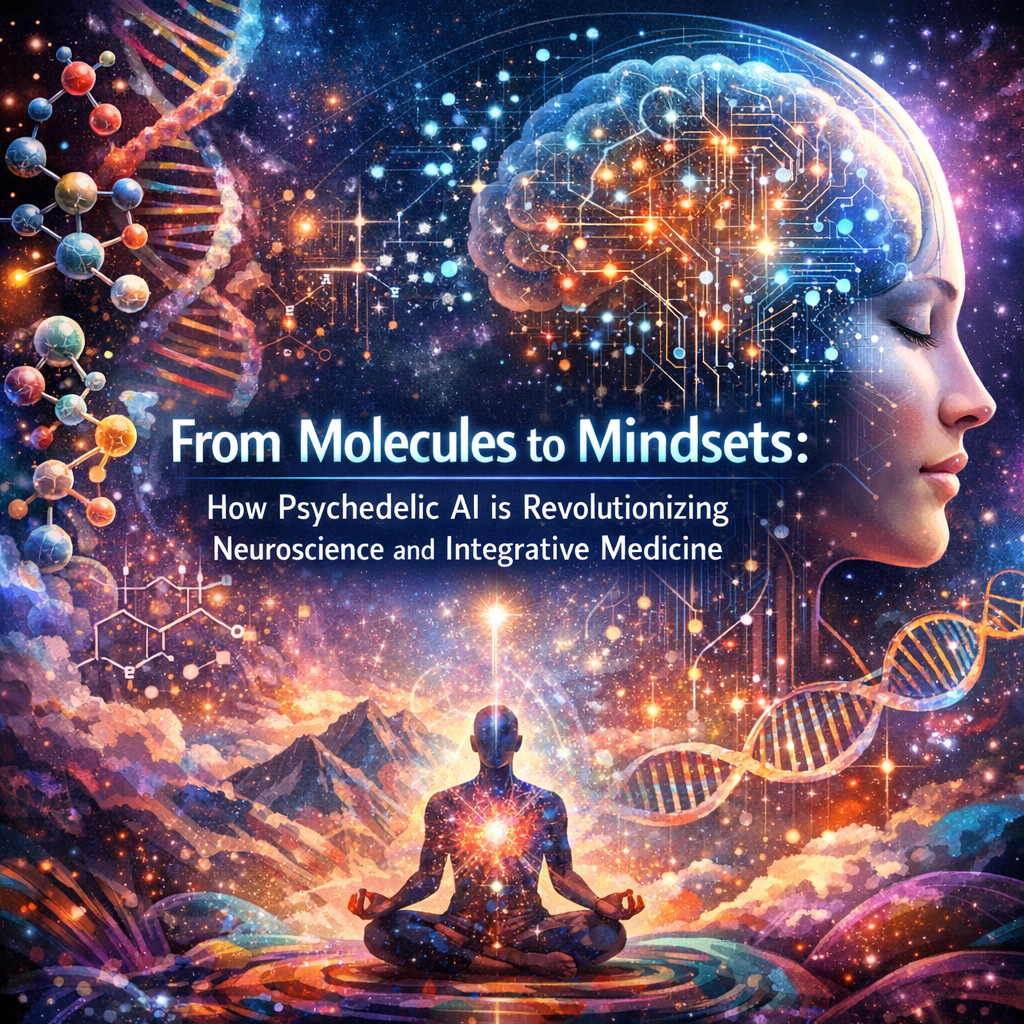
From Molecules to Mindsets: How Psychedelic AI is Revolutionizing Neuroscience and Integrative Medicine
Introduction
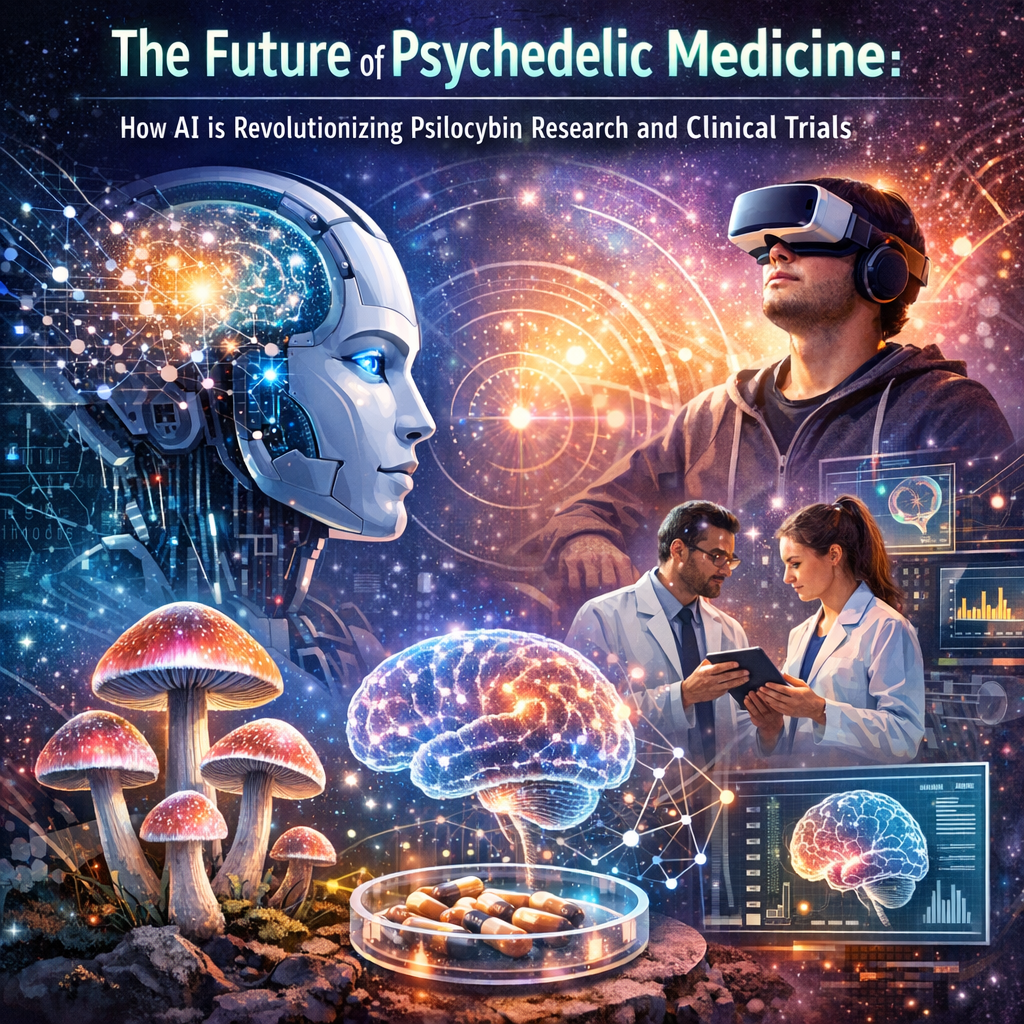
In recent years, the therapeutic potential of **psychedelic substances**, particularly **psilocybin**, has gained remarkable interest in both scientific and medical communities. This newfound fascination aligns with the evolving understanding of mental health issues, where traditional pharmacological treatments sometimes fall short. What excites researchers and practitioners alike is not just the potential efficacy of **psychedelics** but the revolutionary technology being harnessed to explore their benefits: **Artificial Intelligence (AI)**.
AI is dramatically transforming the landscape of **neuroscience** and **integrative medicine**, highlighting a new frontier aptly described as “Psychedelic AI.” This fusion leverages advanced algorithms to unlock deeper insights into how **psychedelics** can modulate cognition, emotion, and behavior. By decoding the complex interplay between brain molecules and psychological states, scientists hope to tailor personalized therapies aimed at a broader spectrum of mental health conditions, including **depression**, **PTSD**, and **anxiety disorders**.
**Psychedelic AI** is not only redefining treatment paradigms but it is also expanding the capabilities of integrative medicine. Traditionally, this broad approach to healing focuses on the holistic integration of multiple therapeutic practices, addressing the body, mind, and spirit. By incorporating AI-driven insights from psychedelic research, practitioners can now take a more nuanced view of each patient’s unique neurobiological and psychological profile, offering customized interventions that align with individual needs and lifestyle.
The concept of “molecules to mindsets” encapsulates this transformative journey. It articulates the transition from understanding simple biochemical interactions to exploring complex mental frameworks—and eventually reshaping them for improved mental wellness. As we delve into how Psychedelic AI is spearheading this evolution within neuroscience and integrative medicine, we’ll explore the latest studies that underscore this compelling frontier, offering a glimpse of the promising future it holds.
Features
Recent advancements in psychedelic research, propelled by **AI**, have begun to illustrate the potential of these substances to enact significant neurophysiological and psychological changes. One pivotal study published in the journal [Nature Reviews Neuroscience](https://www.nature.com/articles/s41583-018-0098-6) discusses how **psilocybin** can increase **neural plasticity**, essentially “rewiring” brain circuits that are implicated in mood disorders. This enhancement in brain connectivity encourages new patterns of thought and behavior, essential for breaking the cycle of depression and anxiety.
**AI technologies** play a crucial role in these revelations. **Machine learning algorithms** analyze vast datasets and neural images to discern patterns that may not be immediately apparent to human researchers. A study conducted by [Imperial College London](https://www.imperial.ac.uk/news/190683/sterling-study-paves-future-psychedelic-therapy/) used AI to understand how psilocybin affects resting-state brain activity. The findings indicated that PSYC-specific AI models could predict shifts in consciousness and emotional processing with computational accuracy.
Moreover, a collaborative research effort explored how AI could simulate the molecular interaction of psilocybin with serotonin receptors in the brain. By examining these interactions at a molecular level, AI algorithms help scientists predict the subjective effects of psychedelics, paving the way for precision medicine approaches in treating mental health conditions [Source](https://www.ncbi.nlm.nih.gov/pmc/articles/PMC6124687/).
**Integrative medicine**, which often employs a broad spectrum of healing modalities, benefits immensely from these AI-driven insights. By integrating personalized data analysis, practitioners can more effectively combine psychedelic therapies with other treatments like **mindfulness**, **acupuncture**, and nutritional guidance. The result is a therapy framework not limited to alleviating symptoms but geared towards cultivating long-term mental resilience and wellness.
Conclusion
The confluence of **AI technologies** and **psychedelic research** marks a profound shift in neuroscience and integrative medicine. By unlocking the mysteries of brain-behavior interactions through advanced computation, we are not only expanding our understanding of the mind but also opening doors to innovative, personalized mental health treatments. As AI and psychedelics synergize, they chart a new path forward, one that holds promise for a more comprehensive and empathetic approach to mental wellness.
Concise Summary
The integration of **Artificial Intelligence (AI)** with **psychedelic research** is revolutionizing **neuroscience** and **integrative medicine**. By leveraging advanced algorithms, **psychedelic AI** delves into how substances like **psilocybin** affect cognition and behavior, offering personalized therapies for conditions such as **depression** and **PTSD**. This cutting-edge technology enables a holistic approach that seamlessly combines multiple healing practices tailored to individual neurobiological profiles. Through AI, the potential for a more comprehensive, empathetic approach to mental health treatments is progressively becoming a reality, marking a significant evolution in medical paradigms.
“`

Dominic E. is a passionate filmmaker navigating the exciting intersection of art and science. By day, he delves into the complexities of the human body as a full-time medical writer, meticulously translating intricate medical concepts into accessible and engaging narratives. By night, he explores the boundless realm of cinematic storytelling, crafting narratives that evoke emotion and challenge perspectives. Film Student and Full-time Medical Writer for ContentVendor.com