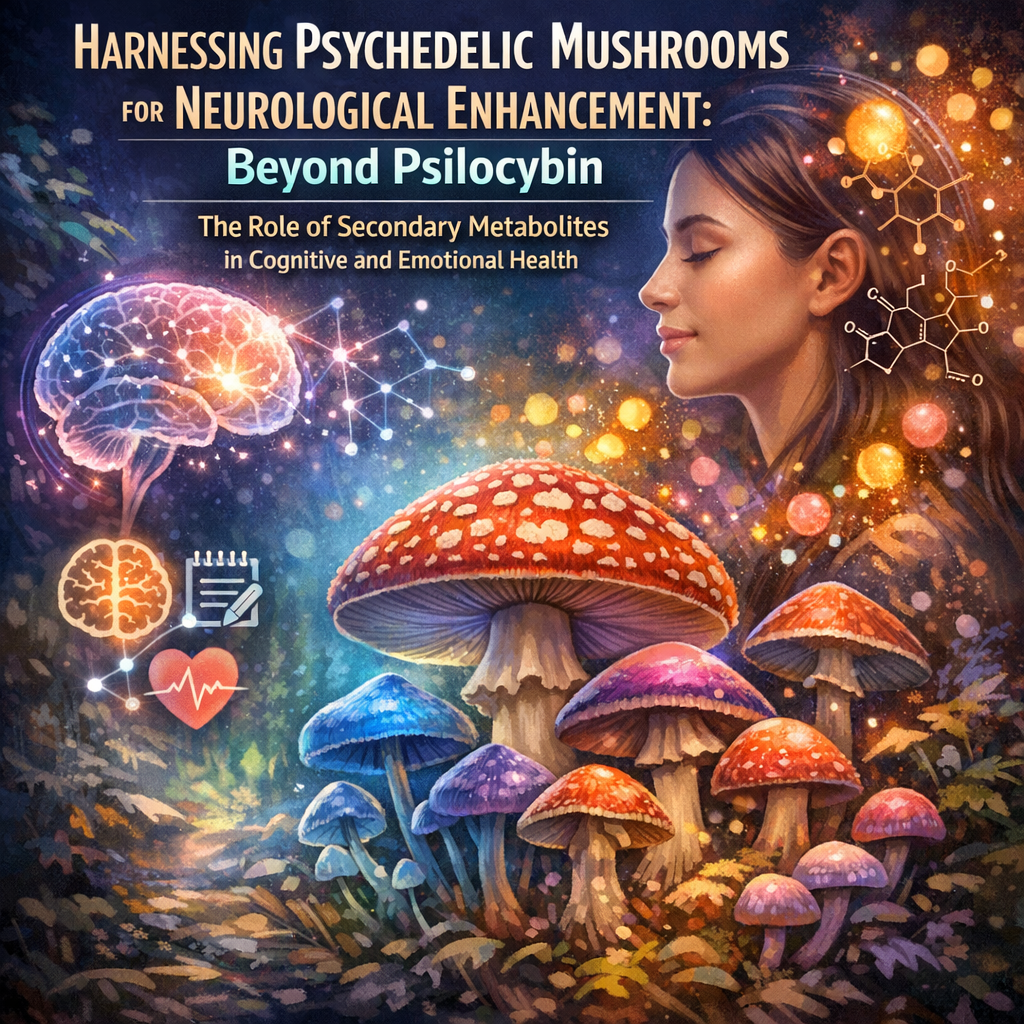
Harnessing Psychedelic Mushrooms for Neurological Enhancement: Beyond Psilocybin – The Role of Secondary Metabolites in Cognitive and Emotional Health
Introduction
In recent years, the realm of medical and wellness-oriented mushrooms has burgeoned into mainstream awareness, with **psilocybin** at the forefront of discussions surrounding **mental health**. However, there is growing interest in how these intriguing fungi can enhance **neurological function** beyond the well-documented psychotropic effects of psilocybin. The focus is gradually shifting towards understanding the holistic composition of these mushrooms, particularly the role of **secondary metabolites**. These compounds, found in all species of mushrooms, provide new insights into potential **cognitive** and **emotional health** benefits that can complement, or in some cases surpass, the effects of psilocybin.
**Secondary metabolites** are organic compounds that are not directly involved in the normal growth, development, or reproduction of organisms. In mushrooms, they include a range of biologically active substances, such as **polysaccharides**, **sterols**, and **alkaloids**, each contributing uniquely to health. For instance, certain polysaccharides have been noted for their **immune-boosting** capabilities, while other compounds exhibit **anti-inflammatory** and **antioxidant** properties. These agents can profoundly impact how our brains function, potentially mitigating effects of aging, stress, and mental fatigue.
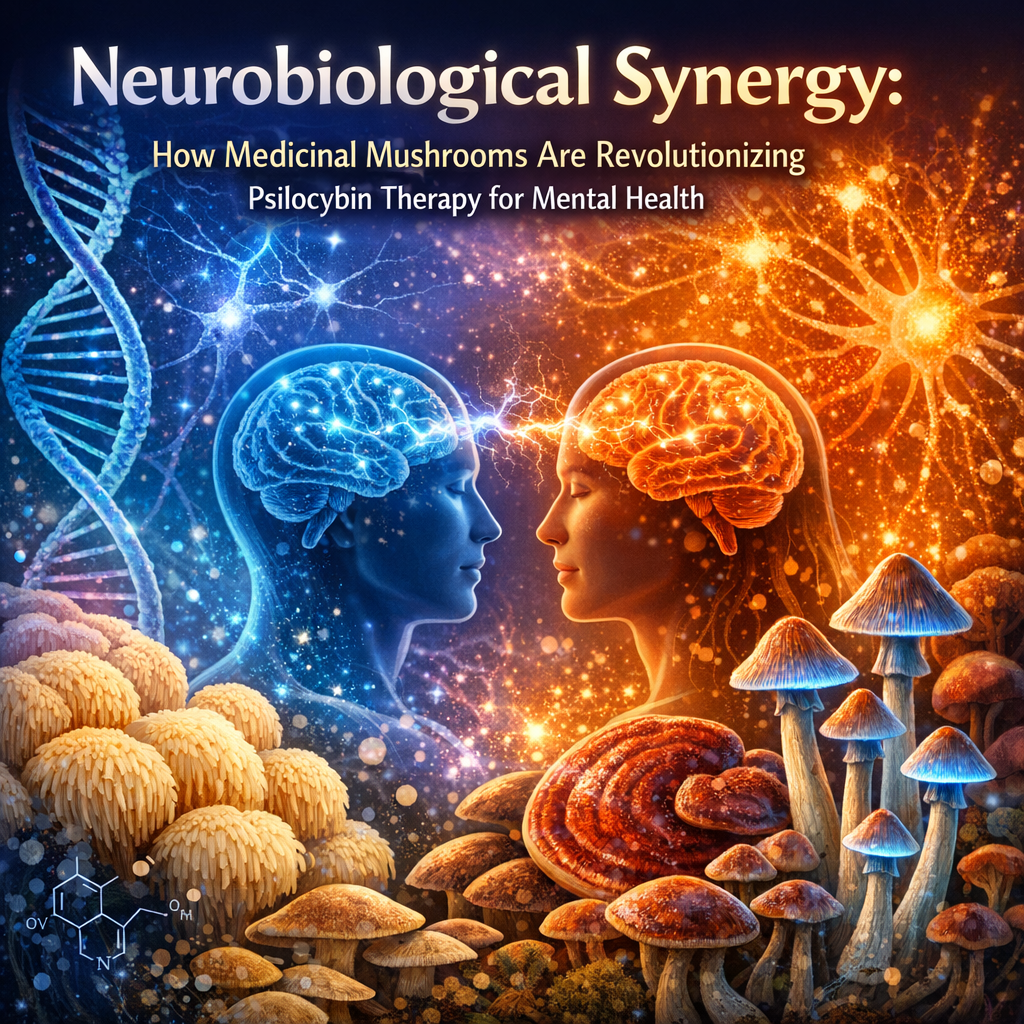
Emerging research suggests that secondary metabolites from certain mushrooms could support **cognitive enhancement**, **neuroprotection**, and **emotional regulation**. With neurodegenerative diseases like **Alzheimer’s** and **Parkinson’s** on the rise, uncovering novel ways to preserve cognitive health is essential. Mushrooms such as **Lion’s Mane**, **Turkey Tail**, and **Reishi** have long been revered in traditional medicine and are now under scientific scrutiny for their potential neurological benefits.
The premise is not only to use these mushrooms for treating illnesses but to employ them as proactive measures in enhancing brain functionality. This marks an exciting chapter in the evolving narrative of natural treatments, as we begin to recognize the full spectrum of benefits offered by these fungi beyond the single-dimensional view of psilocybin. By leveraging both modern science and ancient wisdom, we can potentially usher in a new paradigm focused on comprehensive neuroenhancement strategies.
Features
In the scientific community, there is a growing repository of studies examining the potential cognitive and emotional health benefits offered by secondary metabolites in mushrooms. One significant study published in the Journal of Agricultural and Food Chemistry emphasizes the role of **Lion’s Mane mushroom**, rich in **hericenones** and **erinacines**, for its **neurogenesis-promoting** abilities. These compounds stimulate the production of **nerve growth factor (NGF)**, crucial for the maintenance, survival, and regeneration of neurons. The implications of these findings suggest potential treatments for neurodegenerative diseases and overall cognitive enhancement.
Moreover, **Turkey Tail mushrooms**, abundant in **polysaccharide-K (PSK)** and **polysaccharide-peptide (PSP)**, have demonstrated profound immune-modulating effects, which indirectly benefit cognitive functions. According to research in BMC Complementary and Alternative Medicine, the intake of PSK has shown a reduction in inflammation and oxidative stress, factors that can deteriorate cognitive performance over time.
The **Reishi mushroom**, another focus of academic interest, contains **ganoderic acids** and **triterpenes**, which are notable for their calming effects on the central nervous system. A study in Neuropharmacology highlighted these compounds’ potential in reducing **anxiety** and **depression** symptoms, aiding emotional health and cognitive clarity. With the **epidemic of stress-related disorders** in the modern era, such attributes are invaluable.
These studies collectively underscore the remarkable potential of secondary metabolites in mushrooms as agents of neurological and emotional enhancement. Though more robust clinical trials are needed, the early results provide an encouraging glimpse into how these natural compounds can contribute to mental well-being. The aim is to create a holistic approach that utilizes the full spectrum of compounds found in mushrooms, moving towards innovative solutions that not only treat but also prevent cognitive and emotional disorders.
Conclusion
The exploration of **secondary metabolites** in mushrooms marks an exciting frontier in the field of **neurological enhancement** and **mental health**. These compounds, while less known, offer promising avenues for cognitive support and emotional regulation, complementing the effects of psilocybin. As research continues to unravel the complexities of these fascinating organisms, the potential for harnessing their full therapeutic power becomes increasingly apparent. Their integration into modern medical practices could lead to groundbreaking advancements in both preventive and restorative mental health strategies.
**Concise Summary**
The exploration of mushrooms beyond **psilocybin** focuses on secondary metabolites which offer promising benefits for **cognitive** and **emotional health**. Compounds like **polysaccharides**, **sterols**, and **alkaloids** have immune-boosting, anti-inflammatory, and antioxidant properties beneficial for brain health. Studies highlight mushrooms like **Lion’s Mane**, **Turkey Tail**, and **Reishi** for their potential to enhance **neurogenesis**, reduce oxidative stress, and support emotional regulation. The integration of these findings with modern medicine could revolutionize strategies for neurological enhancement and mental health, emphasizing both treatment and prevention of cognitive disorders.

Dominic E. is a passionate filmmaker navigating the exciting intersection of art and science. By day, he delves into the complexities of the human body as a full-time medical writer, meticulously translating intricate medical concepts into accessible and engaging narratives. By night, he explores the boundless realm of cinematic storytelling, crafting narratives that evoke emotion and challenge perspectives. Film Student and Full-time Medical Writer for ContentVendor.com